

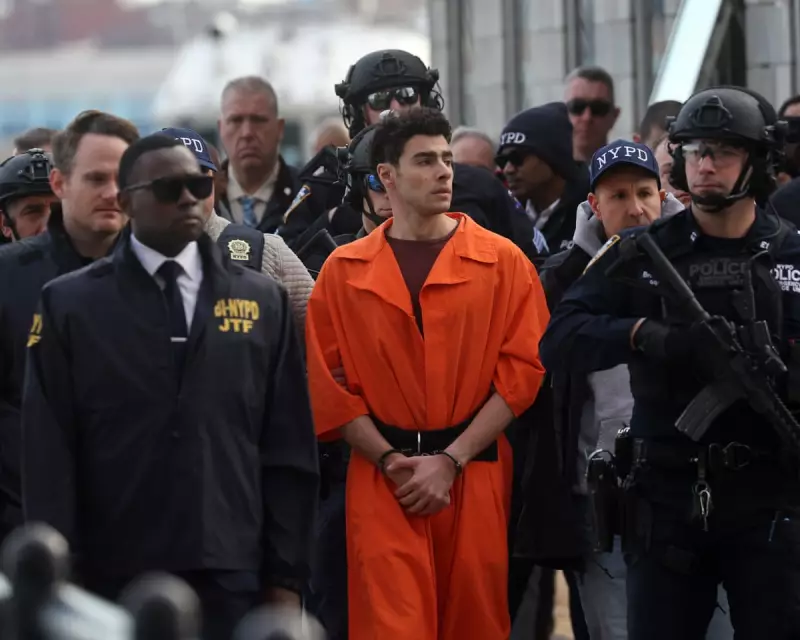
The shocking assassination of a health insurance CEO in broad daylight and the subsequent arrest of a university graduate has sparked intense debate across America, raising troubling questions about healthcare, corporate responsibility, and vigilante justice.
The Broad Daylight Assassination
On 5 December 2024, the business world was rocked by a brutal murder in Midtown Manhattan. Brian Thompson, a health insurance CEO, was shot in the back by an assassin who reportedly walked away from the scene without hesitation. The New York Times described the killing as both cold and shocking, noting the killer's calm departure.
While the murder horrified many, the public response revealed deep-seated anger toward the healthcare industry. Social media platforms exploded with reactions that ranged from outrage to something approaching catharsis. One viral post captured the mood: "All jokes aside ... no one here is the judge of who deserves to live or die. That's the job of the AI algorithm the insurance company designed to maximize profits on your health."

The Arrest and the Accused
Just five days after the assassination, on 10 December 2024, authorities apprehended Luigi Mangione at a McDonald's in Altoona, Pennsylvania. The 26-year-old University of Pennsylvania graduate, who held a master's degree in computer science, now faces both federal and state murder charges, with prosecutors seeking the death penalty.
Mangione's background presents a complex picture. Described as good-looking and highly educated, he becomes the subject of John H Richardson's new book, Luigi: The Making and the Meaning, published by Simon & Schuster. The investigation attempts to unravel what might have motivated such an extreme act.
Investigating the Motive: Delay, Deny, Depose
Richardson, an Esquire journalist with experience investigating online subcultures, delves deep into Mangione's digital footprint. The book's title finds its meaning in three words etched onto the bullets recovered from the crime scene: "delay," "deny," and "depose" - terms notoriously associated with health insurance claim rejection strategies.
The investigation reveals Mangione as an extensive reader, with 295 books listed on his Goodreads account at the time of his arrest. His reading interests spanned climate change, masculinity, and personal development. Richardson sifts through correspondence with influencers and social media posts, yet Mangione remains an elusive figure.
Despite exploring whether Mangione suffered from a chronic back condition that might have provided motive, Richardson finds no concrete evidence. Instead, the book suggests the meaning behind the crime might lie in Mangione's existential anxiety about a world "sliding faster and faster to the edge" and fears about AI's growing control over human lives.
Controversial Portrayal and Critical Omissions
The investigation faces significant limitations. Richardson never interviewed Mangione directly, and the suspect's family declined to speak with press before trial. More notably, the book provides scant information about victim Brian Thompson, though it does note that under his leadership from 2021 to 2023, UnitedHealth Group profits increased by 33%.
Critics argue Richardson's approach veers dangerously close to romanticising his subject. The author describes Mangione's "elusiveness" as giving him "a little of that old trickster magic" and concludes with fairytale imagery, comparing him to Robin Hood figures who "arrive in times of social turmoil, when the people are suffering and nothing makes sense anymore."
This sympathetic portrayal creates what some readers might interpret as a veiled endorsement of the assassination. However, as Mangione's defence team works to have death penalty charges dismissed, such mythological comparisons will hold no weight in a court of law.
The case continues to develop as America grapples with questions about healthcare ethics, corporate responsibility, and the limits of vigilante justice in an increasingly automated world.






