US Prediction Markets Forecast Zohran Mamdani Win in NYC Mayoral Race
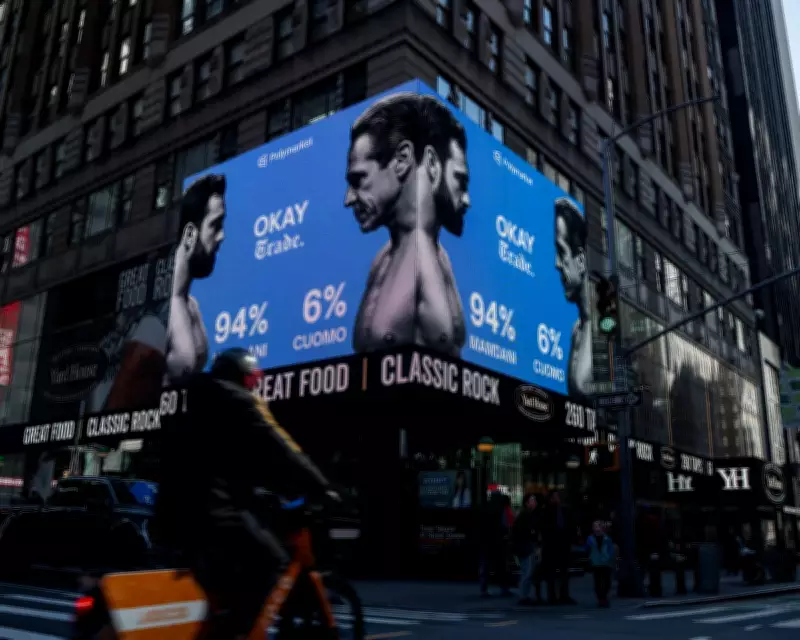
Advertisements from the American company Polymarket are projecting a victory for Zohran Mamdani in the upcoming New York City mayoral election scheduled for November 2025. This bold prediction underscores the growing influence of prediction markets, a novel form of betting enterprise that has rapidly gained traction, particularly in the United States, often attracting customers with little prior interest in traditional gambling.
The Explosive Growth of Prediction Markets
Polymarket, alongside its larger competitor Kalshi, represents a relatively new breed of betting company that has burst onto the scene. These platforms allow users to stake money on a wide array of events, ranging from political outcomes like last week's Gorton and Denton byelection to speculative questions such as whether the US will confirm the existence of aliens before 2027. Notably, Polymarket recently faced backlash and removed a market on nuclear Armageddon after widespread online distaste for wagering on potential mass casualties, though the company did not respond to requests for comment.
For those inclined to put their money where their mouth is, gambling on affairs of state is not entirely new. The 2024 general election betting scandal in the UK highlighted the myriad ways bookmakers and punters can engage in such activities. However, the rapid expansion of prediction markets, especially in the US, is making these wagers more commonplace and accessible to a broader audience.

How Prediction Markets Operate
Despite the hype surrounding this "new" phenomenon, British punters are already quite familiar with prediction markets, often referred to as betting exchanges. Betfair, the dominant UK exchange, launched over a quarter of a century ago. Unlike traditional bookmakers, exchanges and prediction markets pit customers against one another, providing a platform for users to bet on multiple "markets," such as the outcome of a football match or whether a prime minister will be deposed by a certain date.
Punters choose a side of that bet, either backing (betting on) or laying (betting against) the outcome, with exchanges taking a commission on the payout. Customers can trade in and out of those bets, cashing out or staking more as the odds fluctuate before the outcome is known. The key innovation from companies like Kalshi and Polymarket lies in cosmetic but potentially crucial tweaks that make the model more accessible to less betting-savvy customers and more palatable to US regulators.
US-Style Innovations and Regulatory Loopholes
Instead of using traditional odds like 5-1 or 11-2, prediction markets typically express probabilities in percentage terms, with many bets presented as simple yes/no answers. This user-friendly approach is particularly appealing in a country where legal sports betting is a relatively new, albeit fast-growing, phenomenon. Additionally, prediction markets often deploy the language of financial trading, showing graphs of market movements or inviting customers to "buy" or "sell" an outcome.
In the UK, the prediction market model is just as legal as any other betting exchange, provided operators hold a licence from the Gambling Commission. However, in the US, sports betting is only legal in 38 states, each with different and sometimes complex regulatory regimes. Kalshi and Polymarket have exploited a loophole by convincing the Commodities and Futures Trading Commission (CFTC) to regulate them as if they were offering financial trading in binary options—instruments that either pay out in full or not at all, much like traditional bets.
Novelty Markets and Publicity Stunts
Prediction markets have garnered attention by offering wagers on current affairs, even when it might appear in poor taste, as seen with the nuclear Armageddon market. However, there are also quirkier, seemingly harmless markets, such as betting on the release date of the Grand Theft Auto VI video game or who will win the Oscar for best picture. According to Jason Trost, CEO of the UK betting exchange Smarkets, many of these markets are more about generating publicity than revenue.

"These are brand exercises rather than things people want to trade," he says. "It's novelty markets for show, sports for dough. The money is all in sports." This highlights the strategic focus on sports betting for profitability, while novelty markets serve to attract media attention and new users.
Potential Expansion to the UK and Business Challenges
While some UK users may already access US prediction markets via virtual private networks (VPNs), despite the lack of a UK gambling licence, domestic players are also moving towards a US-style model. Trost has redesigned Smarkets to resemble Kalshi and Polymarket, believing there is appetite in the UK for a betting exchange that avoids the "esoteric" language and interface of sites like Betfair. Similarly, fellow UK exchange Matchbook, owned by Australian gambling tycoon Zeljko Ranogajec, is weeks away from launching its own US-style site, targeting British customers.
However, opportunities may be limited in a mature gambling market where rivals include sophisticated sports book operators and an incumbent powerhouse like Betfair. For instance, the volume of bets on the Gorton and Denton byelection outcome on Polymarket was about $1 million (£750,500), but this number counts betting positions that users may have entered and exited multiple times. The actual amount of money at stake is a fraction of what would typically be wagered in the UK on an unglamorous Premier League football game on any given weekend.
Alun Bowden, an industry analyst at Eilers & Krejcik Gaming, questions the business case: "People are going to flock back to betting exchanges to bet billions on byelections and what Brooklyn Beckham is putting in his next Insta post? I'm highly sceptical." The bigger prize could be competing with US prediction sites in their own market, with UK firms like Matchbook pursuing a CFTC licence for a planned US launch and London-based Plus 500 launching a prediction market product this month.
Ethical Pitfalls and Regulatory Scrutiny
Beyond public revulsion at betting on war, prediction markets appear highly susceptible to manipulation. While sports events can be rigged, it is difficult to do so, and betting operators are adept at spotting patterns that indicate fraud. However, there have been several high-profile examples in the US where big bets were placed with apparent insider knowledge, such as on events like the capture of Venezuelan president Nicolás Maduro or strikes on Iran targeting Ayatollah Ali Khamenei.
Until recently, neither US regulators nor the prediction markets themselves seemed overly concerned about apparent insider trading. However, Kalshi last month suspended and fined two users for "willingly" cheating and is investigating 200 apparent violations of its rules. Public and political outcry about bets on the unfolding Iran conflict is intensifying scrutiny of the ethics of betting on war, particularly where it may incentivise political insiders to favour lethal action.
In the UK, where prediction markets would be regulated as gambling, regulators are vigilant about potential risks. Last year's general election betting scandal resulted in criminal charges against 15 people, including former Conservative MP Craig Williams, for cheating under the Gambling Act 2005, with the case ongoing. This underscores the need for robust oversight as prediction markets evolve and potentially expand globally.