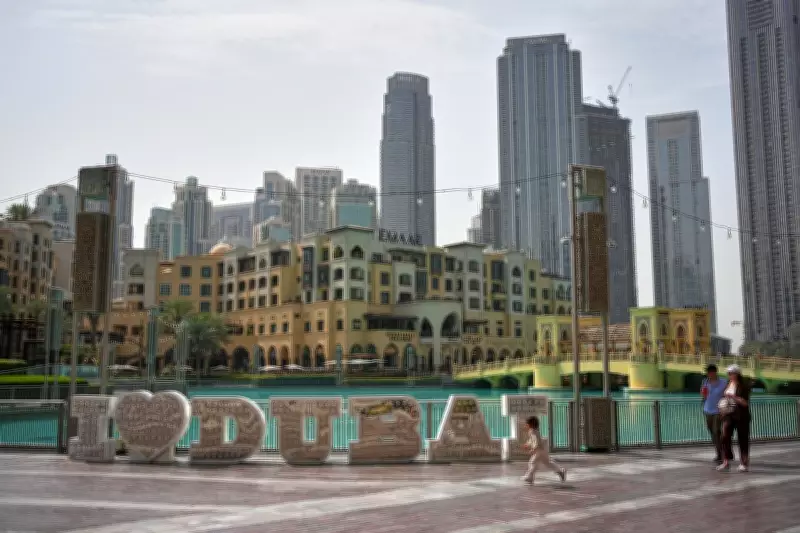
Dubai's reputation as a secure financial centre is facing intense scrutiny from wealthy Asian investors, who are now actively moving their assets to safer locations amid escalating regional tensions. This significant trend has accelerated sharply in the wake of recent Iranian missile and drone attacks targeting Dubai, prompting a reassessment of the Gulf's traditional safe-haven appeal.
Immediate Asset Transfers Underway
Two Indian entrepreneurs based in Dubai, speaking on condition of anonymity due to security concerns, disclosed they attempted to transfer over $100,000 each from their local bank accounts to Singapore immediately following the attacks. While initial technological disruptions temporarily hindered their efforts, one entrepreneur confirmed successfully moving the substantial sum through an alternative Emirates-based financial institution.
Growing Movement to Established Financial Hubs
Industry advisers and legal professionals report that numerous other affluent Asian investors are making similar inquiries or actively taking steps to relocate their Dubai-based assets to established regional financial centres like Singapore and Hong Kong. This capital movement coincides with growing perceptions that the "U.S.-Israel war on Iran" is undermining the Gulf region's stability, creating significant unease among international investors.

While wealthy individuals typically maintain diversified investment portfolios across multiple regions and asset classes, their choice of primary financial base depends heavily on considerations including taxation policies, regulatory frameworks, privacy protections, and operational efficiency. In recent years, Dubai has emerged as a preferred wealth management hub for Asian entrepreneurs and affluent families, particularly from China, attracted by its favourable business policies and strategic location.
Private Wealth Lawyers Confirm Client Movements
Singapore-based private wealth attorney Ryan Lin revealed that six or seven of his twenty Dubai-based clients, each holding average assets of approximately $50 million, contacted him this week regarding potential transfers. Three clients are planning immediate asset relocations to Singapore, with one specifically "checking how quickly they can transfer everything to Singapore" according to Lin's statement.
Family Offices Reconsidering Middle East Presence
Iris Xu, principal at global corporate and fund services provider Anderson Global, reported that ten to twenty family offices have approached her firm this week about moving assets from the Middle East back to Singapore. These inquiries stem from concerns that the regional conflict might persist longer than initially anticipated. Family offices, which serve as comprehensive management firms for wealthy individuals' portfolios, are reconsidering their Middle East presence despite previous tax advantages.
"Dubai was always about tax benefits but now I think the tax benefits may not be the top priority for them," Xu explained, highlighting how security concerns are outweighing financial advantages in current decision-making processes.
Confidence Crisis Despite Official Reassurances
A Singapore-based wealth management adviser, requesting anonymity due to media restrictions, disclosed conversations with thirteen UAE-based clients, with more than half seriously considering asset transfers to Singapore. The adviser noted that "flying back and forth will be a challenge even if the conflict ends tomorrow. It is a confidence thing," emphasizing how perceptions of instability can have lasting effects on investor behaviour.
Grace Tang, Chief Executive Officer of Phillip Private Equity, confirmed that her predominantly Asian client base has grown increasingly skittish, with ten to twenty investors inquiring about moving their wealth to Singapore to better preserve their capital amid the uncertainty.
Contrasting Perspectives on Capital Flight
Not all financial professionals view the Middle East conflict as triggering immediate capital flight. Dhruba Jyoti Sengupta, CEO of Dubai-based WRISE Private Middle East, stated his firm has not observed "serious capital flight discussions," noting clients remain confident about the UAE's long-term resilience and economic prospects.

"They are sophisticated global investors, already diversified internationally, but deeply invested ... in the UAE's growth story," Sengupta explained. "Despite the broader geopolitical turmoil in the region, clients are feeling safe and secure."
Official Statements and Continued Expansion
The United Arab Emirates central bank governor Khaled Mohamed Balama asserted on Thursday that the nation's banking and financial sector remains "resilient, strong, stable, and well-positioned to navigate regional developments." He confirmed that banks, financial firms, and insurance companies continue operating normally without disruption.
Leading Singapore-based wealth management institutions including Bank of Singapore and DBS Group indicated their clients are closely monitoring regional developments while adopting a cautious wait-and-watch approach for the time being.
Despite the uncertainty, some investors continue with expansion plans in the Emirates. Jeremy Lim, co-founder of GrandWay Family Office, is proceeding with establishing a family office in Abu Dhabi, stating his plans remain unchanged provided the UAE avoids direct involvement in the conflict and Iran refrains from further escalation.
"The real deal-breaker for businesses would be if the UAE were to...become directly involved alongside one side in a conflict," Lim clarified, outlining the conditions under which his investment strategy might change.
The United Arab Emirates banking and financial sector holds total assets exceeding 5.42 trillion dirhams ($1.48 trillion), according to central bank data, representing a substantial financial ecosystem now facing unprecedented scrutiny. With Dubai experiencing significant property and infrastructure development in recent years, the Gulf region has transformed into a major investment destination whose future attractiveness now hangs in the balance as wealthy investors reconsider their geographic allocations.