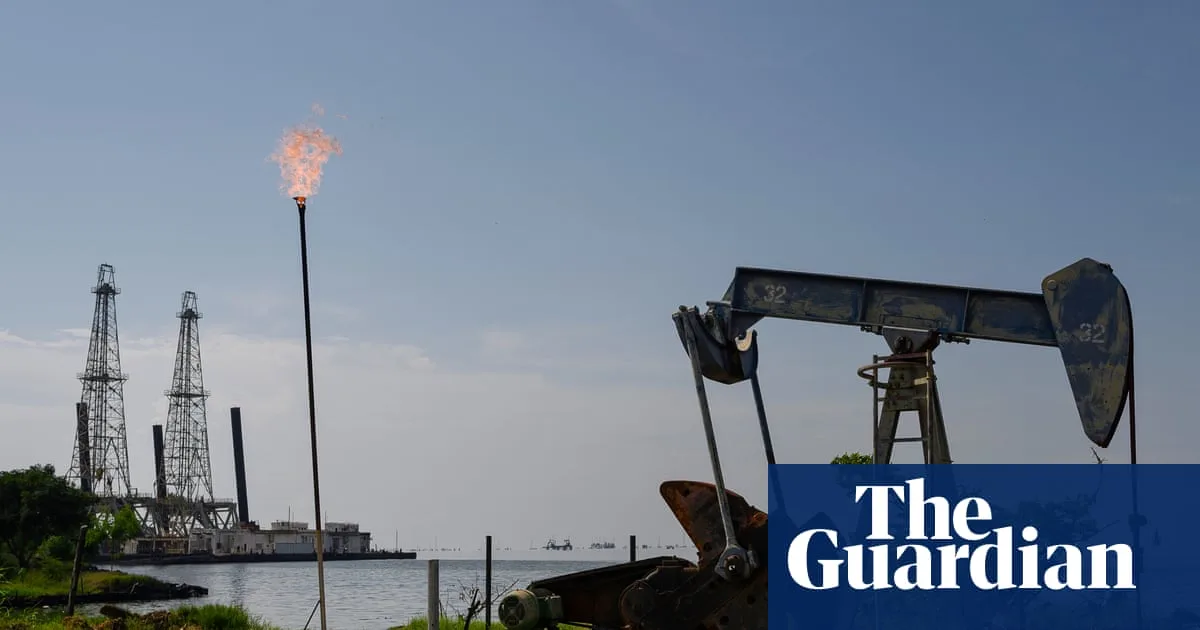
Venezuela's acting president, Delcy Rodríguez, has signed into law a bill that significantly alters the country's oil sector, following pressure from the United States to allow foreign private investment. The new hydrocarbons law grants private companies control over oil production and sales, eases taxes, and permits independent arbitration of disputes, while maintaining state ownership of oil reserves.
Analysts remain cautious about the practical application of the law, arguing that it lacks clarity and that the changes, though welcome, are insufficient to meet the overhauls sought by the US as it seeks to revive Venezuela's struggling oil industry. David Vera, an associate dean at the Craig School of Business in the US, described the law as 'a positive step' but noted it 'still falls short of what US oil companies need to commit capital at scale'.
Speaking after the law's approval, Delcy Rodríguez said: 'We're talking about the future. We are talking about the country that we are going to give to our children.' Her brother, congressional leader Jorge Rodríguez, added: 'Only good things will come after the suffering. These are the good things, for everyone, that we must build together.'
The US has played a direct role in the changes. Earlier on Thursday, Delcy Rodríguez held a phone call with Donald Trump, who later disclosed the conversation during a cabinet meeting. Trump said he was about to 'open up all commercial airspace over Venezuela' and noted that large US oil companies were already conducting site assessments in the country. The US Treasury also issued a general licence easing sanctions on Venezuela's state-owned oil company, Petróleos de Venezuela (PDVSA).
The new law, approved unanimously by the regime-loyal National Assembly, allows private companies—even as minority partners in joint ventures with PDVSA—to exercise 'technical and operational management' directly, breaking with the previous rule requiring state control over decisions. It also enables a reduction in royalty payments from 30% to zero. However, legal scholar José Ignacio Hernández said the law 'fails to address all the causes that led to the collapse of the oil sector'. Venezuela holds the world's largest proved oil reserves but accounts for less than 1% of global production.