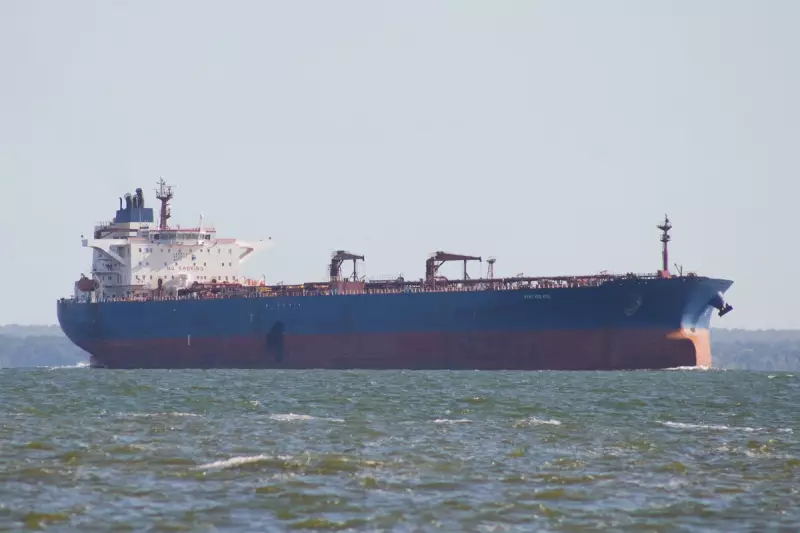
The geopolitical landscape of global energy was dramatically reshaped this week after US military forces captured Venezuelan President Nicolas Maduro. In the immediate aftermath, President Donald Trump declared the United States would assume control of the South American nation and, critically, access its enormous petroleum wealth.
The Prize: Venezuela's Untapped Petroleum Wealth
Venezuela sits atop one of the planet's largest accumulations of crude oil. According to the U.S. Energy Information Administration, the country holds an estimated 303 billion barrels of oil reserves, representing roughly 17% of the global total. Unlike unexplored frontiers, these reserves are largely mapped and known, yet they produce a mere 1% of the world's oil due to catastrophic infrastructure decay.
"Venezuela has enormous reserves," stated Claudio Galimberti, a director at Rystad Energy. He highlighted a looming global concern: "If you ask any oil company... where is oil going to come from in the 2030s and 2040s, their answer is a rather scary, 'We don't know.'"

A Strategic US Move for Energy Security
President Trump has framed the intervention as reclamation, alleging Venezuela "stole U.S. oil"—a reference to the mass nationalisation of foreign assets, including those of Exxon Mobil and ConocoPhillips, under the late Hugo Chávez. The new US strategy involves a multi-phase plan.
First, the administration has selectively removed sanctions to allow Venezuelan oil to be shipped and sold globally. Proceeds are mandated to settle in US-controlled accounts for disbursement. Second, Trump has floated the return of major American oil firms to rebuild the industry, suggesting it could be revived in under 18 months. He subsequently announced Venezuela would supply the US with 30 to 50 million barrels of oil.
Energy analysts see a clear dual objective. "The first is to overall lower energy prices by adding to global supply, and second is to produce more of the heavy, sour crude that is currently in short supply," explained Kevin Book of ClearView Energy Partners. This specific crude type is perfectly suited to refineries on the US Gulf Coast and could potentially reduce prices for gasoline, diesel, and jet fuel.
Daunting Investment and Political Hurdles
Despite the potential, experts warn of monumental obstacles. Decades of mismanagement have left the industry in ruins. Amy Myers Jaffe of New York University described "physical devastation," including looted surface equipment and leaking pipelines, compounded by nationwide blackouts and a crippling brain drain of technical staff.
Rystad Energy estimates $54 billion in investment is needed over 15 years just to maintain current meagre production. Significant expansion would require billions more annually.
Furthermore, major oil companies remain deeply cautious. "You need to start with basic political stability before you're going to have companies... interested in making those kinds of investments," said Daniel Sternoff of Columbia University. The shadow of past expropriations and unresolved arbitration awards worth billions looms large. A ConocoPhillips spokesman said it was "premature to speculate on any future business activities," while Exxon Mobil offered no comment.
History also offers a cautionary tale. Sternoff noted that in major oil-producing nations like Iraq, Iran, and Libya, regime change typically led to a severe, years-long drop in output before any recovery. The path to unlocking Venezuela's oil, while strategically enticing for US energy interests, appears fraught with immense risk and uncertainty.