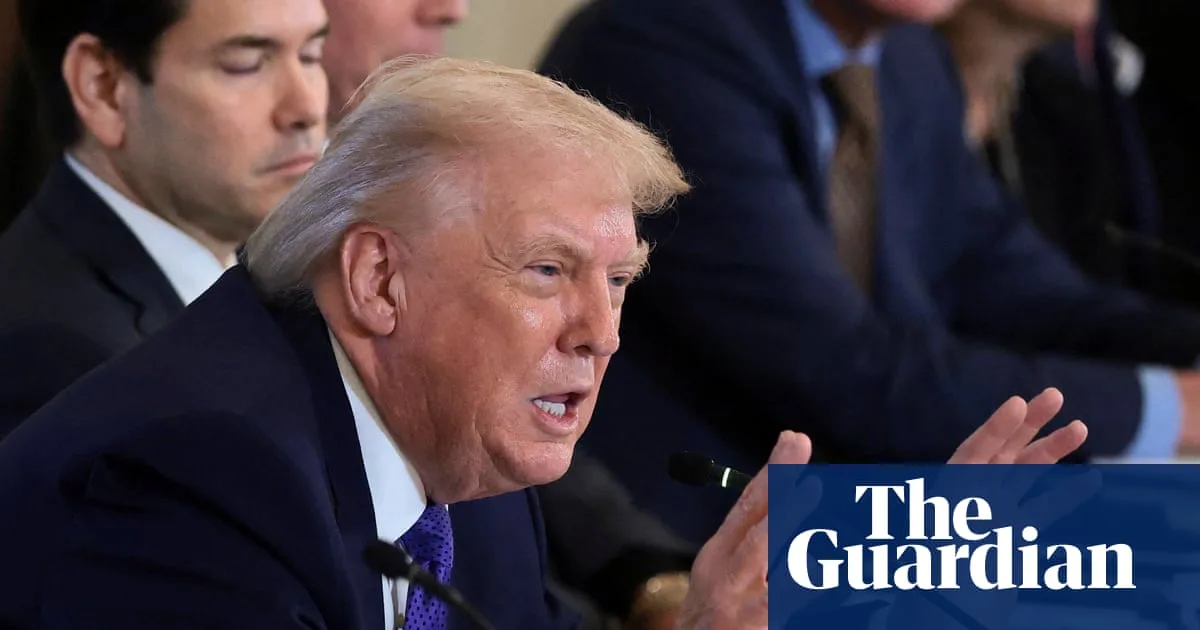
Donald Trump has promised oil companies “total safety, total security” in Venezuela in an effort to persuade them to invest $100bn in the country’s infrastructure after US forces toppled Nicolás Maduro from power. At a roundtable press conference at the White House with more than a dozen oil executives, including leaders from Chevron, ExxonMobil and ConocoPhillips, the US president doubled down on claims that Maduro’s arrest presents American oil companies with an unprecedented opportunity for extraction.
Many of the executives expressed support for the Trump administration’s actions in Venezuela and hinted they stood ready to invest. However, analysts have expressed scepticism that oil firms will invest vast sums as rapidly as Trump has suggested. Earlier this week, the president suggested production in Venezuela could be boosted within 18 months. “We’re going to be extracting numbers in terms of oil like few people have seen,” he said on Friday, emphasising that the US stands to benefit from lower energy prices.
Trump said the investment would come from the oil companies, not the federal government, despite earlier suggestions that US taxpayers might fund the investments. “The plan is for them to spend, meaning our giant oil companies will be spending at least $100bn of their money, not the government’s money,” Trump said. “They don’t need government money, but they need government protection and government security.” He warned the executives that if they are not interested, “I got 25 people that aren’t here today that are willing to take your place.”
Later, Trump signed an executive order aimed at blocking courts or creditors from impounding revenue tied to the sale of Venezuelan oil held in US treasury accounts. The order said the revenue should be used in Venezuela to help create “peace, prosperity and stability”. Several companies have longstanding claims against the country; ExxonMobil and ConocoPhillips left Venezuela nearly 20 years ago after their assets were nationalised and are still owed billions of dollars.
In brief remarks, oil executives expressed willingness to rebuild Venezuela’s oil infrastructure with US government reassurances. Chevron vice-chair Mark Nelson said the company currently has 3,000 employees across four joint ventures in Venezuela and has the capacity to “increase our liftings from those joint ventures 100% essentially, effective immediately”. Exxon’s chief executive Darren Woods said the company would need “significant changes” to Venezuela’s legal and commercial landscapes for reinvestment, noting that “today, it’s uninvestable”. ConocoPhillips CEO Ryan Lance echoed cautious optimism, saying “there’s an opportunity to be quick, fast and restore the quality of what’s been lost in Venezuela over the last 25 years”.