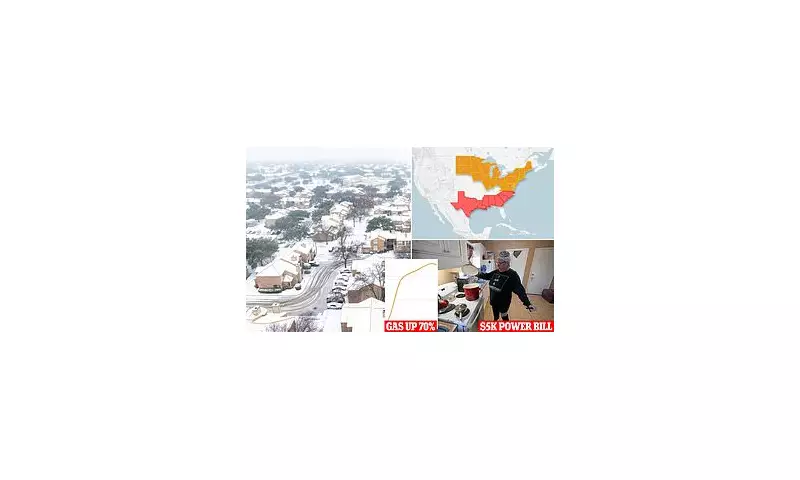
American Households Confront Dual Threat of Extreme Cold and Soaring Energy Costs
Millions of American families are being warned to prepare for sharply increased heating expenses as a severe Arctic freeze descends upon the country simultaneously with dramatic spikes in natural gas prices. This dangerous combination threatens to push household energy bills hundreds of dollars higher during what forecasters predict will be the coldest two-week stretch since 1985.
Unprecedented Price Surges Meet Historic Cold Snap
Natural gas prices have skyrocketed by as much as seventy percent in recent days, creating a perfect storm of financial pressure for households already facing one of the most brutal winter periods in decades. The forecast period ending in early February is expected to force families across large swathes of the nation to maintain heating systems at maximum capacity almost continuously, sending demand for heating fuel to extraordinary levels.
More than half of all American households find themselves exposed to these market forces. Approximately sixty-one million homes rely directly on natural gas for heating, while another fifty-seven million depend on electricity generated predominantly through gas-fired power plants. This interconnected energy system means that price spikes can impact even those households that do not heat their homes directly with natural gas.

Variable Rate Customers Face Most Severe Financial Impact
American bill payers will experience increased costs through multiple mechanisms. The extreme cold alone will drive bills higher as millions are compelled to raise thermostat settings and operate heating systems for extended periods, increasing energy consumption before price increases are even considered.
Households with fixed-price natural gas contracts will see higher overall bills primarily due to increased usage, with their per-unit price remaining stable and offering some financial protection. However, families whose fixed agreements have expired or who are on variable-rate plans face a far more severe financial hit. These households must pay not only for greater energy consumption but also for that energy at significantly elevated per-unit prices.
In Georgia, some customers have reported alarming price increases, with the cost per therm jumping to approximately $2.79 from previous levels around sixty-five cents—representing a more than fourfold increase. Energy experts strongly advise households never to allow fixed-price gas contracts to expire during winter months, as customers become immediately vulnerable to extreme price spikes once contractual protections lapse.
Southeastern States Particularly Vulnerable to Immediate Price Transmission
In several Southeastern states, utility companies can pass fuel price increases directly to consumers through specific billing mechanisms. Throughout this region, fuel costs are typically excluded from base utility rates and instead recovered dollar-for-dollar through fuel adjustment charges on customer bills. This regulatory framework means that when natural gas prices spike, customers feel the financial impact almost immediately rather than utilities absorbing the increased costs.
Analysts emphasize that the greatest financial risks are concentrated among households with variable or wholesale-linked energy plans, which accounted for the notorious $5,000 utility bills experienced during the Texas winter crisis of 2021. While most customers during that freeze experienced modest bill increases, a smaller segment faced extreme charges when prices reached unprecedented levels.
Long-Term Implications and Broader Market Pressures
Even families currently protected by fixed-rate contracts may not escape higher costs indefinitely. Energy analysts warn that today's price surges mean customers whose agreements expire later this year will likely face substantially higher rates when renewing, even if the most severe winter conditions have passed.

American consumers were already anticipating elevated heating costs this winter, with households expected to pay approximately 9.2 percent more on average according to the National Energy Assistance Directors Association. Multiple factors are contributing to this financial pressure, including greater electricity demand, higher natural gas prices, rapid expansion of data centers, costly restarts of coal-fired power plants, and federal assistance programs failing to keep pace with inflation.
If utility companies failed to secure natural gas supplies at fixed prices before the current storm system, they may now be forced to purchase fuel at volatile spot-market rates that are typically substantially higher—costs that will inevitably be passed along to consumers. The severity of the current weather situation creates additional complications, as surplus energy from neighboring states may be unavailable during peak demand periods.
The situation has raised concerns about potential parallels with the February 2021 Texas disaster, when Winter Storm Uri crippled power infrastructure, left millions without electricity, and resulted in catastrophic heating bills for some families. As the current Arctic freeze tightens its grip, households across America are bracing for both the physical chill and the financial cold front of soaring energy expenses.