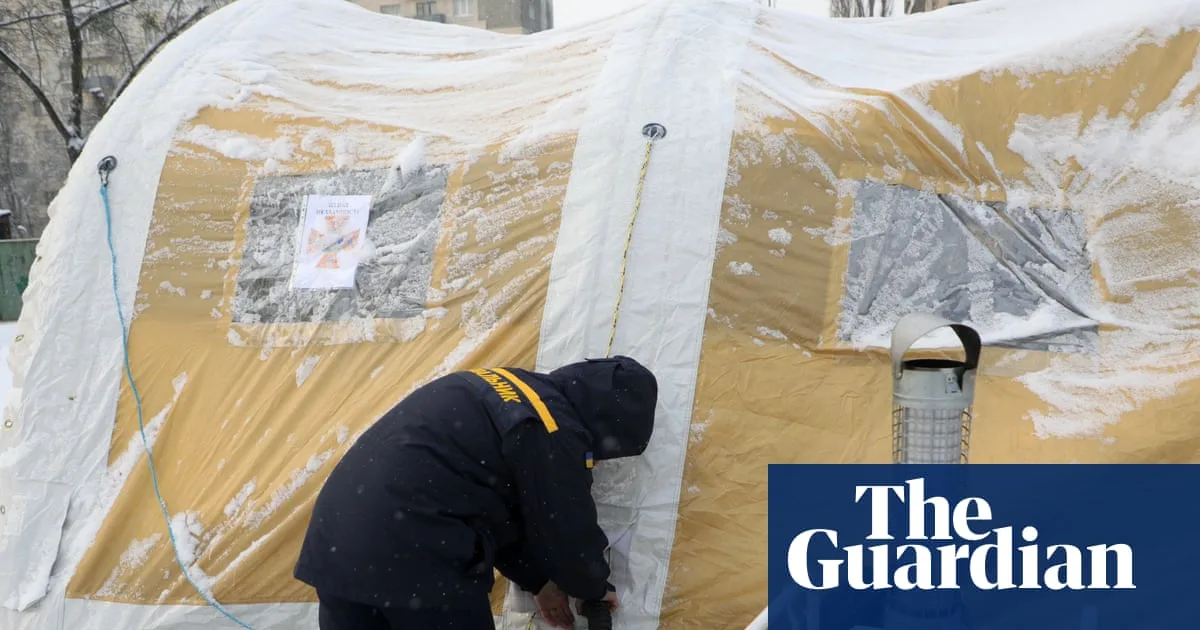
President Volodymyr Zelenskyy has declared a state of emergency in Ukraine's energy sector following heavy Russian attacks that have disrupted power supplies. Night-time temperatures have dipped close to -20°C, leaving millions without heating. Emergency crews are working around the clock to restore power and heating, while energy imports will be increased to mitigate the crisis.
Zelenskyy criticised the city of Kyiv for insufficient preparation compared to Kharkiv, prompting a rebuttal from Mayor Vitali Klitschko, who stated that heating had been restored to all but 400 of 6,000 affected buildings. The president announced a permanent coordination headquarters in Kyiv, overseen by the newly appointed first deputy prime minister and energy minister, Denys Shmyhal.
In international developments, Donald Trump claimed Ukraine is less ready to make a peace deal than Russia, contrasting with European allies who accuse Moscow of lacking interest in ending the war. Zelenskyy urged Ukrainian forces to hold positions along the 1,200km front line and called for continued diplomatic efforts.
The EU has proposed allowing Ukraine to purchase military equipment from non-European suppliers under a €90bn loan, softening France's 'buy European' stance. Meanwhile, Ukraine's new defence minister, Mykhailo Fedorov, outlined significant challenges including desertion by 200,000 troops and two million evading conscription, alongside bureaucratic and supply issues.
The US Treasury extended a licence for companies to negotiate with Russian energy firm Lukoil over its foreign assets until February, as part of sanctions pressure on Moscow.