Trump's Venezuela Oil Seizure Plan Faces Major Hurdles, Unlikely to Shift Prices
Trump's Venezuela Oil Plan Faces Major Investment Hurdles

Plans by US President Donald Trump to take control of Venezuela's vast oil industry and enlist American firms to revive it are confronting substantial immediate obstacles, with experts suggesting the move will have little short-term effect on global oil prices.

Decades of Decay and Political Instability

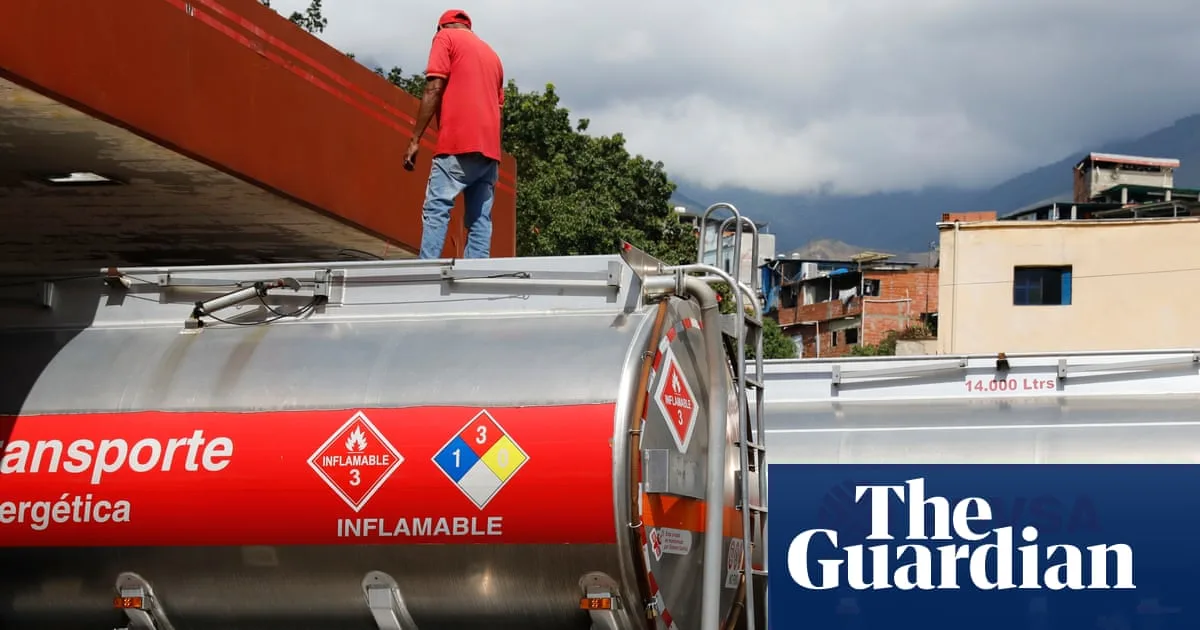
The proposed strategy, following the capture of President Nicolás Maduro in a military operation, aims to tap into Venezuela's world-leading 303 billion barrels of proven crude oil reserves. However, years of neglect, mismanagement, and international sanctions have left the national industry, run by state-owned PDVSA, in profound disrepair.

Analysts stress that restoring output to historic levels is a long-term project. Patrick De Haan, lead petroleum analyst at GasBuddy, noted, "While many are reporting Venezuela’s oil infrastructure was unharmed by U.S. military actions, it has been decaying for many many years and will take time to rebuild."

The political landscape remains highly uncertain. While the US asserts control, the legitimacy of any new governing authority is contested, creating a risky environment for the massive foreign investment required. American oil majors like ExxonMobil and Chevron are adopting a wait-and-see approach, seeking clarity on political stability and contract enforcement before committing funds.

A Long Road to Recovery: Billions and a Decade Needed

Francisco Monaldi, director of the Latin American Energy Program at Rice University, provided a stark assessment of the scale of the challenge. "The estimate is that in order for Venezuela to increase from one million barrels per day — that is what it produces today — to four million barrels, it will take about a decade and about a hundred billion dollars of investment," he said.

This current output of roughly 1.1 million barrels per day is a dramatic fall from the 3.5 million barrels per day pumped in 1999. The decline is attributed to corruption, mismanagement, and the chilling effect of US sanctions. A key historical barrier was the 2007 nationalisation by then-President Hugo Chávez, which forced out major international players.

Global Market Impact and Legal Quandaries

Despite the hurdles, some market watchers see potential for a future surge. Phil Flynn, a senior market analyst at the Price Futures Group, expressed optimism that if US control appears stable, energy companies could move in relatively quickly. He suggested a revitalised Venezuela could "cement lower prices for the longer term" and apply pressure on rival producer Russia.

Venezuela's heavy crude is particularly valuable for producing diesel and asphalt, commodities in short supply globally due to sanctions on both Venezuela and Russia. US Gulf Coast refineries, built to process such oil, would benefit from renewed access.

However, the legal framework for seizing another nation's resources is fraught. Matthew Waxman, a Columbia University law professor and former Bush administration official, warned the action opens complex legal issues regarding ownership. "An occupying military power can’t enrich itself by taking another state’s resources," he noted, though he acknowledged the Trump administration's dismissive stance toward international law in this context.

For now, with oil markets closed over the weekend and a global surplus in place, no immediate price shock is anticipated. The long-term success of the plan hinges on establishing lasting political stability and convincing wary corporations to commit unprecedented capital to a broken system.