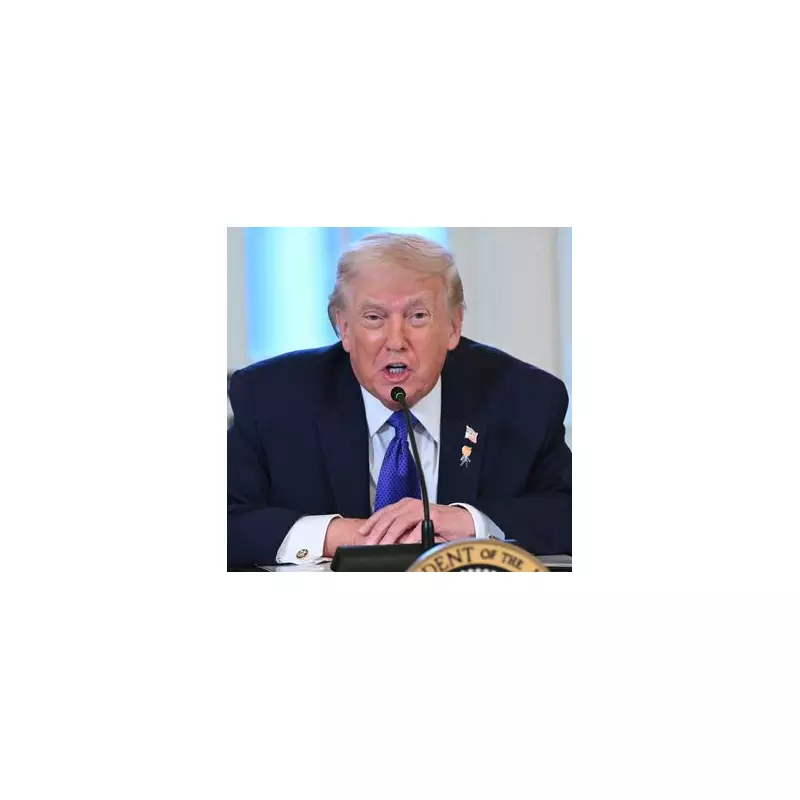
In a bold move to unlock Venezuela's vast petroleum reserves, US President Donald Trump has personally courted top oil company executives, seeking a monumental $100 billion in private investment. The high-stakes meeting at the White House on Friday, January 9, came as US border forces boarded another oil tanker in the Caribbean Sea, highlighting the tense geopolitical backdrop.
The $100 Billion Pitch: "Total Safety" Promised
Facing executives from industry giants including ExxonMobil, Chevron, ConocoPhillips, Halliburton, Valero, Marathon, and Shell, President Trump offered an unprecedented guarantee. He assured the room that their investments would have "total security" despite Venezuela's notorious history of state asset seizures, ongoing US sanctions, and deep political instability.
"You’re dealing with us directly and not dealing with Venezuela at all. We don’t want you to deal with Venezuela," Trump told the assembled leaders, as reported by the Associated Press. He emphasised that the $100 billion would come from corporate coffers, not government funds, but stressed that "they need government protection."

The promise follows a dramatic shift in the region, after Venezuelan President Nicolás Maduro was captured by a US military elite squadron in a raid on Saturday, January 3. Maduro, indicted on US drug and terrorism charges in 2020, had led the country for 12 years.
Executive Hesitation and Historical Seizures
While interested in the opportunity, executives expressed significant caution. Darren Woods, CEO of ExxonMobil—the largest US oil company—stated plainly, "If we look at the commercial constructs and frameworks in place today in Venezuela, today it’s un-investable."
His wariness is rooted in painful experience: ExxonMobil's assets have been seized twice before by the Venezuelan state. Woods confirmed his company would send a team to assess the situation, but stopped short of any commitment.
Trump sought to allay fears by suggesting the security guarantee would stem from cooperation with Venezuelan leaders and their people, rather than a direct US military deployment. In a characteristically blunt assessment, he noted the executives were "not babies" and were accustomed to drilling in "pretty rough places" that made Venezuela look "like a picnic."
Caribbean Crackdown: Fifth Tanker Seized
Simultaneously, the Trump administration is intensifying pressure on Venezuela's oil trade through enforcement actions. Also on Friday, January 9, US forces boarded an oil tanker in the Caribbean. This marks the fifth such seizure in the past month as part of a broader crackdown on the global illegal oil trade.
Homeland Security Secretary Kristi Noem stated on social media that the vessel was another 'ghost fleet' tanker suspected of carrying embargoed oil, which had departed Venezuela and attempted to evade US forces.
The dual strategy of enticing investment while enforcing sanctions underscores the complex challenge. Venezuela's oil production has crumbled to below one million barrels per day. Following the White House meeting, Energy Secretary Chris Wright indicated it could take eight to 12 years for the country's daily output to rebound to three million barrels.
The unfolding situation presents a high-risk, high-reward scenario for global energy markets and US foreign policy, with billions in capital and regional stability hanging in the balance.