A third major offshore wind development in the United States has been given the green light to restart construction following a successful legal challenge against the Trump administration's suspension of key leases.
Legal Victories Pile Up for Wind Industry
On Friday, 16 January 2026, a federal judge in Virginia ruled that work on the Coastal Virginia Offshore Wind project could resume. This decision marks the third such victory for the offshore wind sector this week, following similar rulings for projects in New York and New England.
The administration of President Donald Trump announced last month that it was suspending leases for at least 90 days on five East Coast offshore wind projects, citing unspecified national security concerns. The move prompted immediate legal action from developers and supportive states.

Dominion Energy Secures Preliminary Injunction
Dominion Energy Virginia, the developer behind the Coastal Virginia Offshore Wind project, was the first to sue. According to court records from the hearing in Virginia, the judge granted the Richmond-based company's request for a preliminary injunction. This allows construction to continue while Dominion's lawsuit, which argues the government's order is "arbitrary and capricious" and unconstitutional, proceeds through the courts.
Dominion stated after the hearing that it would now focus on restarting work to ensure the project, which has been under construction since early 2024, can begin delivering power in a matter of weeks. The company emphasised the project's critical role in meeting surging energy demands, driven in part by dozens of new data centres.
Wave of Challenges Across the East Coast
This week, judges in the federal court for the District of Columbia also ruled that construction could resume on two other paused projects:
- The Empire Wind project for New York, developed by Norwegian company Equinor.
- The Revolution Wind project for Rhode Island and Connecticut, developed by Danish company Orsted.
These large-scale, ocean-based wind farms are considered fundamental to East Coast states' plans to transition to renewable energy, where land for onshore wind or solar farms is limited.
The legal challenges are not over. Orsted is also suing over the pause of its Sunrise Wind project for New York. The fifth project affected by the administration's order is Vineyard Wind in Massachusetts. Its developer, Vineyard Wind LLC—a joint venture between Avangrid and Copenhagen Infrastructure Partners—filed a complaint in Boston's District Court on Thursday, joining the other developers in opposing the suspension.
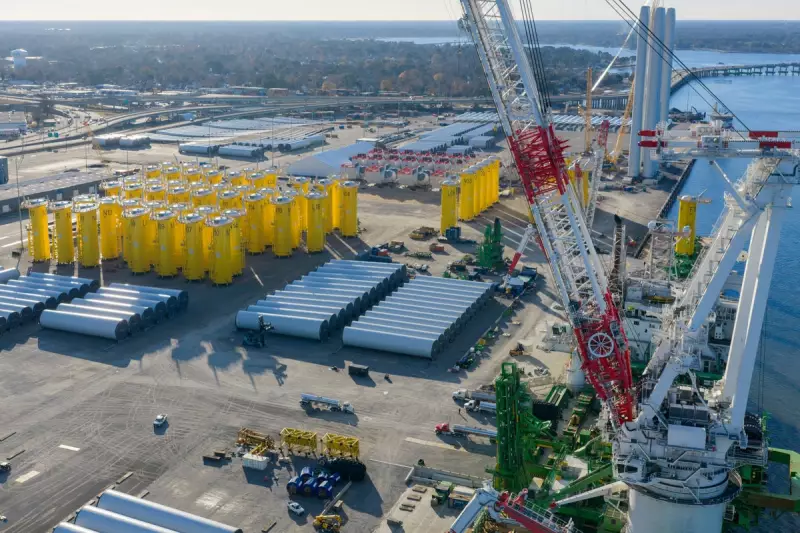
When complete, the Coastal Virginia Offshore Wind project will comprise 176 turbines located roughly 27 miles (43 kilometres) off Virginia Beach, capable of powering approximately 660,000 homes.