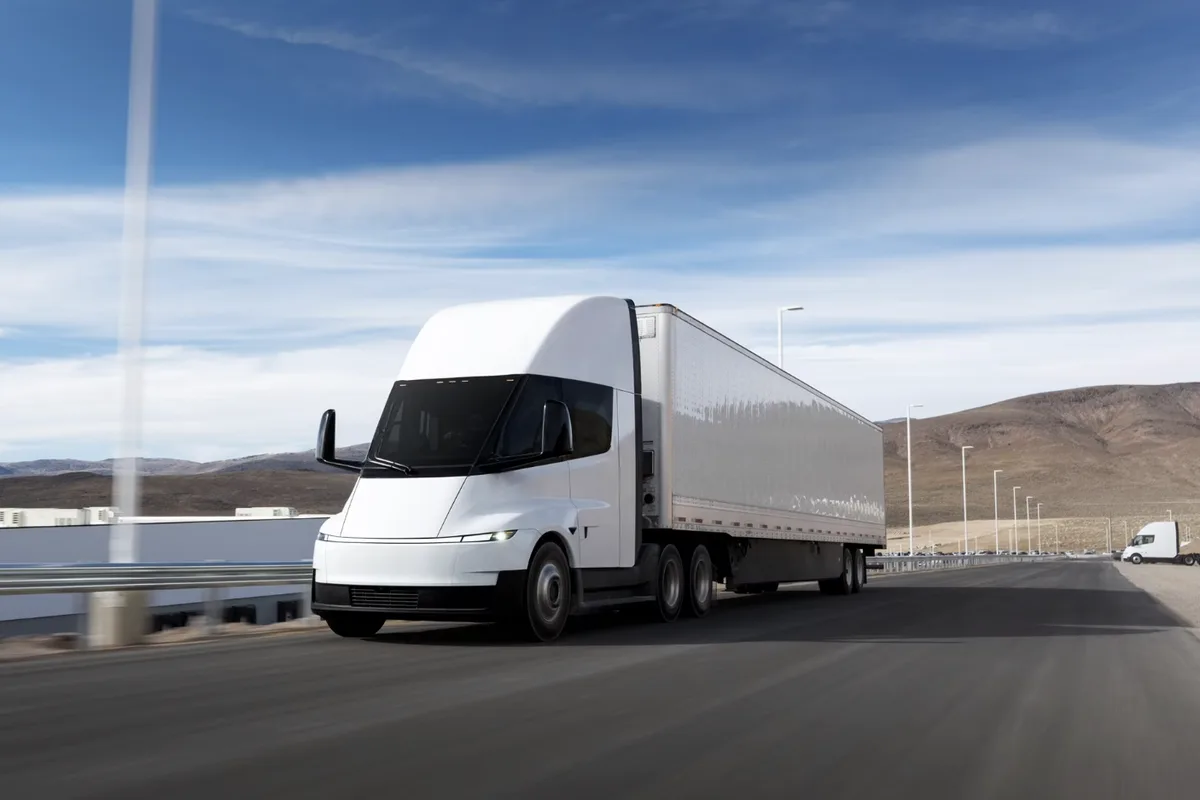
Tesla’s Semi truck has finally entered high-volume production, seven years later than originally planned. The electric truck was first unveiled in 2017, with CEO Elon Musk promising production would begin in 2019. That target was repeatedly pushed back to 2020, 2021, and 2022, before a limited launch on a low-volume pilot line delivered a few early units to PepsiCo.
In 2023, a $3.6 billion expansion of Tesla’s Gigafactory in Nevada included a dedicated high-volume Semi factory, but by 2024 the mass production target was again postponed to 2026. By contrast, Volvo’s electric truck was announced a year after the Tesla Semi was unveiled and entered volume production just a year later. The Swedish automaker is now the global leader in electric truck manufacturing.
Tesla’s missed deadlines follow a pattern of overly optimistic timelines set by Musk at his various companies. The second-generation Tesla Roadster, unveiled alongside the Semi in 2017, was meant to enter production in 2020 but is now scheduled for 2027. Similar delays have affected the company’s Full Self-Driving technology and the production of the Model 3. At SpaceX, Musk has pushed back his timeline for sending rockets to Mars, originally claimed for 2022 with the Starship rocket, which is still undergoing testing as of 2026.
Despite the delays, Tesla says it expects to produce up to 50,000 trucks per year at its 1.7-million-square-foot facility in Texas. When unveiled, Musk claimed the Semi could deliver over 1,000 horsepower and would be “the safest, most comfortable truck ever”. It boasts a 0-100km/h acceleration time of 20 seconds, three times faster than the average fuel-powered semi, with a range of around 500 miles for the Long Range version and 325 miles for the Standard Range version. After testing the truck, Musk said it “feels like a sports car to drive”.