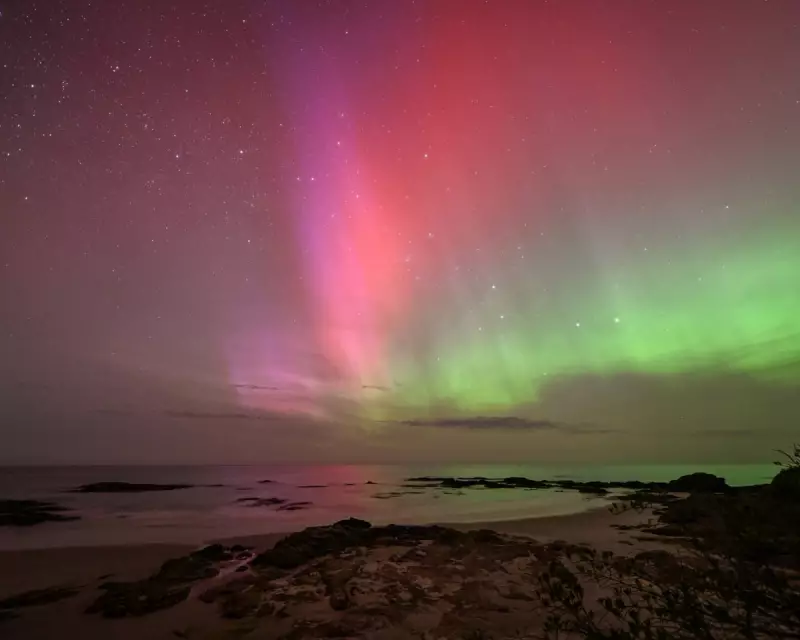
The Australian sky is set for a potentially dramatic light show this weekend, but the celestial spectacle comes with a serious technological warning. The Bureau of Meteorology (BoM) has issued an alert for 20 January, advising that a severe geomagnetic storm in progress could make the aurora australis, or southern lights, visible during night-time hours across parts of the continent.
What is Causing This Solar Event?
According to astrophysicist Sara Webb, a solar storm occurs when a sudden event on the sun's surface ejects particles and plasma into space. "When these storms happen, the particles and plasma can be in direct line of the Earth and end up interacting with our magnetic field," Webb explained. The current event stems from a large flare of energy and material ejected from the sun on 18 January, which began impacting Earth's magnetic field late on 19 January.
This interaction is what creates the awe-inspiring aurora australis. However, Shawn Dahl, service coordinator at the US National Oceanic and Atmospheric Administration (Noaa), noted the intensity of this storm hasn't been seen in more than two decades, raising the potential for both remarkable visibility and significant infrastructure disruption.

Where and When to See the Southern Lights
The BoM states that under good observing conditions—clear skies and minimal artificial light—the aurora may be glimpsed as far north as the middle latitudes of Australia. This includes parts of Victoria and New South Wales.
Hannah Schunker, a physicist at the University of Newcastle, said viewers in New Zealand and Tasmania have the best chance of a vivid display. "The closer you get to a pole the more chances you have of seeing the aurora," she stated. However, she added that recent years have been "very kind to us," and mainland Australians with a clear southern horizon and dark skies might get lucky. The displays can appear at any moment and typically last from 20 minutes to an hour.
Australians won't be the only ones looking up. Webb confirmed that the same solar storm will likely offer a display of the northern lights across many parts of North America and Europe, hours before the southern lights become visible.
Potential Risks to Technology and Infrastructure
Beyond the visual spectacle, the severe solar storm carries risks. Schunker explained that the storm can alter Earth's magnetic field, allowing particles to flow lower into the atmosphere. This can cause the ionosphere to increase in size and density, leading to inaccurate GPS signals and communication errors by affecting satellites in orbit.
More critically, the rapidly changing magnetic field can generate strong electric currents with the potential to severely damage power grids. "Hopefully there will be very little impact for New Zealand or Australia’s power grids or global GPS systems, but there have been severe consequences in the past in other parts of the world," Schunker cautioned. She confirmed that power and satellite companies will be monitoring their systems closely for anomalies.
While Webb said there is no immediate cause for panic, she acknowledged a "non-zero chance that we could see outages or planned shutdowns of power grids and satellite systems." She noted that large geomagnetic storms can affect air traffic control and have grounded planes in the past.
Authorities are monitoring the situation. The National Emergency Management Agency (Nema) told Guardian Australia that no significant impacts are expected for New Zealand, where the storm is likely to be most intense. A spokesperson for Transpower, New Zealand's grid operator, said mitigation actions were not currently needed but a contingency plan was in place, assuring there would be no impact on consumer electricity supply.
For the public, the advice is to prepare for a possible natural wonder while authorities guard against technological fallout. As Webb summarised, "For us humans, we’ll be more than fine and might be lucky enough to see the aurora."