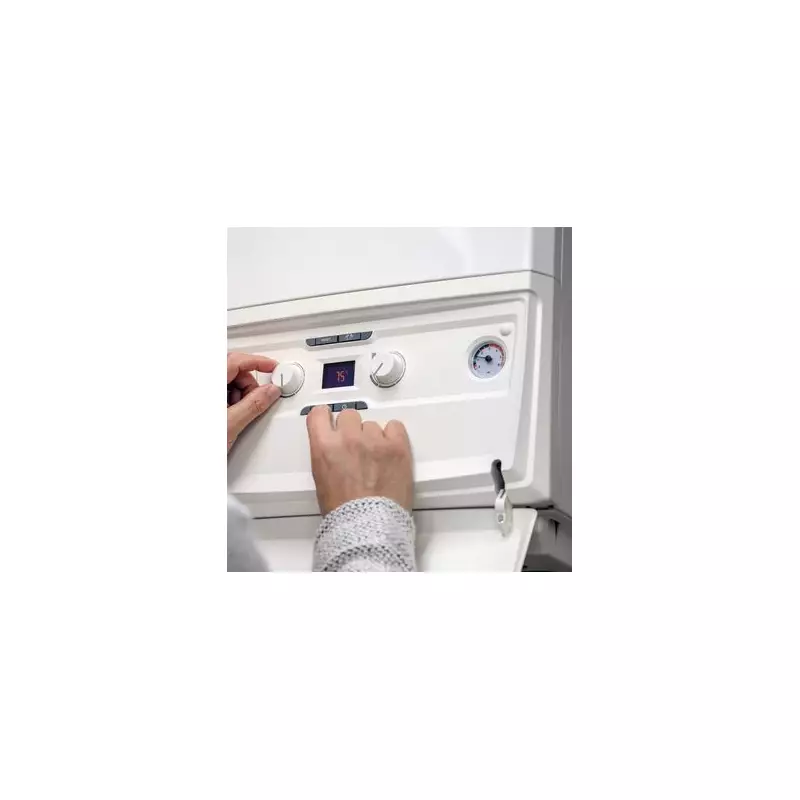
Households across the UK could be needlessly wasting hundreds of pounds on their heating bills this winter due to a single, commonly overlooked setting on their boiler. Consumer experts have identified a simple fix that requires no professional help and can lead to instant savings.
The Tell-Tale Sign You're Wasting Money
According to the consumer champion Which?, a key indicator of energy inefficiency can often be spotted outside your home. For properties with a combi, system, or regular gas boiler, a flue—a pipe that vents exhaust gases—protrudes from an external wall. If you see significant plumes of vapour billowing from this flue when your heating is on, it could be a sign your boiler is working harder than it needs to, burning excess gas and inflating your bills.
The culprit is frequently the boiler's flow temperature, which is the temperature of the water sent to your radiators. Most people have this set too high, often at 70°C or even 80°C, when a lower setting would heat the home just as effectively but far more efficiently.

How Adjusting Your Boiler Saves Gas
Lowering the flow temperature on a modern combi boiler makes it operate more efficiently. This means it uses less gas to reach the same room temperature set on your thermostat, though it may take slightly longer to warm up initially. The savings, however, are substantial.
Groundbreaking research from the Salford Energy House provides concrete evidence. Their tests found that reducing the flow temperature from a typical 80°C down to 60°C resulted in gas usage savings of up to 9%. Taking it a step further to 55°C saw savings jump to up to 12%. Crucially, their model house maintained a comfortable room temperature of 21°C even with these lower flow settings.
Energy supplier EDF confirms this approach, stating that lower flow temperatures create a more efficient boiler that "uses less gas to heat your home to the same temperature, saving you money and reducing your carbon footprint."
How to Make the Change Yourself
Making this cost-cutting adjustment is straightforward. In a recent social media post, a spokesperson for Which? advised: "Turn it down to 60°C, if it doesn't have numbers, then pointing the knob straight up usually does the trick."
It is vital to note that this is not the same as your room thermostat. You should still set your thermostat to your desired comfort level, for example 21°C. The boiler will still achieve this; it just operates in a more economical way. Which? does caution that those with a separate hot water cylinder should seek expert advice before changing settings, as it can affect hot water production.
This boiler tip follows earlier advice from the watchdog on radiator settings, reminding consumers that having all radiator valves on the maximum setting can also lead to higher than necessary bills. Together, these small tweaks can lead to significant financial relief during the ongoing cost of living crisis.