

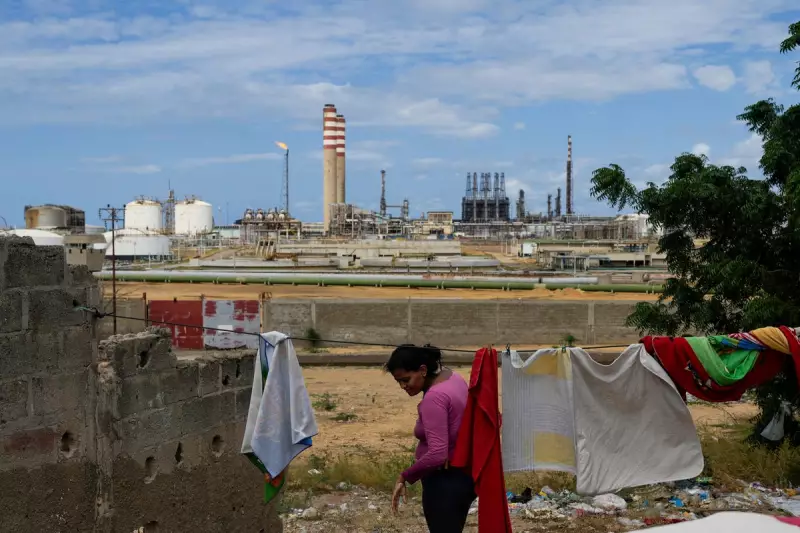
Striking new images have emerged depicting daily life along Venezuela's crucial oil-producing coastline, less than a fortnight after a dramatic U.S. military operation led to the capture of former President Nicolás Maduro and his wife.
A Landscape of Contrasts
The photographs, curated by AP photo editors, focus on the Paraguana Peninsula in northwestern Venezuela. This area is home to the country's largest oil refining complex, a hub that continues to dominate the landscape. The visuals present a study in contrasts, where the industrial might of the energy sector sits alongside traditional coastal communities.
In the waters off the coast, small fishing boats navigate the same stretches as large oil tankers. On land, the daily rhythms of life unfold in settlements nestled close to vast refinery installations, extending out to the region's unique natural features like salt flats and the sweeping sand dunes of the Medanos de Coro National Park.

A Nation in Transition
The release of these photos comes at a pivotal moment for the South American nation. The capture of Maduro on Friday 16 January 2026, marked a seismic shift in the country's political landscape. His successor, Acting President Delcy Rodriguez, has since announced plans to reform Venezuela's troubled energy sector, which holds the world's largest proven oil reserves.
The images offer a ground-level view of the environment in which these proposed reforms will need to take root. They show the deep entanglement of the local economy and community life with the fortunes of the state-owned oil industry.
The Road Ahead for the Oil Coast
While the political drama unfolds at the national level, the photos underscore the enduring reality for those living in the heart of Venezuela's oil country. The infrastructure of the refining hub remains a constant, towering presence. The key question now is how Acting President Rodriguez's promised reforms will impact these coastal communities and the workers who depend on the energy sector for their livelihoods.
The visual narrative suggests a population accustomed to coexisting with the industry's environmental and economic footprint. The coming months will reveal whether the change in leadership and policy direction brings tangible change to the daily lives captured in these frames, or if the rhythm of life along the oil coast continues, largely unchanged, beneath a new political dawn.






