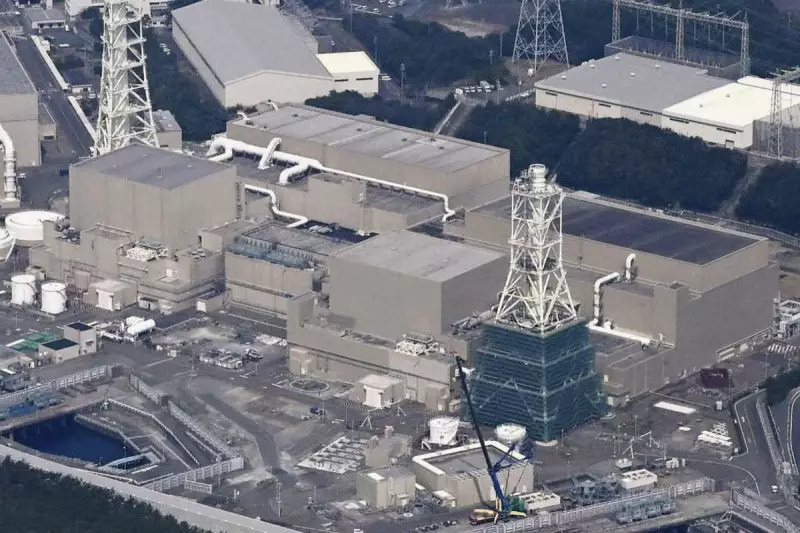
Japan's nuclear energy ambitions have suffered a significant blow after its national watchdog halted a crucial safety review. The action was taken following the discovery that a major power company had fabricated seismic data for a plant located in a high-risk earthquake zone.
Safety Screening Scrapped After Data Falsification
The Nuclear Regulation Authority (NRA) announced on Wednesday, 7 January 2026, that it is scrapping the safety screening process for two reactors at the Hamaoka nuclear power plant in central Japan. This decision came after the plant's operator, Chubu Electric Power Co., was found to have provided falsified data concerning earthquake risks.
The regulator's chair, Shinsuke Yamanaka, stated that the NRA suspended the screening in mid-December after confirming the data manipulation and receiving an acknowledgement from the utility. The NRA is now considering an inspection of the company's headquarters.

"Ensuring safety is the first and foremost responsibility for nuclear plant operators and (data fabrication) is an act of betrayal to their task and one that destroys nuclear safety," Yamanaka said.
Whistleblower Tip Uncovers Years of Fabrication
The scandal came to light after the NRA began an internal investigation in February 2025. This probe was triggered by a tip from a whistleblower alleging that the utility had for years supplied fabricated data that underestimated potential seismic risks.
On Monday, 5 January 2026, Chubu Electric President Kingo Hayashi publicly acknowledged the misconduct. He admitted that workers had used inappropriate seismic data with the alleged intention of downplaying earthquake dangers and offered an apology. Hayashi pledged to establish an independent investigation panel.
The Hamaoka plant, situated roughly 200 kilometres west of Tokyo, is in a coastal area notorious for its vulnerability to powerful Nankai Trough megaquakes. Chubu Electric had applied to restart the plant's No. 3 and No. 4 reactors in 2014 and 2015 respectively. Two other reactors at the site are being decommissioned, while a fifth remains idle.
Major Setback for Japan's Nuclear Energy Policy
This development represents a serious setback for the Japanese government, which has been pushing to accelerate reactor restarts. The policy aims to address rising energy costs and meet carbon emission reduction targets. However, public trust remains fragile following the 2011 Fukushima Daiichi nuclear disaster.
Yamanaka confirmed that the entire safety screening process, including any previously approved data, must now begin again from scratch or face possible outright rejection.
According to the NRA, Japan currently has 57 commercial reactors. Of these, only 13 are operational, 20 are offline, and 24 are undergoing decommissioning. The incident at Hamaoka underscores the profound regulatory and safety challenges facing the country's nuclear sector as it seeks to rebuild public confidence.