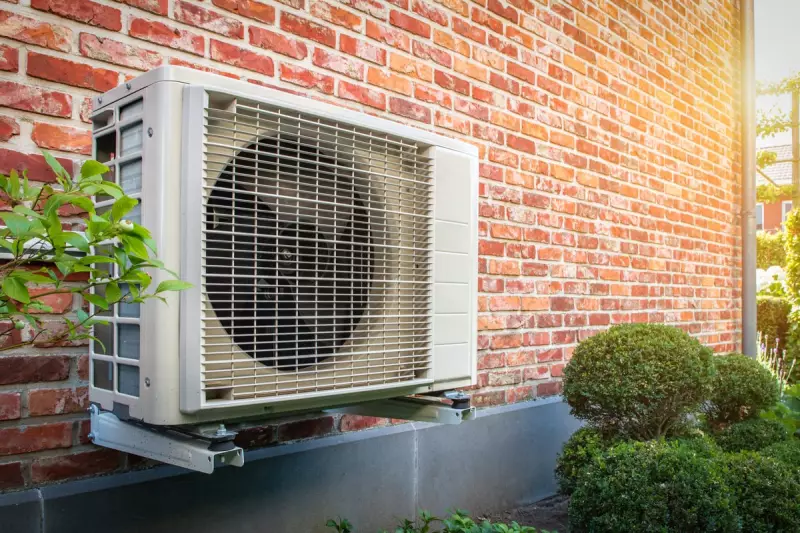
Heat Pump Savings Under Scrutiny as Majority of Owners Report Financial Losses
A comprehensive new survey has raised significant concerns about the financial viability of heat pumps, casting doubt on the widely promoted savings associated with this green heating technology. The research indicates that a substantial majority of households are experiencing higher energy costs after switching to heat pumps, despite the government's push for their adoption as part of the UK's net-zero strategy.
Survey Reveals Widespread Disappointment with Running Costs
Polling conducted by Censuswide, commissioned by the Green Britain Foundation, presents a sobering picture of heat pump performance in real-world conditions. The survey of 1,000 heat pump owners found that 66 per cent of respondents reported their homes were more expensive to heat with the new technology compared to their previous heating systems. This stark finding challenges the narrative that heat pumps consistently deliver financial benefits alongside environmental advantages.
Only 15 per cent of those surveyed said their heating costs had decreased with heat pumps, while 19 per cent reported no significant difference or were uncertain about the financial impact. These results emerge against a backdrop of growing heat pump adoption, with approximately 98,000 units sold in 2024 alone – representing a substantial 64 per cent increase from the previous year.

The Efficiency Paradox: Technology Versus Economics
Heat pumps operate on a fundamentally efficient principle, transferring heat from outside to inside a property and typically producing three to four times more energy than they consume. This makes them significantly more efficient than traditional gas boilers from a technical perspective. However, the economic reality presents a different picture due to the substantial price differential between electricity and gas.
With electricity costing consumers around four times more per unit than gas – averaging 28p per kilowatt-hour compared to just 6p for gas – the running costs often outweigh the efficiency gains. This price disparity creates a challenging economic environment for heat pump owners, particularly those in properties that aren't optimally insulated or suited to the technology.
Substantial Upfront Investment and Government Support
The financial challenges extend beyond running costs to include significant initial investment. Installing a heat pump typically costs around £13,200, compared to approximately £3,000 for a conventional gas boiler. The government's green technology schemes aim to mitigate this barrier, currently offering £7,500 toward new heat pump installations through initiatives like the newly-announced Warm Homes Plan.
This £15 billion programme represents a substantial commitment to supporting household transitions to greener heating solutions. A government official emphasised that "together with a time of use tariff, they can save households £130 a year on their energy bills compared to having a gas boiler," highlighting the potential benefits when combined with appropriate energy pricing structures.
Industry Voices Express Concerns About Mis-selling
Dale Vince, green energy leader and founder of the Green Britain Foundation, has voiced strong concerns about how heat pumps are being marketed to consumers. The Ecotricity owner told The Times that households are being "mis-sold" the technology, noting that significant savings primarily materialise in "really modern, well insulated homes" – a scenario he describes as "very rare."
Vince characterised the reality for most households as "a disappointment, an expensive one," suggesting that expectations have been set unrealistically high regarding the financial benefits of heat pump adoption.
Variable Outcomes Depending on Existing Heating Systems
Research from the Energy Saving Trust reveals that the financial impact of switching to heat pumps varies considerably depending on the type of boiler being replaced. Households replacing old, inefficient G-rated gas boilers could save approximately £260 annually, while those replacing G-rated oil boilers might save around £65 per year.

However, the picture reverses for those with newer, more efficient heating systems. Replacing an A-rated gas boiler could result in an annual loss of about £40, while switching from an A-rated oil boiler might lead to substantial losses of approximately £220 per year. These figures are expected to remain relatively stable throughout 2026, as energy experts anticipate minimal fluctuations in Ofgem's price cap.
Balancing Environmental Benefits with Economic Realities
The debate surrounding heat pumps highlights the complex balance between environmental objectives and household economics. While the technology undoubtedly represents a cleaner alternative to fossil fuel-based heating – producing no direct carbon emissions during operation – the current economic model presents challenges for widespread adoption.
The government maintains that its comprehensive support package, combined with efforts to reduce electricity costs, will make heat pumps increasingly accessible and financially viable for British households. However, the survey results suggest that for many current owners, the promised savings have yet to materialise, raising important questions about how the transition to green heating can be managed more effectively to benefit both the environment and household budgets.