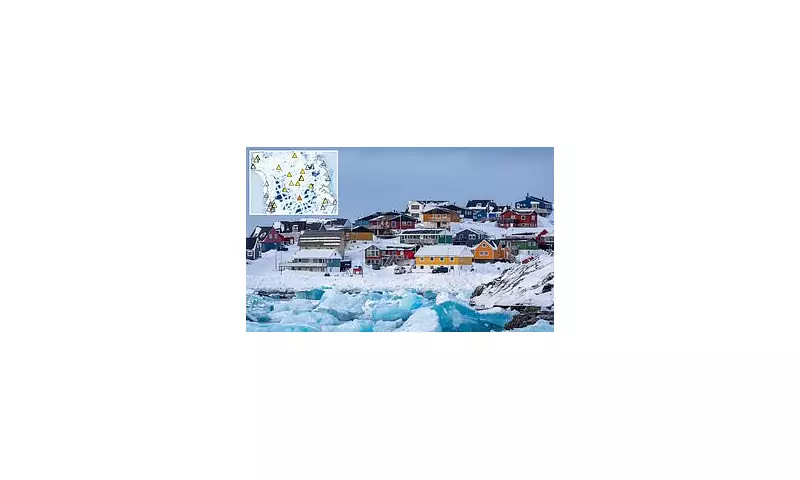
Scientists have uncovered a major geological vulnerability hidden deep beneath Greenland's vast ice sheet, a discovery that could hasten the sheet's collapse and throw a significant spanner in the works of long-held American ambitions for the Arctic territory.
The Slippery Foundation Accelerating Melt
A groundbreaking new study has identified a widespread, previously hidden layer of sediment composed of soft dirt and sand lying under much of Greenland's ice. This layer is acting as a lubricant, driving increased rates of glacial melting, fracturing, and collapse into the ocean. The research, spearheaded by Yan Yang from the University of California, San Diego, indicates the ice sheet is far less stable than if it were anchored directly to solid bedrock.
The sediment reduces friction, especially as meltwater from the surface seeps down, allowing colossal masses of ice to slide more easily towards the sea. Yang's team used data from 373 seismic monitoring stations across Greenland, analysing how earthquake vibrations travelled through the ground. Delays in these signals revealed the presence and thickness of the soft sedimentary layer, which varies dramatically from about 15 feet to over 1,000 feet deep in places.

Implications for Resources and Geopolitics
This discovery carries profound implications beyond climate science, directly impacting geopolitical and economic interests. The Trump Administration has repeatedly prioritised gaining full control of Greenland, citing its strategic Arctic location and wealth of natural resources, including oil, gold, rare earth elements, copper, and iron.
However, the newly mapped sediment layer presents a formidable obstacle. Mining and drilling operations require a stable, frozen bedrock base for safety and efficiency. The study warns that hundreds of feet of soft sediment can repeatedly clog drill bits, leading to stalled progress, damaged equipment, and frequent operational shutdowns in unstable areas. Furthermore, increased iceberg calving from accelerated glacial collapse would heighten risks and costs for any offshore oil rigs.
On Monday, former President Trump reportedly reiterated demands for the US to take control of Greenland, arguing Denmark could not protect it from rivals like Russia and China. Although a 1941 agreement already permits US military facilities on the island, full control is seen by some as a strategic necessity to block adversaries.
A More Vulnerable Future
The research, published in the journal Geology, suggests that some regions of Greenland may be more vulnerable to climate change than current models predict. "If more meltwater reaches the bed, these sediments may further reduce strength, speed up ice flow, and increase ice loss to the ocean," Yang cautioned. This process is already contributing to global sea-level rise.
The findings align with separate 2022 and 2024 studies in The Cryosphere and Annals of Glaciology, which highlighted the technical challenges of drilling in such unstable, sediment-rich subglacial environments—problems that have previously derailed campaigns in Antarctica. The dream of easily tapping Greenland's buried riches now faces a gritty reality check, with the very ground beneath the ice threatening to undermine both environmental stability and geopolitical plans.