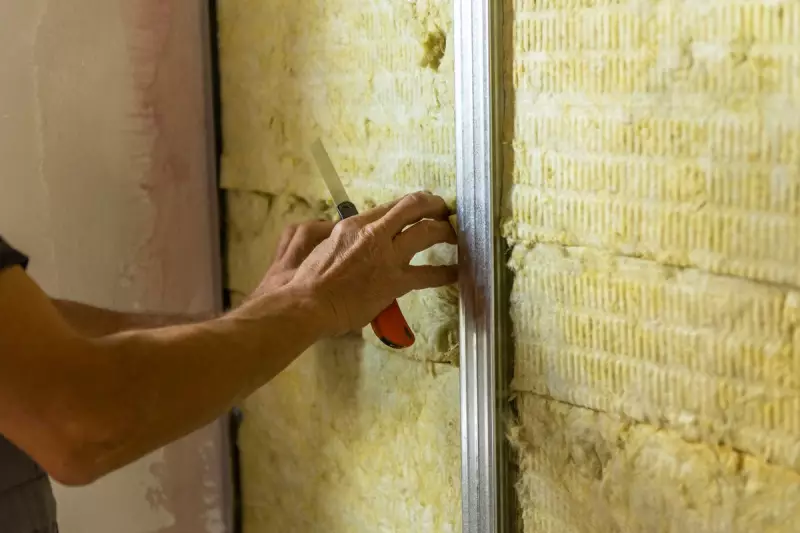
A devastating parliamentary report has exposed what senior MPs are calling a "catastrophic fiasco" in a government-backed energy efficiency scheme that has left tens of thousands of homeowners facing repair bills of up to £230,000 for defective insulation work.
Systemic Failure in Energy Efficiency Programme
The Public Accounts Committee has published findings describing the "abject failure" of the Energy Company Obligation (ECO) programme, which was designed to help households improve their energy efficiency through insulation installations. The scheme, which targeted households with incomes under £31,000 or those with severe long-term health conditions, has instead created what committee chair Sir Geoffrey Clifton-Brown calls "the most catastrophic fiasco" he has witnessed in twelve years on the committee.
Alarming Statistics Reveal Scale of Problem
The National Audit Office previously discovered that external wall insulation installed under the ECO scheme was defective in a staggering 98 percent of cases, presenting immediate health and safety risks to residents. Despite these alarming findings, the issue remained undetected until October 2024, more than two years after the scheme's implementation.

By September 2025, only 3,000 of the estimated 30,000 affected homes had been properly identified and repaired, leaving the vast majority of households still living with potentially dangerous conditions. The Commons spending watchdog has expressed serious concerns about whether original installers have sufficient resources to handle the scale of potential claims now that they have been made liable for repairs.
Financial Burden on Vulnerable Households
Perhaps most concerning is the financial exposure facing affected homeowners. The government has promised that no one should have to pay to resolve the issues, but the committee warns that this assurance lacks substance, particularly given that repair costs in some cases exceed £230,000 - far beyond the government's £20,000 cap.
Fuel Poverty Action spokesperson Jonathan Bean highlighted the human impact, stating: "The Government home retrofit scandal is growing, and before continuing down the same path ministers need to focus on fixing the already damaged homes and ending the suffering of the tens of thousands of often vulnerable people who live in them."
Root Causes and Government Response
The investigation identified several contributing factors to the widespread failure, including work being subcontracted to incompetent firms and individuals, businesses cutting corners to reduce costs, and significant uncertainty around quality standards. These systemic issues created what Minister for Energy Consumers Martin McCluskey described as "a broken system from the previous Government" with "multiple points of failure."
The Department for Energy Security and Net Zero is currently collaborating with Ofgem and TrustMark to conduct comprehensive audits to establish the full extent of the problem. According to the minister, over 50 percent of non-compliant properties identified to date have been remediated, and the government has taken the decision to terminate the ECO scheme entirely.
Broader Implications for Green Energy Policy
This scandal emerges at a particularly sensitive time, coinciding with the government's announcement of a £15 billion Warm Homes Plan designed to help homeowners access green technology like solar panels and heat pumps through free installations or low-interest loans. MPs and campaigners warn that public trust in such initiatives has been severely damaged and must be restored before further schemes can succeed.
Sir Geoffrey Clifton-Brown emphasised: "The public's confidence will have rightly been shaken in retrofit schemes given what has happened, and government now has a self-inflicted job of work on its hands to restore faith in the action required to bring down bills and reduce emissions."
Jonathan Bean echoed these concerns, warning of a "huge risk that history will repeat itself" with the Warm Homes Plan potentially becoming "an even bigger fiasco" unless fundamental changes are implemented.

Path Forward and Systemic Reforms
The government has outlined several measures to address the crisis and prevent future failures. These include shifting investment from the failed ECO scheme to local authorities, which reportedly have a significantly better delivery record, and establishing a new Warm Homes Agency to provide stronger government oversight of retrofit work.
Minister McCluskey stated: "We are reforming the system of consumer protection to better protect people. We will establish a new Warm Homes Agency, bringing in a single system for retrofit work to provide stronger, formal government oversight and driving up quality."
Campaigners continue to demand more concrete action, with calls for a public inquiry into what they describe as a growing scandal affecting some of the country's most vulnerable households. The fundamental question remains whether the government can effectively clean up what one MP called "this mess" while simultaneously launching ambitious new green energy initiatives.