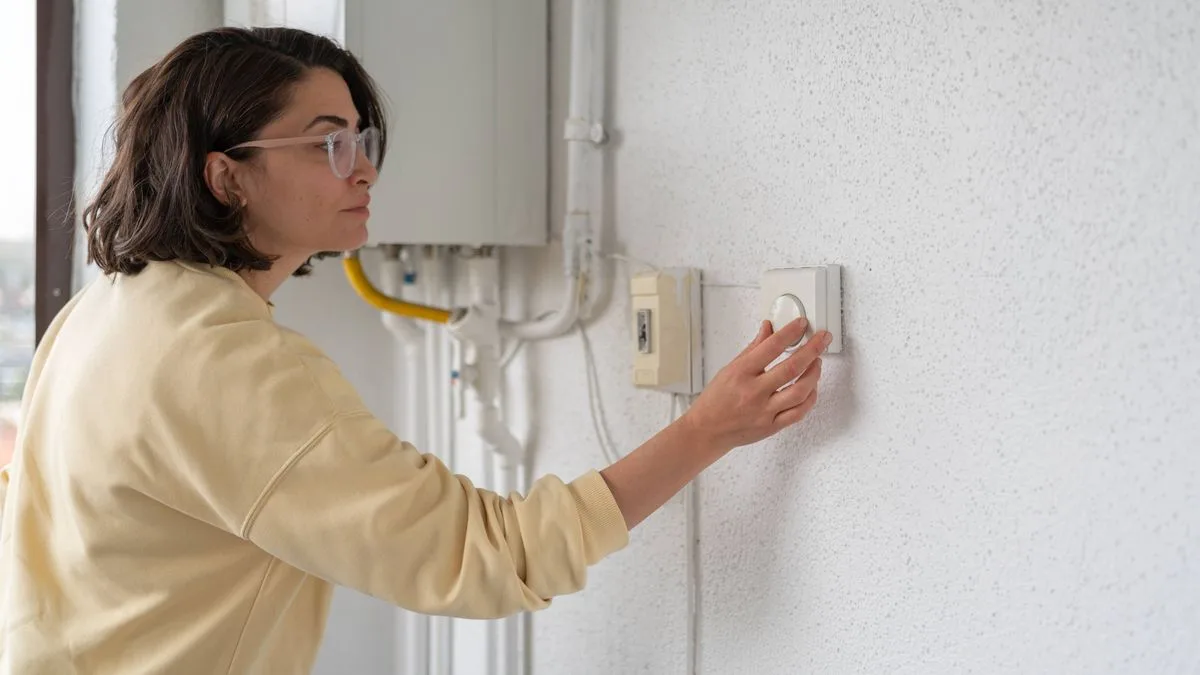
Households across Britain are being urged to check their boiler's flow temperature, a simple adjustment that could save up to £112 a year on heating bills. While many focus on lowering the thermostat, experts say reducing the boiler flow temperature from the default 75–80°C to around 60°C can cut gas use by up to 12% without compromising comfort.
Plumbing expert Zhelyazko Yanchev of My Plumber explained: 'Most boilers are set unnecessarily high. Reducing the flow temperature to around 60°C can make a condensing boiler run more efficiently by allowing it to condense properly, cutting gas use without sacrificing comfort.'
Sam Carter, radiator specialist at Appliances Direct, added: 'Lowering your boiler flow temperature from 80°C to 60°C can reduce your gas use by up to 9% according to EDF, and dropping it to 55°C could save as much as 12%.' Octopus Energy also recommends a setting of 55–60°C, noting potential savings of up to £65 a year according to Nesta.
Zoe Morris from VoucherCodes.co.uk highlighted that most combi boilers are set to around 75°C by default, which is often higher than necessary. 'By reducing the flow temperature to around 60°C your boiler doesn't have to work as hard, which means it uses less gas and costs less to run,' she said. 'You won't notice much difference in warmth, but you could see a noticeable drop in your bills.'
The Energy Saving Trust confirms that adjusting the boiler flow temperature 'can save you both energy and money'. Unlike the thermostat, which controls room temperature, the flow temperature determines how hot the water is when it leaves the boiler for the radiators. For combi boilers, the radiator setting (often marked with a radiator icon) should be adjusted, while conventional boilers with a hot water cylinder have a single dial.