Germany's Ex-Minister Warns of Global 'Weaponisation of Everything' Post-Trump
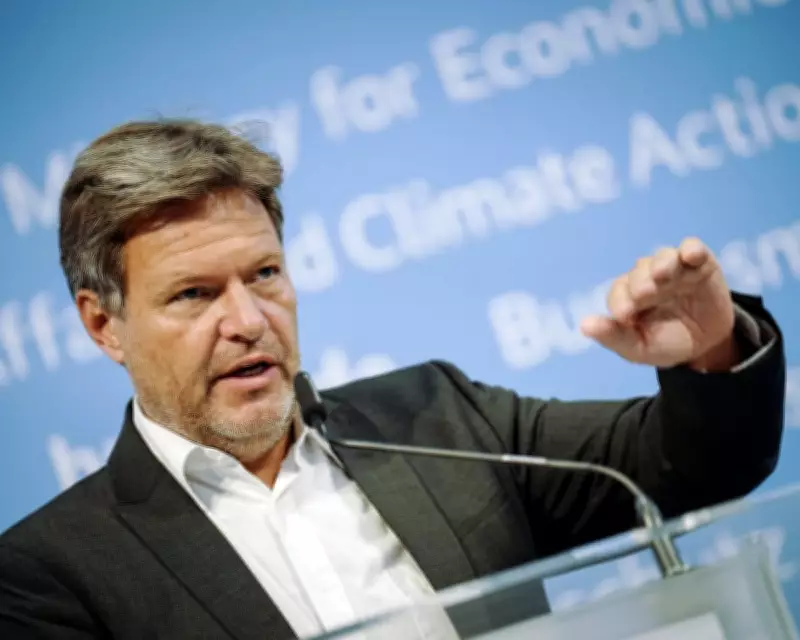
Robert Habeck, the former German economy minister and Green politician, has issued a stark warning that the world has moved beyond the weaponisation of energy to a broader 'weaponisation of everything' since Donald Trump's re-election to the White House. Habeck, who was responsible for managing Germany's energy security during the crisis triggered by Russia's invasion of Ukraine, described this shift as having 'dramatic, drastic, and far-reaching' consequences for global stability.
From Energy to Tariffs and Technology
In an interview, Habeck reflected on how the belief that gas would never be used as a political weapon led previous German governments into a trap with Russia, particularly through investments in the Nord Stream pipelines and the sale of strategic reserves to Gazprom. He noted that Russia emptied these reserves just before the invasion, exacerbating the energy shock. However, he emphasised that Trump's return has escalated tensions, with tariffs and technology now being deployed as weapons in international relations.
'From weaponising energy – bad enough – to weaponising everything, this is the lesson I hope everyone has learned,' said Habeck, who served as vice-chancellor in Germany's last coalition government. He pointed to recent events, such as the US and Israel's attack on Iran in February, which led to retaliatory strikes closing the Strait of Hormuz, a critical chokepoint for 20% of global oil and liquefied natural gas flows. This has sparked renewed energy price spikes and calls for Europe to accelerate its transition to clean, local energy sources.

Sleepless Nights and Crisis Management
Recalling the intense pressure of the Ukraine war energy crisis, Habeck admitted to facing 'sleepless nights' over the prospect of having to order industrial closures if gas supplies failed. He raced to build LNG terminals and secure alternative gas supplies, a move he defended against criticisms that it risked creating stranded assets as Germany pursues pollution cuts. 'The gas prices now in Germany might be high,' he said. 'But that time there was a real threat that we don't have any gas at all.'
Habeck also addressed his controversial decision in 2022 to delay the shutdown of Germany's final nuclear power plants by only a few months, rather than allowing refuelling for longer operation. He stated that he personally would not have opposed using the reactors for a few more years, but feared that changing the rules could undermine the renewable energy market. 'Parts of the opposition had seemed to be using it as a 'Trojan horse' to reopen the phaseout law,' he explained.
Nuclear Fears and Renewable Progress
Reflecting on nuclear power, Habeck said he has grown 'kind of agnostic' about its risks in Germany but vividly remembers the Chornobyl disaster in 1986, which spread radiation across Europe. 'There was no dancing in the rain, there was no kissing in the rain, there was no sleeping at the beach, because there was nuclear fallout everywhere,' he recalled. 'We basically stayed at home, and I really said at the age of 16, this is not the form of energy that should govern my life.'
Despite these challenges, Germany has made significant strides, with renewables accounting for 60% of its electricity last year, supplemented by coal and gas. The Ukraine war accelerated EU permitting for wind and solar projects, though analysts note slow progress in reducing energy demand and electrifying sectors like transport and heating.
Policy Backlash and Political Fallout
Habeck's policies, such as turning down thermostats in public buildings to 18C – leading to staff wearing winter jackets at their desks – and phasing out gas boilers, faced fierce opposition. Tabloids dubbed it 'Habeck's heating hammer,' and the renewable energy requirements are now being diluted by the current conservative-led coalition. Speaking from Copenhagen, where he works as an analyst, Habeck noted that Nordic countries laugh at Germany's resistance to clean heating solutions like heat pumps.

He admitted underestimating public frustration with inflation and personal interference, as well as resistance from gas company owners who, despite acknowledging climate threats, prioritised their business interests. The Greens were voted out of government in February 2025 amid a decline in climate salience and economic criticisms, though they recently won state elections in Baden-Württemberg, a positive sign for the party.
Looking ahead, Habeck expressed cautious optimism: 'I would say Germany has made its peace with a different form of heat systems, and electric vehicles are now really increasing. So yes, too late – and not only a month or a year but 10 years too late, looking to other countries – but due to the hard-fought decisions [it's] basically on the right track now.'