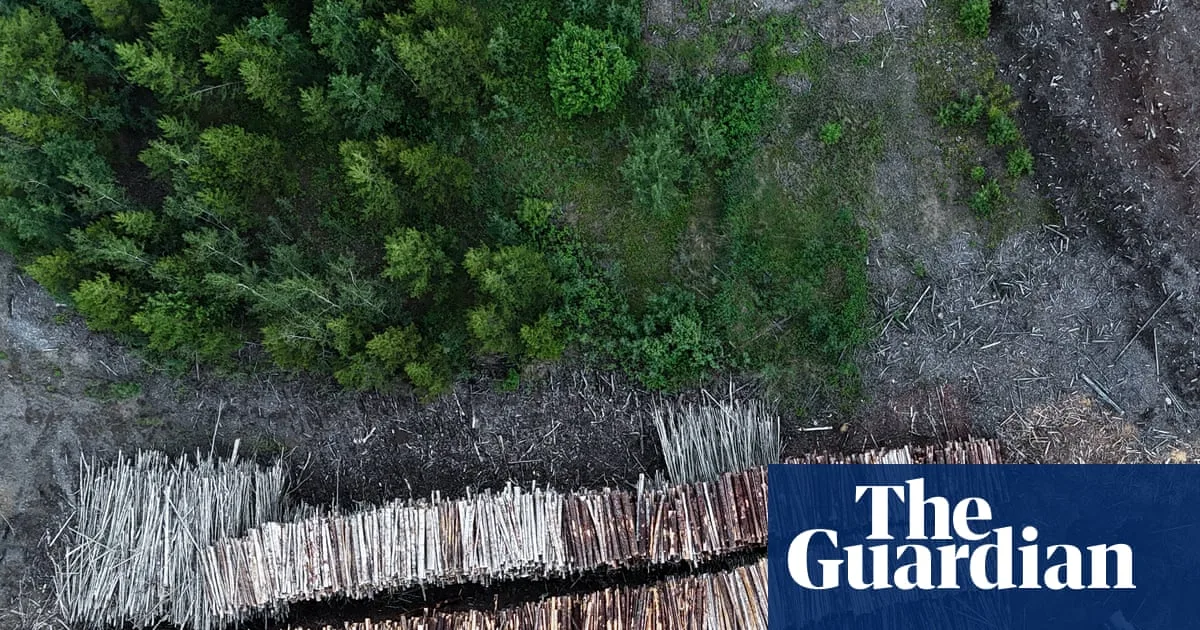
Drax power plant has continued to burn 250-year-old trees sourced from some of Canada’s oldest forests, despite growing scrutiny of its sustainability claims, according to a new report by Stand.earth, a Canadian environmental non-profit.
The report suggests it is “highly likely” that Britain’s biggest power plant sourced wood from ecologically valuable forests as recently as this summer. Drax, Britain’s single biggest source of carbon emissions, has received billions of pounds in subsidies from burning biomass derived largely from wood.
Stand.earth claims that a subsidiary of Drax Group received hundreds of truckloads of whole logs at its biomass pellet sites throughout 2024 and into 2025, which were likely to have included trees that were hundreds of years old. The report uses official data from the government of British Columbia, along with satellite monitoring, to back its claims.
Drax has claimed that it sources wood only from “well-managed, sustainable forests” to manufacture the pellets shipped from its sites in Canada and the US to be burned at its UK power plant. However, the latest investigation claims that the company received 90 truckloads of logs sourced from “old-growth forests” in the Skeena region of British Columbia, home to some of Canada’s largest undeveloped wilderness areas.
Old-growth forests are defined by the local government as areas that include trees older than 250 years in slow-growth ecosystems, or older than 140 years in ecosystems where trees are replaced more quickly. Drax said in October 2023 it had stopped sourcing wood from areas designated as “protected” or “deferred” old-growth forest stands, but it did not dispute that it was still sourcing wood from other sites containing old growth.
Responding to the report, a spokesperson for Drax said: “Our sourcing policy means Drax does not source biomass from designated areas of old growth and only sources woody biomass from well-managed, sustainable forests.” However, these designated areas amount to less than half of the total old-growth forest areas in British Columbia.