Arkansas's $2.3 Trillion Lithium Treasure Trove Poised to Supercharge American Economy
The United States stands on the brink of unlocking a monumental $2.3 trillion reserve of so-called 'white gold' that promises to revolutionise the nation's economic and industrial landscape for generations. Groundbreaking chemical extraction technology is set to tap into an estimated 19 million tons of lithium buried deep beneath southwest Arkansas, heralding a new era of energy independence and manufacturing prowess.
Direct Lithium Extraction: The Technological Key
Officials from Standard Lithium have confirmed that their pioneering Direct Lithium Extraction (DLE) process will enable commercial harvesting of this vital resource by 2028. Lithium, often dubbed white gold for its immense value, is a critical mineral essential for manufacturing batteries in electric vehicles, smartphones, and countless digital devices. Its applications extend far beyond consumer electronics, playing crucial roles in pharmaceuticals, advanced glass and ceramics production, and sophisticated military equipment.
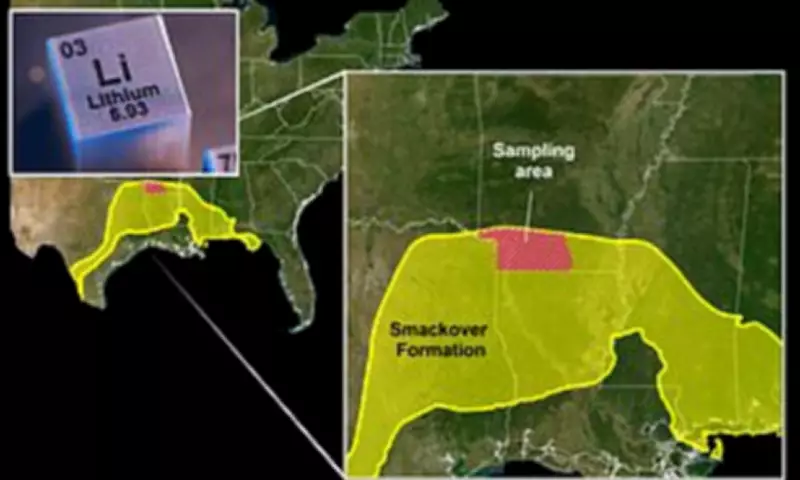
A recent scientific assessment has revealed staggering potential within the Smackover Formation, a colossal limestone slab dating back approximately 200 million years to the Jurassic period. Researchers estimate this geological formation contains sufficient lithium to meet the entire projected global demand for electric car batteries in 2030 nine times over, fundamentally altering global supply dynamics.

Transforming National Security and Economic Independence
The 2024 valuation of 19 million tons within Arkansas alone possesses the capacity to completely eliminate America's current reliance on Chinese lithium imports. China presently dominates the market, controlling roughly 70 percent of worldwide lithium supply—a strategic vulnerability this discovery directly addresses.
Katherine Knierim from the US Geological Survey (USGS) emphasised the scale, stating: 'We estimate there is enough dissolved lithium present in that region to replace US imports of lithium and more.' This assessment underscores how the Smackover Formation could reposition the United States as a dominant global lithium supplier within just two years.
Innovative Extraction and Environmental Considerations
The DLE process represents a significant technological leap. Miners will pump lithium-rich saltwater, or brine, from deep underground reservoirs in Arkansas through specialised filtration materials that selectively capture lithium ions while leaving other minerals largely intact. This creates a purified lithium chloride solution which undergoes further refinement.
Notably, the processed groundwater is returned to the earth within 24 hours, minimising environmental disruption. Subsequent steps involve reverse osmosis—a high-pressure filtering system that concentrates the lithium—followed by chemical treatments to remove impurities like calcium, magnesium, sodium, and boron. A final reaction with soda ash converts the solution into battery-grade lithium carbonate crystals.
Substantial Investment and Job Creation
Supported by a substantial $225 million federal grant, Standard Lithium is constructing a major processing plant in Lewisville, Arkansas, expected to create hundreds of local jobs. Andy Robinson, President and Chief Operating Officer of Standard Lithium, explained the breakthrough: 'This beneath our feet is an unconventional lithium resource. It hasn't been developed today because it needed a new technology to unlock it.'
The DLE technology, patented in 2022 and fully commercialised in 2024 after years of development and partnership testing since 2018, continues to be refined. Robinson highlighted the broader strategic importance: 'This is about having control over the resources that you need in your society, your warfighter, your military, your industrial complex. Everyone will need access to this particular critical mineral for the foreseeable decades.'

The Smackover Formation's Legacy and Potential
The Smackover Formation stretches across several southern states including Texas, Arkansas, Louisiana, Mississippi, Alabama, and Florida. For decades, this geological 'sponge' has yielded oil, natural gas, and bromine—with lithium accidentally surfacing in drilling waste. The USGS study, published in Science Advances, indicates this discovery could yield 100 million tons of lithium carbonate crystals.
To contextualise the scale: a typical smartphone battery requires merely five to seven grams of lithium carbonate. If maximum estimates prove accurate, the Arkansas deposit alone could theoretically produce 20 trillion smartphone batteries. Even conservative estimates of 5.1 million tons would supply one-third of America's total lithium needs, marking a transformative shift in domestic resource security and clean energy advancement.