

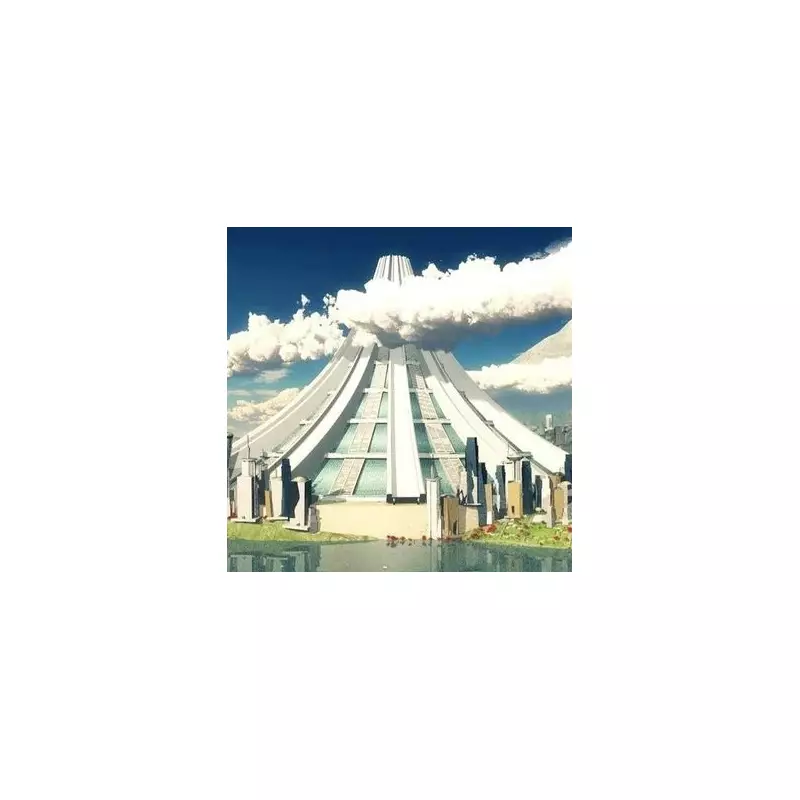
In the world of architectural ambition, few concepts capture the imagination like the X-Seed 4000. Conceived in 1995, this staggering proposal envisioned a skyscraper so vast it would dwarf all existing structures, reaching an astonishing 4 kilometres (2.5 miles) into the sky. This titanic tower, designed to be a self-contained floating metropolis, remains one of the most audacious unrealised dreams in construction history.
The Vision: A Mountain-Sized Metropolis
The brainchild of Japanese construction giant Taisei Corporation, the X-Seed 4000 was more than just a building; it was conceived as a vertical city. Its design, inspired by the iconic silhouette of Mount Fuji, featured a broad, stable base tapering to a peak. This shape was chosen not just for aesthetics but for structural integrity, aiming to withstand oceanic forces and seismic activity in its proposed location on Tokyo Bay.
The scale of the project is almost incomprehensible. At four kilometres high, it would stand just under half the height of Mount Everest and be a staggering five times taller than the Burj Khalifa in Dubai, which currently holds the title of world's tallest building at 828 metres. The design called for 800 floors, providing living space for between 500,000 and one million residents.

Engineering and Economic Hurdles
The technical challenges were as monumental as the design itself. Construction would have required an estimated 3,000,000 tons of steel. Engineers would have needed to regulate internal air pressure to prevent altitude sickness for those living in the upper reaches. The vision extended beyond apartments, incorporating business centres, commercial districts, recreational facilities, and research institutions within its 6-kilometre-wide base.
However, the dream collided with the reality of feasibility. According to architect and author Erik Howeler, while such a structure might be "possible" from an engineering perspective, the estimated $1 trillion cost presented a colossal barrier. Securing permission for a building casting such long shadows and creating significant downdrafts at its base would have been another major obstacle. George Blinder of Buildings & Data suggested the concept was primarily a publicity exercise, stating: "It was never meant to be built. The purpose of the plan was to earn some recognition for the firm, and it worked."
A Legacy on the Shelf
Despite brief rumours of a revival in 2007, the project was officially shelved. Shohei Ogawa, a planning manager at Taisei, confirmed the X-Seed 4000 was "on the shelf now," describing it as a "dream proposal for the technological advances we thought could happen in the future."
The concept recently resurfaced in online discussions, where social media users compared its design to sci-fi cities from Halo 2 and Transformers 2, while others pondered the practical nightmare of a broken elevator for someone living on the 657th floor. Comments also highlighted environmental and resource concerns, questioning the wisdom of such a monumental undertaking.
Ultimately, the X-Seed 4000 stands as a powerful symbol of human ambition and a testament to the boundaries of architectural imagination. It serves as a reminder that while technology may one day catch up to our grandest visions, the interplay of economics, practicality, and environmental responsibility will always shape the skyline of our future.






