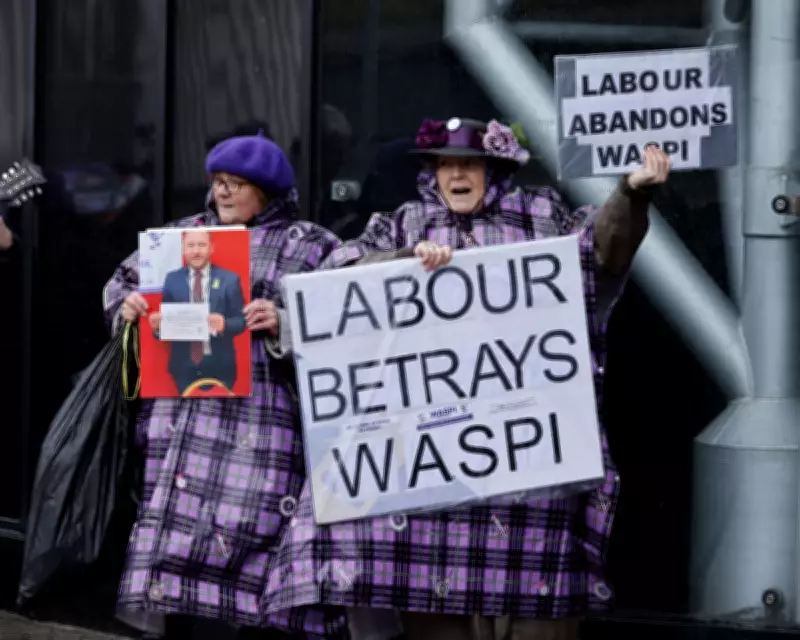
Government Rejects Compensation for 3.6 Million Waspi Women Again
In a move that has dashed the hopes of campaigners, the government has once again ruled out providing compensation to millions of women known as the "Waspi women." This latest decision affects up to 3.6 million women born in the 1950s who argue they have suffered significant financial losses due to changes in the state pension age.
Background of the Waspi Campaign
The Waspi campaign, which stands for Women Against State Pension Inequality, was launched in 2015 in response to government failings in the way changes to the state pension age were implemented. For decades, the state pension age for women was set at 60. However, legislation in 1995 began phasing in an increase to 65 to align with men, a process that was accelerated by the coalition government in 2011.
As a result, the state pension age for women rose to 65 by November 2018 and further increased to 66 by October 2020. Campaigners claim that many women were unaware of these changes, leading to disrupted retirement plans and financial hardship, with some discovering the increase only after leaving the workforce.

Government's Stance and Rationale
Work and Pensions Secretary Pat McFadden announced that after reviewing the evidence, the government has upheld its previous decision from December 2024, denying any payouts to the affected women. He argued that a flat-rate compensation scheme for all women born in the 1950s would cost up to £10.3 billion and would not be fair, as most women were aware of the pension changes.
McFadden also stated that it would not be practical to establish a targeted scheme to identify only those who suffered injustice. This ruling comes just over a year after ministers initially denied compensation, despite a March 2024 ruling by the Parliamentary and Health Service Ombudsman that recommended compensation for those affected.
Campaigners' Response and Future Actions
Angela Madden, chair of Waspi, expressed outrage at the decision, accusing the government of showing "utter contempt" for 1950s-born women, parliament, and the ombudsman. She emphasised that the group is taking legal advice and that all options remain on the table to pursue justice through parliament and the courts.
Madden described the decision as a "disgraceful political choice" by a small group of powerful individuals who have disregarded the harm suffered by millions of ordinary women. Campaigners argue that the Department for Work and Pensions' handling of the pension age increase has left many women thousands of pounds out of pocket and struggling with living costs.
Impact and Broader Implications
The number of individuals affected could reach up to 3.6 million if every woman born in the 1950s and the first three months of 1960 is included. This issue highlights ongoing concerns about pension inequality and the financial security of older people in the UK.
Despite the government's stance, the Waspi campaign vows to continue its fight, underscoring the deep-seated frustrations over what they perceive as a systemic injustice. The case raises important questions about transparency in policymaking and the long-term effects of legislative changes on vulnerable groups.