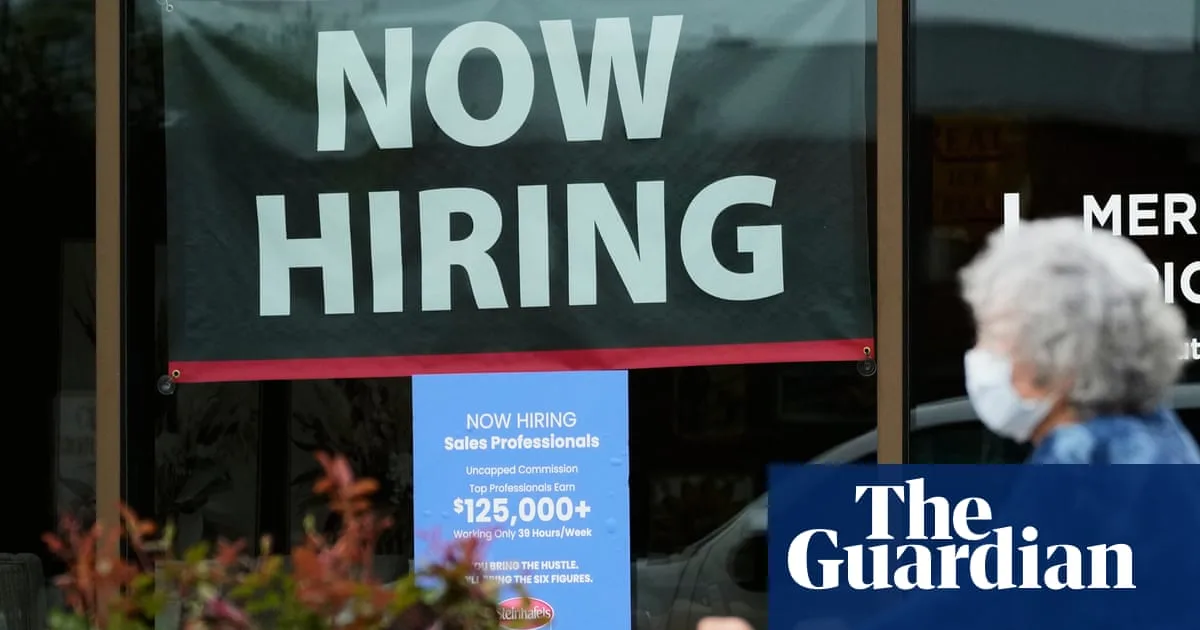
US employers added just 57,000 new jobs in June, roughly half the number economists had predicted, as the labour market showed further signs of cooling. The Bureau of Labor Statistics also revised down its figures for the previous two months by a total of 74,000.
The unemployment rate edged down to 4.2%, although the number of unemployed people changed little as 720,000 individuals left the labour force. May's initially reported gain of 172,000 jobs was revised to 129,000, and April's from 179,000 to 148,000.
Despite the shortfall, the three-month average of 111,000 new jobs per month points to a relatively robust market, albeit slower than earlier in the year. The figures remain well above the sluggish pace seen last autumn and winter.
Private employers added 98,000 jobs in June, with annual pay rising 4.4% for those who stayed in their roles. Workers in finance saw the highest pay rise at 5%. The healthcare sector, a key driver of recent gains, added 22,000 jobs—a slower pace than its monthly average of 38,000—while hospitality and leisure unexpectedly shed 61,000 jobs, reflecting weaker seasonal hiring despite the World Cup.
“The pace of hiring is telling a story of both supply and demand,” said Dr Nela Richardson, ADP’s chief economist. “We know it’s taking people longer to find work, but there also are signs of labour supply constraints in certain industries. For now, the overall effect is a slowdown in job creation.”
The data make it more likely that the Federal Reserve will continue to focus on inflation at its next meeting in late July. Chair Kevin Warsh has emphasised “price stability” and the 2% inflation target, though he recently noted that “inflation risks have come down”. The Middle East conflict has pushed inflation to 4.2%, and it remains unclear whether June's figures, due later this month, will reflect the latest diplomatic efforts.