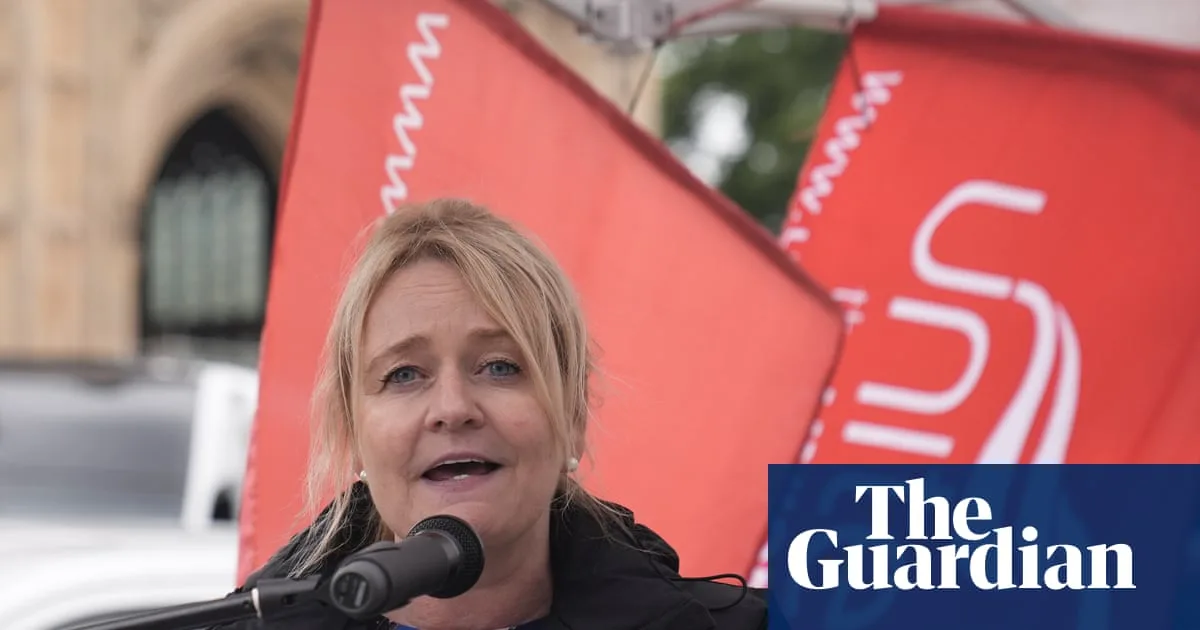
Sharon Graham, general secretary of Unite, Labour's largest union backer, has warned the government that it must do more for workers in 2026 or risk sowing the seeds of its own destruction. Writing in The Times, she accused Labour of being preoccupied with its 'failing leadership' and said debate about replacing Sir Keir Starmer was inevitable.
Graham argued that a change of leader alone would not suffice. 'A new Labour leadership with the same policies simply won't cut it,' she wrote. 'The doom loop cannot be broken with more austerity lite, no matter who is in Downing Street.' She added that replacing Starmer with figures such as Angela Rayner, Andy Burnham, Wes Streeting, or Ed Miliband would not persuade workers to back the party.
The union leader criticised Labour's recent budget, which she said opted for 'stealth taxes on workers instead of a wealth tax on the mega-rich'. She also highlighted Unite's opposition to the winter fuel allowance cut and net-zero targets lacking investment. Unite was the only union not to endorse Labour's manifesto 'as it did not back jobs', Graham noted.
Graham called on Labour to 'stop being embarrassed to be the voice of workers' and to decide what it stands for. 'In the coming year, if this government does not depart from its current path, it will surely be sowing the seeds of its own destruction,' she concluded.