Mutual Aid: The Grassroots Response to Austerity and Uncertainty
In towns and cities across the UK, a quiet revolution in community care is gaining momentum. As government funding shrinks, living costs soar, and political landscapes shift, more Britons are bypassing formal institutions and turning to each other for direct support. This practice, known as mutual aid, involves neighbours pooling resources and skills to meet shared needs without charge.
Organisers and participants report a significant spike in interest, particularly in response to policies affecting vulnerable groups, including immigrants. "The exciting part about mutual aid is that you can really get together and help people in a really meaningful way just by pooling resources and being willing to reach out," said Mary Zerkel, a community organiser from Chicago, whose experience mirrors trends seen in British communities.
From Food Shares to Free Stores: How Mutual Aid Works
The concept is not new. It has deep roots in historical community support systems, such as informal savings circles. Modern examples are diverse, ranging from sharing food and household goods to organising tool libraries and providing direct support for accessing healthcare.

When the COVID-19 pandemic struck, many existing groups pivoted rapidly. Zerkel helped run a community art space that was swiftly transformed into a food distribution hub, eventually delivering meals to 400 families. As needs changed, the project evolved into a "free store" for donated items and began training volunteers in conflict de-escalation to avoid police involvement. Later, they sourced naloxone to reverse opioid overdoses and held public training sessions.
"The main thing is that you’re not trying to be an institution," Zerkel explained. "You’re trying to be a neighbour helping a neighbour."
Mutual Aid vs. Traditional Charities: A Different Model
A key distinction lies in structure. Most mutual aid networks are not registered charities or formal non-profits. Donations are not tax-deductible, but organisers argue this allows all contributions to go directly to those in need, free from administrative overheads.
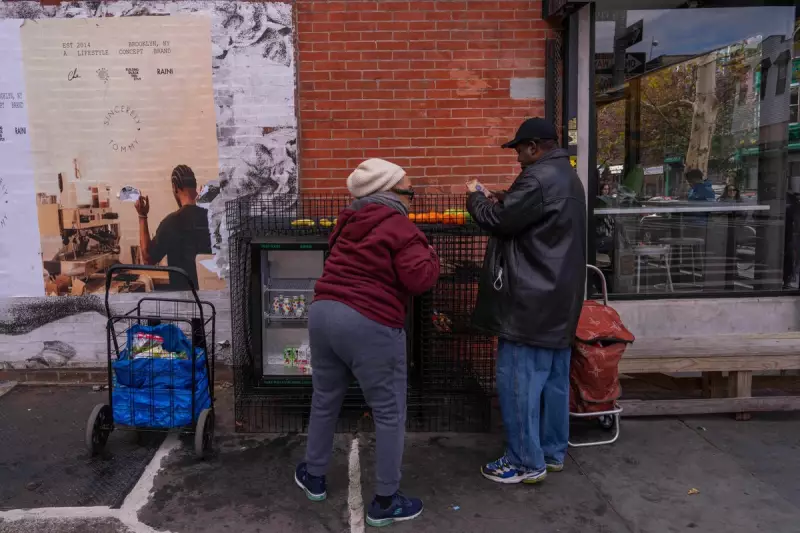
"People are less suspicious of our intention. We are getting food and giving it out. We don’t have any salaried employees," said Nicholas Grosso, who works with Sunnyside and Woodside Mutual Aid in Queens, New York. His group acts as a bridge, collecting food that businesses would discard and redistributing it immediately, cutting through bureaucratic red tape.
Taylor Dudley of the Center for Disaster Philanthropy highlights another difference: accountability. "There’s a lot of community accountability to mutual aid. Often in nonprofits... there’s accountability to donors," or to legal and administrative constraints, she noted.
Navigating Risks: Trust, Funds, and Surveillance
These networks are built on trust and personal relationships. Their small scale helps maintain accountability, as organisers learn who is reliable. However, risks exist. Opportunists may exploit offers of help, and groups handling cash donations must be cautious, as payments can be flagged as taxable income by processors.
Legal guidance, such as that from the Sustainable Economies Law Center, is crucial. Attorney Mohini Mookim notes that rules around giving money with no strings attached are generally promising for mutual aid, as actions motivated by "generosity" often face fewer tax implications.
Privacy is another concern. Groups delivering to homes must safeguard addresses. Some have even faced police orders to stop food distributions, often due to complaints from local businesses or residents, rather than health concerns, according to Aaron Fernando of Shareable.
As economic and political pressures continue, these informal, community-led efforts are proving to be a resilient and essential lifeline, emphasising collective care over institutional aid.