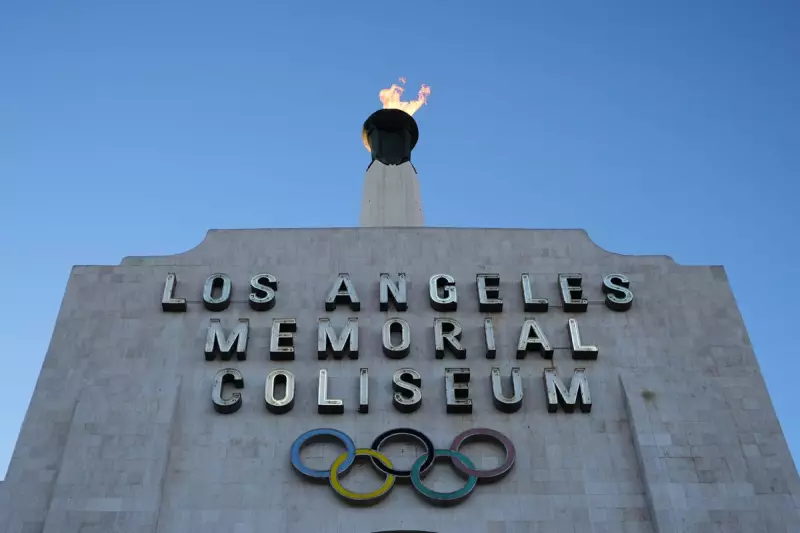
As Los Angeles intensifies preparations to host the 2028 Summer Olympics, local labour unions are meticulously planning a series of strategically timed strikes aimed at securing substantial improvements in wages, benefits, and housing conditions. Drawing direct inspiration from the labour actions that preceded the Paris 2024 Games, union leaders across Southern California are coordinating contract expirations to maximise their bargaining power during the critical pre-Olympic period.
Strategic Contract Alignment for Maximum Leverage
Unite Here Local 11, representing approximately 25,000 workers in hotels, airports, sports arenas, and convention centres, has deliberately aligned over 100 contracts to expire in January 2028. This timing places negotiations mere months before the Olympic opening ceremony, creating significant pressure on employers and organisers. "We are going to have a force... of working people to do whatever it takes, including striking if we have to during the Olympics in 2028," stated union co-President Kurt Petersen, emphasising that "The Olympics can’t happen without the workers."
This coordinated approach extends beyond hospitality. The United Food and Commercial Workers Local 770, covering health care, grocery, and packing industries, and Service Employees International Union Local 721, representing over 100,000 county employees, are also leveraging contracts set to expire in the first half of 2028. This multi-union strategy creates a broad coalition of workers poised to demand concessions as the Games approach.

Learning from Global Precedents
The tactical inspiration comes directly from recent Olympic history. During the Paris 2024 Games, French hotel workers staged strikes just one day before the opening ceremonies, waving signs at the five-star hotel housing International Olympic Committee members. These actions, alongside strikes by transportation workers and garbage collectors, resulted in tangible gains including higher salaries and improved retirement benefits.
Professor Jules Boykoff of Pacific University, who has extensively studied worker gains from past Olympics, describes these mega-events as "once-in-a-generation opportunities" for organised labour. "These sports mega events are yet another social moment that helps us see with greater clarity, people who’ve been there working all along, who actually are essential workers," Boykoff noted, highlighting how Olympics spotlight typically overlooked labour forces.
Beyond Wages: A Broader Social Agenda
Los Angeles unions are pursuing an ambitious agenda that extends beyond traditional wage negotiations. A coalition of labour groups, community organisations, and religious institutions is pushing the LA28 organising committee and city officials to commit to building 50,000 affordable housing units, implement a moratorium on short-term rentals like Airbnb, and strengthen protections for immigrant workers.
This broader social justice approach reflects growing recognition that Olympic benefits should extend beyond temporary economic boosts. As Professor Robert Baumann of College of the Holy Cross notes, while tourism and hospitality see short-term gains during Games, other industries often suffer from disruption. Labour leaders argue that workers who enable the Games should receive lasting improvements.
Recent Victories and Ongoing Battles
The labour movement has already secured significant victories in Los Angeles. The city recently approved a phased minimum wage increase to $30 per hour by July 2028 for workers at hotels with 60 or more rooms, up from the current $22.50. However, business groups argue this increase will damage the city's tourism industry, still recovering from the COVID-19 pandemic, and are attempting to delay implementation until after the Games.
Simultaneously, unions are collecting signatures for several ballot measures that would penalise corporations with CEOs earning over 100 times the company's median employee salary, require public votes on major event and hotel developments, and expand the $30 minimum wage to all workers. "We need to make the Olympics and the CEOs who are gonna make money off the Olympics pay for things that our city and citizens need," Petersen asserted.

Business Community Pushback
Los Angeles-area chambers of commerce are using the Olympic debate to address longstanding grievances, particularly targeting the city's gross receipts tax. Business leaders have proposed a ballot measure to repeal this tax, which generates over $700 million annually for the general fund supporting police, firefighters, homeless assistance, and other core services.
"Businesses continue to get hammered in this city," complained Stuart Waldman, president of the Valley Industry and Commerce Association, highlighting the tension between labour demands and business concerns about competitiveness and taxation.
Worker Perspectives and Economic Realities
For individual workers like Thelma Cortez, a cook for airline catering company Flying Food Group, the Olympic preparations represent potential relief from mounting financial pressures. Cortez currently directs her entire primary paycheck toward rent for herself and her three daughters, relying on overtime and side jobs to make ends meet.
"I thought that, ‘Well there will be more work, and maybe all airport and hotel workers can earn a little more,’" Cortez expressed upon hearing Los Angeles would host the 2028 Games. Her sentiment reflects the hopes of thousands of workers viewing the Olympics as a rare opportunity to improve their economic standing through collective action.
As the 2028 Games approach, the stage is set for a complex negotiation between labour unions seeking to capitalise on this unique leverage point, business groups concerned about costs and competitiveness, and city officials balancing Olympic preparations with broader social needs. The outcome will likely shape not only the success of the Games themselves but also the economic landscape of Los Angeles for years to come.