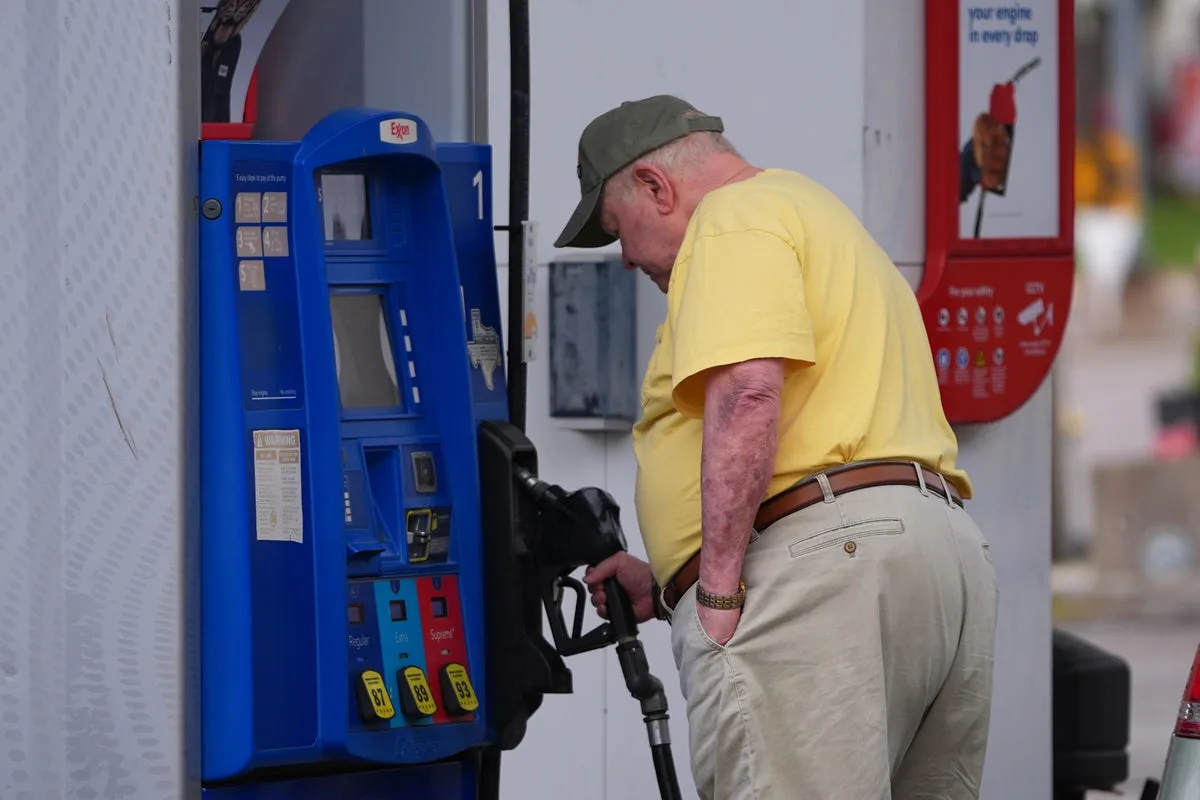
Spiking gas prices in the month following the Iran war have disproportionately impacted lower-income Americans, forcing them to spend more at the pump despite sharply reducing their consumption, new research has revealed. This trend has exacerbated existing economic disparities across the nation.
In stark contrast, higher-income households increased their spending on fuel while barely curbing their usage, according to a report from the Federal Reserve Bank of New York. Middle-income households, meanwhile, exhibited behaviour falling between these two extremes.
The report highlighted that the divergence in reactions between income groups was more pronounced than during a similar gas-price shock in 2022, which occurred after Russia's invasion of Ukraine. Four years ago, higher-income households cut back more significantly on their gas consumption, while poorer households likely benefited more from government stimulus programmes at the time.
The figures suggest the gas-price surge has worsened what many economists call the “K-shaped economy.” The K-shape label refers to upper-income Americans continuing to do well while lower-income households fall behind. The disparate outcomes can help explain the generally gloomy attitude most Americans have toward the economy even as headline figures, such as the unemployment rate and economic growth, remain mostly solid.
“We find that households had very different experiences with gasoline spending,” researchers at the New York Fed wrote. “With the sharp increases in gasoline prices in March, a K-shaped pattern in gasoline consumption emerged—showing faster consumption growth for high income households relative to low-income households.”
The Iran war began on February 28, and in March gas prices rose about 25 per cent, according to government consumer price data. Overall gas consumption, according to the New York Fed, fell 3 per cent. Poorer households, defined as those earning less than $40,000, cut their gas consumption by 7 per cent but still spent 12 per cent more on gas in March. Higher-income households, defined as those earning $125,000 a year or above, lifted their spending on gas by 19 per cent in March, while reducing their overall consumption of gas by just 1 per cent. The report did not specify the middle-income figures.