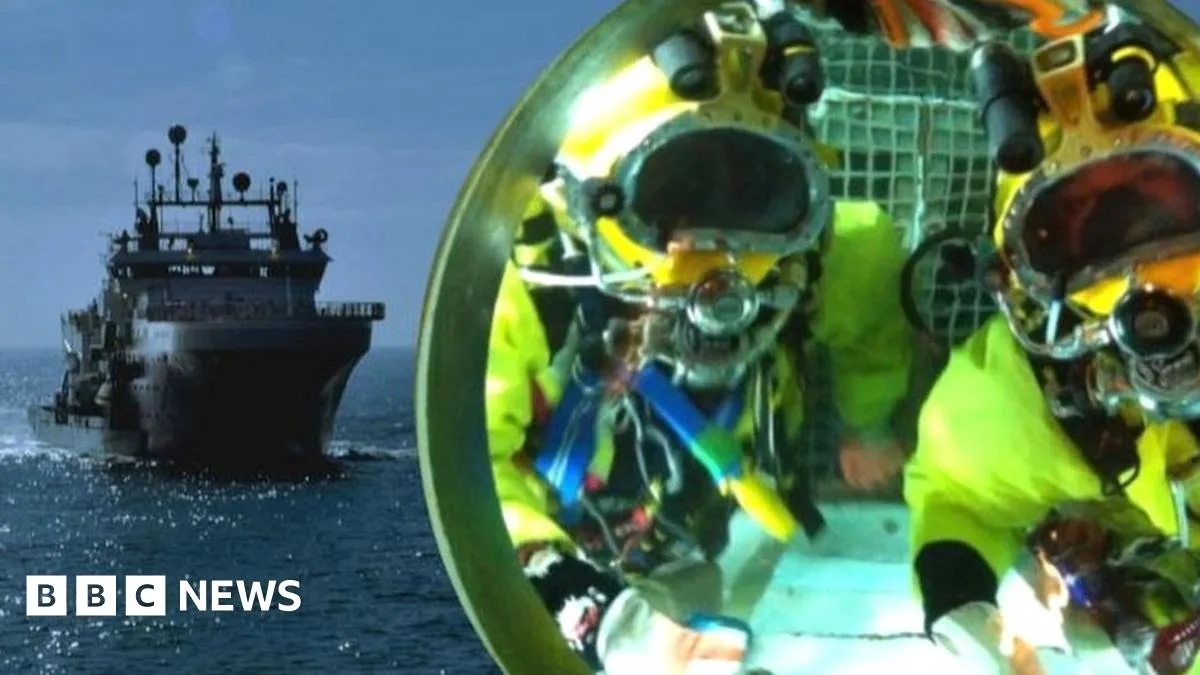
Byford Dolphin Disaster: The Day Divers 'Boiled Alive' in the North Sea
Byford Dolphin: The 1983 North Sea Diving Catastrophe

In what remains one of the most shocking and gruesome industrial accidents in maritime history, five men met an instantaneous and horrific end, their bodies ravaged from within by the very air in their blood. This is the story of the Byford Dolphin disaster.

The Rig and the Routine

In 1983, the semi-submersible oil drilling rig, Byford Dolphin, was operating at various sites in the North Sea. On board, a team of saturation divers was engaged in deep-sea operations. The divers were Edwin Arthur Coward (35), Roy P. Lucas (38), Bjørn Giæver Bergersen (29), and Truls Hellevik (34). They were assisted by tenders William Crammond (32) and Martin Saunders (30).

To work at such depths, the men lived in a pressurised chamber system on the rig for a 28-day period. This saturation diving technique allowed them to avoid the lengthy decompression stops normally required after each dive, by keeping their bodies continually pressurised. They travelled to the seabed in a diving bell, which locked onto the living quarters.

A Catastrophic Failure in Seconds

The routine turned to tragedy on 5 November 1983. Divers Bergersen and Hellevik were returning to the main living chamber via the diving bell, with tenders Crammond and Saunders assisting. A critical safety procedure required the diving bell to be securely sealed to the chamber before the intervening clamp was opened.

In a fatal split-second error, the clamp was released before Hellevik had closed the chamber door. The result was catastrophic. The pressure inside the crew chambers, which should have been maintained at nine atmospheres, plummeted to one atmosphere almost instantly.

The sudden, explosive decompression caused dissolved gases—primarily nitrogen—in the divers' bloodstreams to form massive bubbles. This process, akin to violently shaking a fizzy drink, caused immediate and massive internal trauma. The four divers inside died in an instant, their organs and tissues effectively boiled from the inside out.

The Grisly Aftermath and Sole Survivor

The force of the decompression was so extreme that Truls Hellevik was physically ejected through the narrow 60-centimetre opening. The rapid pressure change caused his internal organs to be expelled from his body. Tender William Crammond, who was standing by the clamp, was struck and killed by the diving bell as it violently separated.

Miraculously, Martin Saunders survived the incident. He was found seriously injured, suffering from collapsed lungs, a broken neck, and fractures to his spine. He was the only man to live through the horrifying event.

An official inquiry into the disaster concluded that the cause was human error. While the precise sequence of miscommunication or mistake has never been fully clarified, the tragedy highlighted critical flaws in diving safety protocols and equipment design of the era. It led to significant changes in the procedures and interlocking mechanisms used in saturation diving systems worldwide, aiming to prevent a repeat of such a swift and terrible loss of life.