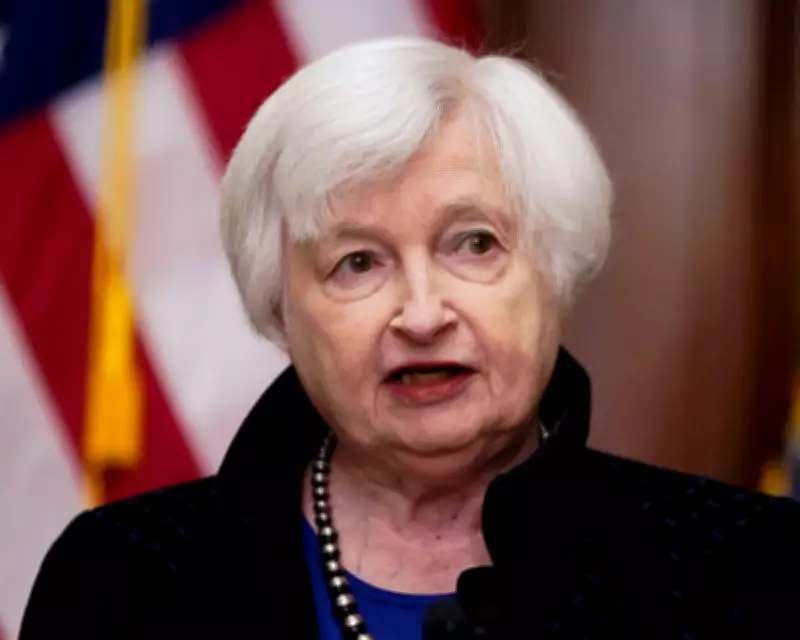
Yellen Condemns Trump's Interest Rate Pressure as 'Banana Republic' Strategy
Former US Federal Reserve Chair Janet Yellen has launched a sharp critique of Donald Trump's persistent demands for lower interest rates, equating his approach to the economic policies often seen in "banana republics." Speaking at an HSBC investor summit in Hong Kong, Yellen highlighted the dangers of politicians influencing central bank decisions for cheaper borrowing.
Trump's Push for Reduced Debt Costs
Donald Trump has repeatedly urged the Federal Reserve to slash interest rates, aiming to lower the government's borrowing expenses on its substantial $39 trillion debt. In a January post on his Truth Social platform, Trump asserted, "We should be paying the LOWEST INTEREST RATE OF ANY COUNTRY IN THE WORLD." Yellen responded by questioning how often a developed nation's leader would advocate setting rates primarily to ease debt service, a practice she associates with less stable economies.
Inflation Risks and Central Bank Independence
Yellen argued that if central banks succumb to political pressure to facilitate cheaper borrowing, inflation could spiral out of control. She emphasised the critical need for central bank independence to maintain economic stability. Her comments come amid ongoing tensions between Trump and current Fed Chair Jerome Powell, whom Trump has insulted as a "moron" and accused of delaying rate cuts.

Leadership Transition and Credibility Concerns
Jerome Powell is set to step down as Fed chair next month, with Trump's nominee, Kevin Warsh, awaiting Senate confirmation. Powell has stated he will remain in position if his successor is not confirmed and plans to stay as a Fed governor until a Department of Justice investigation concludes. Trump has threatened to fire Powell if he does not leave, while Powell views the case as a pretext to pressure him into cutting rates.
Yellen expressed doubts about Warsh's credibility, comparing him unfavourably to former Fed Chair Alan Greenspan, who was widely respected for his economic expertise. Warsh has suggested that AI-driven productivity gains might justify lower rates, but Yellen questioned whether other Fed governors would be persuaded.
Broader Economic Context and Global Implications
The Federal Reserve last reduced rates in December to a range of 3.5%-3.75%, but policymakers are growing wary of inflation risks exacerbated by conflicts such as the war in Iran. At the International Monetary Fund's spring meetings in Washington, central bankers, including Bank of England Governor Andrew Bailey, stressed the importance of independence. Bailey noted rising oil prices from the Iran conflict as a "major supply shock," requiring careful assessment by monetary committees.
The IMF has warned that prolonged closure of the Strait of Hormuz could trigger a global recession, underscoring the high stakes of current economic policies. Yellen, who served as Fed chair from 2014 to 2018 and later as Treasury Secretary under Joe Biden, continues to advocate for prudent, independent central banking to safeguard against inflationary threats.