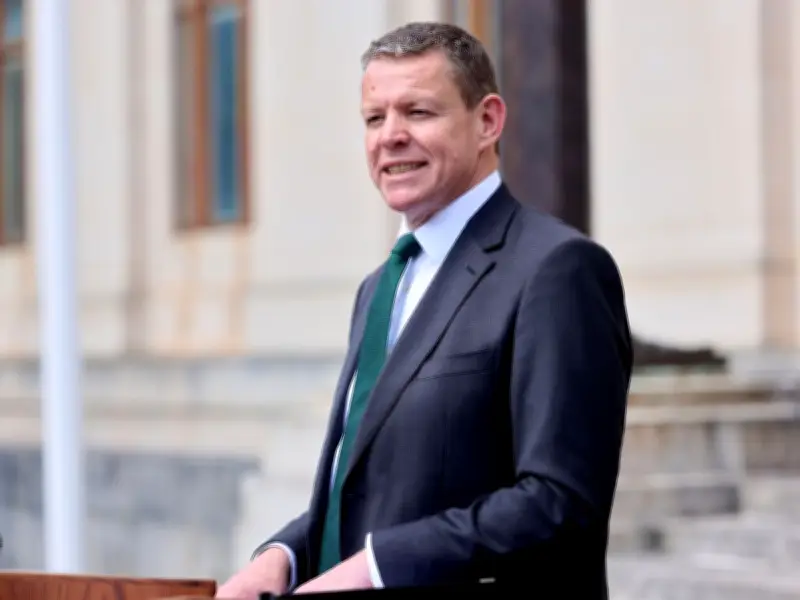
Wales' First Minister Rhun ap Iorwerth has launched a blistering attack on Brexit on the 10th anniversary of the referendum, labelling it the greatest act of "economic self-sabotage in modern history." Writing in WalesOnline, the Plaid Cymru leader blamed a "campaign of misinformation led by Nigel Farage and his Tory counterparts" for leaving the UK "smaller in stature, meaner in spirit, and poorer." He quantified the economic damage to Wales at £4bn.
Brexit Promises vs Reality
Mr ap Iorwerth said: "What was promised and what came to pass are poles apart - an electorate yearning for change teased by the prospect of sunlit uplands only to be left stranded on an arid plain." Wales voted 52.5% to 47.5% to leave the EU on June 23, 2016, a wider margin than the UK-wide 51.9% Leave vote. Only five of 22 council areas voted Remain. However, recent polling indicates a shift: a YouGov poll last week found 61% of people in Wales, 56% in England, and 75% in Scotland now believe Britain was wrong to leave.
Voices from Blaenau Gwent
WalesOnline reporter Ellie Gosley visited Blaenau Gwent, the area with the strongest Leave vote, and found residents feel let down. Retired planning officer Raymond Rowland in Ebbw Vale said: "I think we’ve been let down." While some are disillusioned, not all would change their vote in a new referendum.

First Minister's Vision for Europe
Mr ap Iorwerth reiterated his commitment to rejoining the EU single market and customs union, saying his administration is "doing things differently" in its approach to Europe. He expressed sadness that young people cannot now have the same opportunities he had living and working in Europe: "Mobility means opportunity and I am determined that the next generation will not have their wings clipped." He will travel to Dublin for the Ireland-Wales Ministerial Forum, aiming to foster closer ties between the Celtic nations.
Academic Analysis: 'Worst of All Possible Worlds'
Professor David Pickernell of Swansea University argued Brexit has produced "the worst of all possible worlds," with the UK failing to shed regulation or secure a Norway-style deal. He said: "I think it's relatively hard to argue that at least in the last 10 years, Wales didn't vote to make itself poorer." A Senedd Research paper found Welsh trade volumes with the EU have never recovered since Brexit took effect in 2021. Wales' EU exports stood at £10.7bn in 2025, with imports at £7.7bn, dominated by machinery and transport equipment. The number of Welsh businesses exporting to the EU fell by 207 (5.3%) between 2021 and 2024, while imports from non-EU countries nearly doubled.
Impact on Businesses and Trade
Prof Pickernell noted small and medium-sized enterprises were hardest hit due to limited capacity to adapt. "None of them are saying it has made it easier. Several have said either they do it less or they don't do it at all," he said. He also highlighted Wales' vulnerability due to lack of direct shipping routes to Northern Ireland, unlike England and Scotland, meaning it cannot benefit from the Windsor Framework's frictionless trade routes. Additionally, direct routes between Ireland and the EU mainland have increased since Brexit, bypassing Welsh ports like Holyhead. "It's made us less attractive for foreign direct investment," he concluded, noting that manufacturing's decline was already underway but Brexit accelerated it without replacing EU trade with other markets.
Agriculture and Trade Deals
In agriculture, a sector Wales relies on disproportionately, Prof Pickernell said trade deals like the one with Australia have not been beneficial. "If you want to look at what trade deals have been done, for example with the Australia one, there were lots of conversations at the time about that really benefited Australia more than the UK." The Senedd paper noted that between 2020 and 2024, the number of Welsh businesses importing from non-EU countries almost doubled from 5,404 to 10,253, while exports to non-EU countries remained steady. The Welsh Government believes trade was "disproportionately impacted" because Wales is more reliant on EU goods exports than the UK overall, and its geography puts it in a unique position in UK-EU arrangements.