Plug-in solar panels are set to officially go on sale in the UK within the next few months, priced at around £500. However, several obstacles must be addressed by both the government and householders before this technology becomes as user-friendly as it is in other European countries.
How plug-in solar works
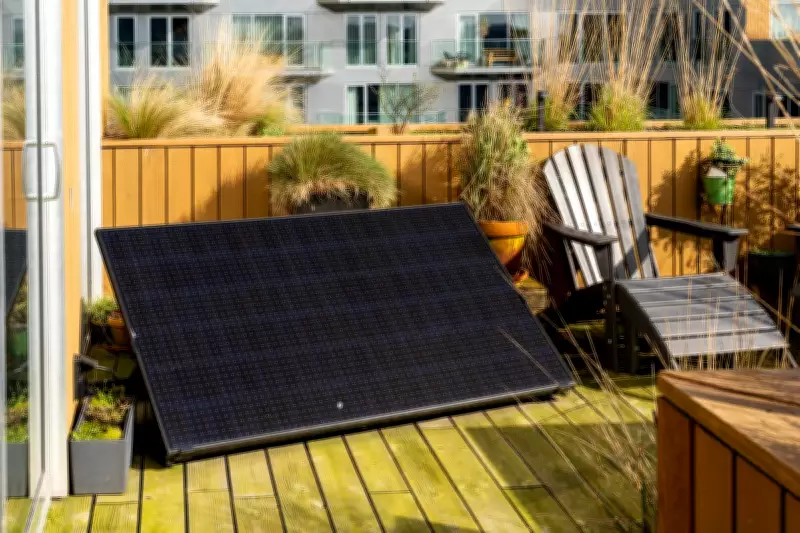
Plug-in solar systems typically consist of one or more panels that can be mounted on a balcony or in a garden, connected to the house via an inverter. The inverter converts the electricity generated by the panels to the voltage and frequency used by the grid. In theory, this power can be fed into a home through a standard plug. Previously, this was not permitted in the UK due to safety and regulatory reasons, but regulations are now being amended to allow it, provided the panels meet new safety standards.
In Germany, millions of such panels were already in use by 2025. German-owned supermarket Lidl and British-owned Iceland are collaborating with the UK government to bring these panels to market. Each panel could generate around 200–500 kWh per year, approximately 10% of a typical household's energy consumption, depending on positioning.

Government requirements
The government's plans will permit plug-in installations of up to 800W, subject to several guidelines. However, it remains unclear whether changes to planning laws will be necessary. Tenants in shared developments must check with their landlords, as balcony solar could affect building insurance. Additionally, planning restrictions may apply to those living in conservation areas.
For optimal power generation, solar panels should be tilted, which may conflict with existing planning rules. Without proper angling, performance could drop by 30–45%. This raises the question of whether planning regulations need revision.
The government is promising new safety standards and anti-islanding measures for these kits. Anti-islanding refers to the risk that plug prongs remain live briefly after unplugging, or if the grid goes down while panels continue feeding power into the house without a load. A safety mechanism is required to stop electricity flow in such scenarios.
Concerns from industry bodies
The Institute of Engineering and Technology and the Electrical Contractors Association have raised concerns about the use of these panels. Many UK homes have older electrical systems that may not cope with plug-in solar. Previous building standards did not account for power being fed into houses via a plug. While some plug-in devices available online are of good quality, others are cheaply made, underscoring the need for industry standards and enforcement.
What householders should consider
For most people living in houses, installation will be fairly straightforward, but those in conservation areas may need planning permission. Most should also check with their insurers. Balcony solar is not ideal for everyone; if the balcony is shaded or north-facing, benefits may be minimal.
Householders must notify their local district network operator, which maintains the network, and complete a G98 notification form to inform the electricity supplier about the solar system. These forms are typically handled by electricians, and it is unclear if householders can manage this themselves.
An external weatherproof plug is needed for a balcony unit. Hiring an electrician to install it might make it safer to wire the system directly into the mains. Running a cable through an open window is unsafe and would let heat escape, potentially negating energy savings.
Another consideration is how to use the power. The grid pays less for excess energy than households pay for electricity, so using as much generated power as possible is key. A battery costing several hundred pounds can store daytime power for night use, improving flexibility but extending the payback period.
The government hopes plug-in solar will encourage wider adoption of solar technology, potentially leading to larger rooftop installations. However, in Germany, rooftop solar (supported by subsidies) came first, with balcony systems filling gaps later. By addressing practical issues quickly, the UK government can foster a broader shift to solar power.