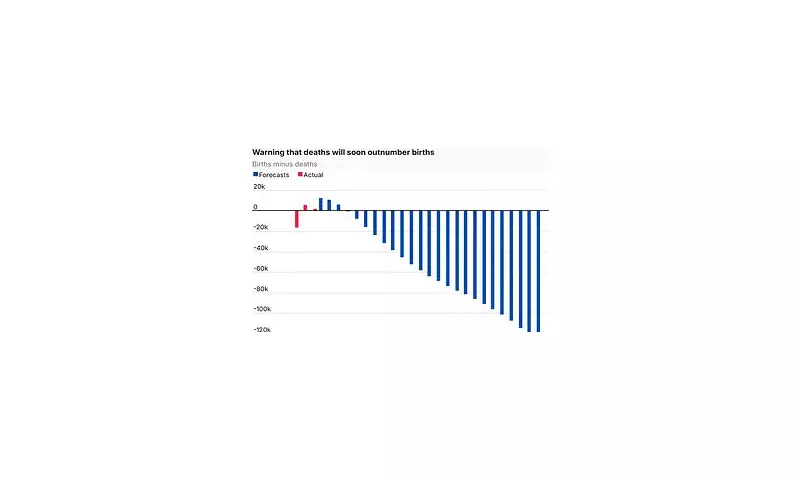
A stark demographic warning has been issued for the United Kingdom, with experts predicting the nation is on the cusp of a historic shift where annual deaths will begin to outnumber births.
The Tipping Point: A 'New Normal' from 2026
The left-leaning Resolution Foundation, which focuses on improving living standards, has sounded the alarm. Its research director, Gregory Thwaites, told The Telegraph that 2026 could mark the first year of a 'new normal' where this reversal becomes a permanent feature. He attributes this looming change primarily to 'extremely low fertility and not especially high deaths'.
While births have exceeded deaths for most of the last century, exceptions occurred in 1976, the pandemic year of 2020, and 2023. Data from last year revealed births only narrowly surpassed deaths in 2024. The think tank now forecasts an even slimmer margin for 2025 and warns that by the mid-2040s, deaths could exceed births by a staggering 100,000 each year.

Falling Fertility and Rising Fiscal Pressure
The core driver is a dramatic collapse in the birth rate. It has plummeted from an average of three children per woman in the 1960s to just 1.4 last year. For a population to replace itself without immigration, a fertility rate of 2.1 is required, a level no local authority in England or Wales currently meets.
This downward trend threatens to upend public finances. A shrinking working-age population will be required to support a growing number of older citizens through taxes. 'We're already moving to this situation where the Government is, to a large extent, paying for older people,' said Mr Thwaites. While falling child numbers might reduce education spending, the costs of pensions and healthcare are set to balloon.
Ruth Curtice, chief executive of the Resolution Foundation, added that this shift raises 'hard questions for the future of our public services and the tax revenues needed to fund them in an aging society'.
Immigration as the Key Counterbalance
The UK's population has grown from 64.6 million in 2014 to 69.3 million by mid-2025, a rise largely fuelled by immigration. Mr Thwaites emphasised that future population growth will depend entirely on net migration, stating: 'All of the rise in population, if we want one in the future, will have to come from immigration because there’s no increase in birth over deaths.' Without it, Britons face the prospect of ever-increasing taxes.
Experts cite several reasons for declining fertility, including women prioritising education and careers, couples having children later in life, and lifestyle factors such as rising obesity levels. This profound demographic change, once a distant concern, is now at the UK's doorstep, set to redefine the nation's social and economic landscape for decades to come.