A comprehensive new survey has revealed that business growth across the United Kingdom has dramatically slowed to a near standstill, with companies directly attributing the stagnation to the ongoing war in the Middle East. The conflict, involving the US, Israel, and Iran, is cited as the primary cause for souring customer demand, escalating prices, and severe disruptions to global supply chains.
PMI Data Shows Sharp Decline
The closely watched S&P Global flash UK composite purchasing managers' index (PMI) recorded a significant drop to 51.0 in March, down from 53.7 in February. While any score above the 50.0 threshold indicates continued growth, this latest figure represents a six-month low, signalling a substantial deceleration in economic activity.
Chris Williamson, chief business economist at S&P Global Market Intelligence, stated unequivocally: "The war in the Middle East has hit the UK economy in March, stalling growth while driving inflation sharply higher. Output growth across manufacturing and services has slowed to a crawl as companies blamed lost business directly on the events in the Middle East."

Manufacturing Sector Under Intense Pressure
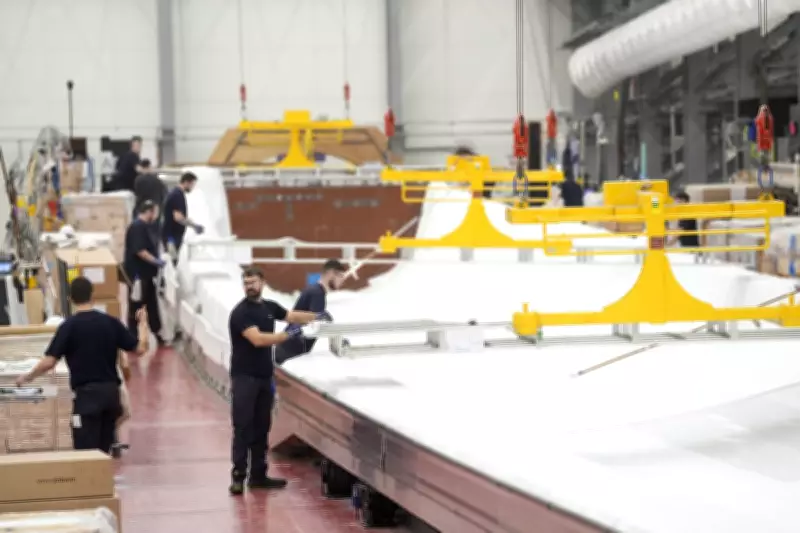
Manufacturers have borne the brunt of the economic impact this month, facing a steep increase in costs for fuel, transportation, and raw materials. Nearly half of all goods producers surveyed reported a rise in their input costs, which encompass expenses for materials, energy, machinery, and labour.
Alarmingly, the acceleration in price pressures between February and March was the largest recorded since 1992, according to the survey data. This surge is largely driven by rising energy prices and fractured supply chains, creating a challenging environment for sustained production.
Supply Chain Disruptions and Consumer Caution
The survey highlights multiple pathways through which the conflict is affecting UK businesses. Approximately a quarter of UK manufacturers reported longer delivery times from suppliers in March. Specific disruptions include shipping being rerouted from Asia via the Cape of Good Hope to avoid the Strait of Hormuz, and production pauses at petrochemical suppliers in the Middle East, which rely on crude oil and natural gas to produce essential raw materials.
Furthermore, businesses reported that worries about the conflict have significantly dampened consumer confidence. This heightened risk aversion is pulling back consumer spending, resulting in less new work for firms and creating a cycle of reduced economic activity.
Broader Economic Risks Materialise
Mr Williamson added a note of caution regarding the future economic outlook: "The full impact on the economy depends not just on the duration of the war but also the length of disruptions to energy markets and shipping." He emphasised that the latest figures demonstrate that risks to both economic growth and inflation have "already materialised".
The survey paints a clear picture of an interconnected global economy where geopolitical instability in one region can swiftly translate into tangible business challenges thousands of miles away. For UK companies, the immediate consequences include lost business, surging operational costs, and an increasingly cautious customer base, all combining to slow growth to a crawl.