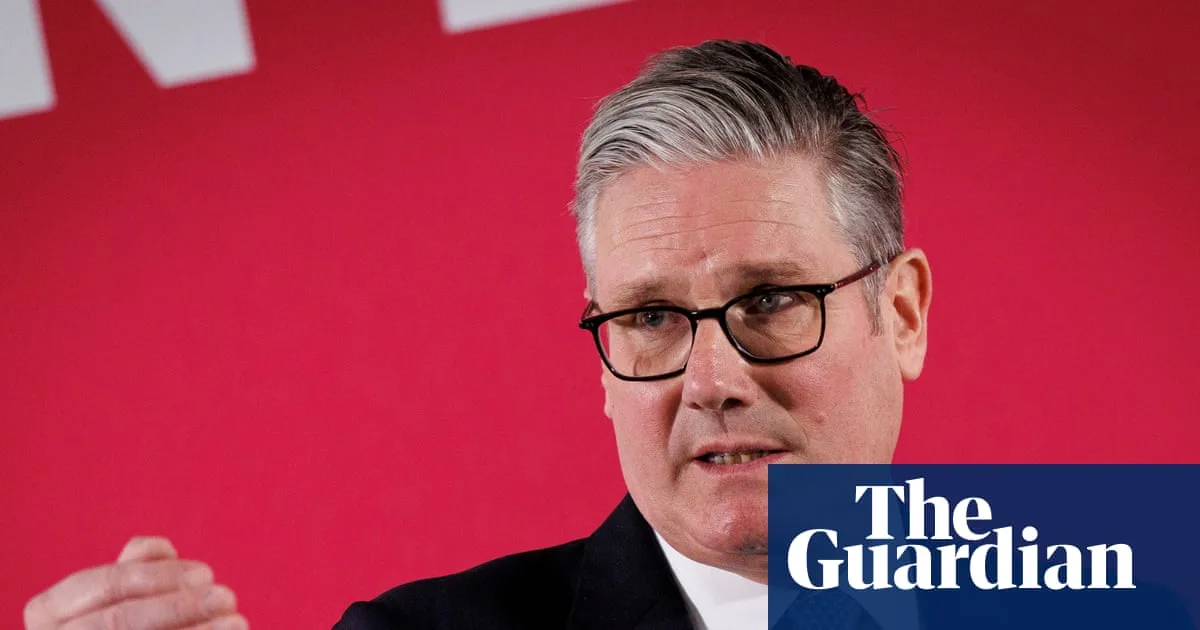
Keir Starmer has intensified pressure on the head of the Office for Budget Responsibility (OBR) over the leak of market-sensitive budget details, calling the breach a “serious error” and a “massive discourtesy” to parliament. The prime minister said he remained “very supportive” of the spending watchdog, but stopped short of giving its chair, Richard Hughes, his full confidence. The OBR is expected to publish the findings of its investigation on Monday afternoon, with Hughes’s position increasingly uncertain.
Speaking in defence of Chancellor Rachel Reeves, who has faced criticism over her claim of a £16bn shortfall in public finances, Starmer said the OBR’s productivity downgrade had left the government with a lower starting point. He admitted for the first time that he had considered breaking Labour’s manifesto pledge not to raise income tax, but said it became clear that this could be avoided. “On the substance of the budget, I’d defend it any day of the week,” he said.
Starmer used a speech to set out a multiyear economic plan focused on deregulation, further welfare overhauls, and closer ties with the European Union. He said he was confident the UK had “walked through the narrowest part of the tunnel” on the cost of living, and that the government’s measures, including cuts to energy bills, a rail fare freeze, and a boost to the minimum wage, were beginning to have an effect. He also expressed personal pride in lifting the two-child benefit limit.
On Europe, Starmer said the UK needed to get closer to the EU, acknowledging that the Brexit deal had “hurt our economy”. He argued that economic renewal required reducing frictions and accepting trade-offs. He also stressed the need to transform the welfare system, after earlier attempts at reform failed this year.
The prime minister conceded that significant challenges remained, warning that the path to a Britain “truly built for all” would require further decisions that are “not cost free”. Nevertheless, he insisted the government was taking the right steps for the country.