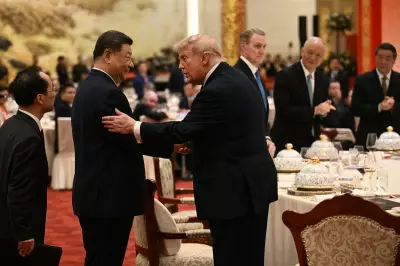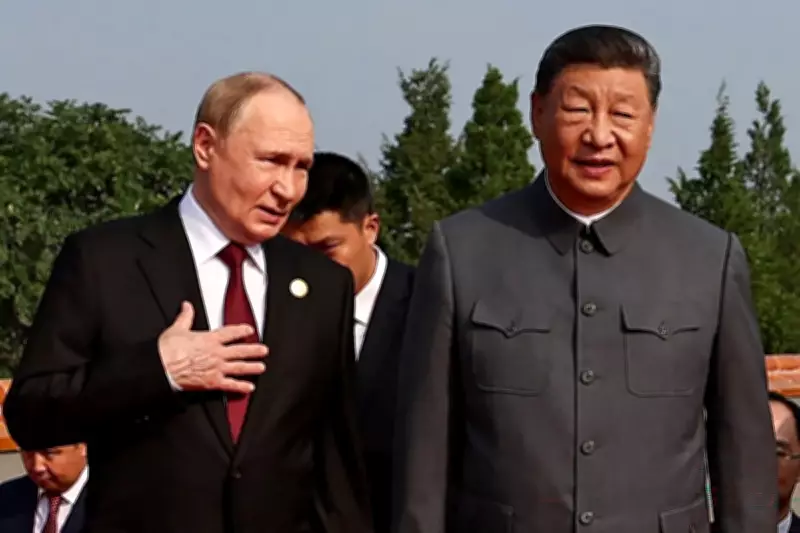
As Vladimir Putin embarks on his 25th visit to Chinese President Xi Jinping, just days after Donald Trump's historic return to Beijing, the economic realities facing all three nations come into sharp focus. The Russian leader arrived late Tuesday for a two-day trip emphasizing economic cooperation, particularly energy deals, as Moscow seeks to counter Western sanctions.
Russia's Economic Position
Russia's economy, though battered by four years of conflict in Ukraine, has not collapsed as some predicted. Despite sanctions and debt, Russia climbed from the 11th to the 9th largest global economy last year. However, the war-driven industrial boom is unsustainable, with public services and manpower depleting over time.
China has capitalized on Western sanctions by buying cheap Russian energy. Oil and gas now constitute 75% of Russia's exports to China, up from 60-65% before 2022. Russian goods exports to China surged 289% over a decade, reaching $129.32 billion in 2024. The Power of Siberia pipeline supplies natural gas, and a new pipeline is under discussion this week.

However, China has reduced imports of Russian military equipment, becoming self-sufficient in weapons production. Instead, China exports cars, tractors, household goods, computers, and tools to Russia, with imports totaling $115.49 billion in 2024.
The United States and China
Donald Trump's visit to China last week aimed to stabilize trade relations amid the Iran war's impact on global energy prices. Since 2018, the US has layered tariffs on Chinese goods, now averaging almost 48%, up from 3% in 2016. Despite this, China remains the US's largest trading partner.
In 2025, US imports from China totaled $331.58 billion, while exports to China were $162.96 billion. Trump's tariff policy drove a 39% drop in total American imports from China in 2025. China has retaliated by threatening to withhold rare earth minerals, which it produces 90% of globally, crucial for technologies from EVs to fighter jets.
After last week's summit, both sides agreed to pursue a "constructive relationship of strategic stability." China pledged to address US concerns about rare earth supply chains, while the US agreed to preliminary tariff reductions. However, tangible commitments remain vague.
As Putin, Xi, and Trump navigate this complex economic landscape, Russia appears most vulnerable, heavily reliant on China's goodwill amid ongoing sanctions.