Oil Prices Surge Over 5% as US-Iran Strait of Hormuz Tensions Reignite
Oil Prices Jump 5% Amid US-Iran Strait of Hormuz Standoff

Oil Prices Surge Over 5% Amid Renewed US-Iran Strait of Hormuz Standoff

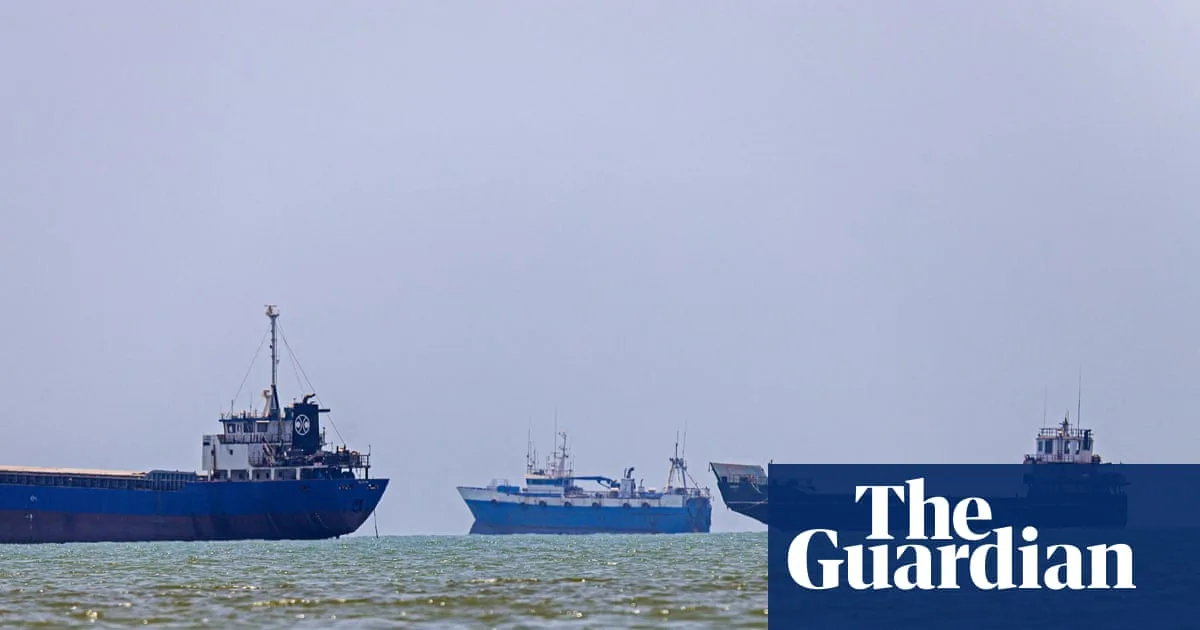
Oil prices experienced a significant spike of more than 5 per cent on Monday, driven by escalating tensions between the United States and Iran that have once again closed the critical Strait of Hormuz to tanker traffic. The Persian Gulf waterway, a vital conduit for global oil shipments, was shut down after Iran reversed its decision to reopen the strait, prompting President Donald Trump to reaffirm that a US Navy blockade of Iranian ports remains fully in effect.

Market Reactions and Price Movements

US benchmark crude oil surged by 5.6 per cent to reach $87.20 per barrel, while Brent crude, the international standard, increased by 5.3 per cent to $95.16 per barrel. This sharp rise comes despite ongoing uncertainties about when ships will resume transporting the vast quantities of oil that the world relies on from the Middle East region.

In a contrasting development, share prices across Asia were mostly higher. Japan's Nikkei 225 index gained 1 per cent to close at 59,045.45, while South Korea's Kospi rose by 1.1 per cent to 6,260.92. Hong Kong's Hang Seng added 0.8 per cent to reach 26,373.71, and the Shanghai Composite index advanced 0.6 per cent to 4,075.08. Australia's S&P/ASX 200 remained nearly unchanged at 8,943.90, and Taiwan's Taiex jumped 1.4 per cent.

Wide Pickt banner — collaborative shopping lists app for Telegram, phone mockup with grocery list

Analyst Commentary and Market Sentiment

Stephen Innes of SPI Asset Management provided insight into the market dynamics, stating in a commentary: "The problem for markets is not the absence of hope; it is the overpricing of it. The latest move higher in equities has started to feel less like conviction and more like momentum feeding on itself."

This sentiment follows a volatile period where oil prices had dropped back to levels seen in the early days of the Iran war just last Friday, after Iran initially declared the strait open again for commercial tankers. That announcement had led to a surge in US stocks, with the S&P 500 leaping 1.2 per cent to an all-time high of 7,126.06, marking its third consecutive week of substantial gains. The Dow Jones Industrial Average surged 1.8 per cent to 49,447.43, while the Nasdaq composite climbed 1.5 per cent to 24,468.48.

Geopolitical Developments and Their Impact

The current situation stems from a fragile two-week ceasefire between the US and Iran that is set to expire on Wednesday, with escalating tensions in the Strait of Hormuz raising serious questions about new talks to end the conflict. President Trump announced on Sunday that the US had seized an Iranian-flagged cargo ship attempting to circumvent the naval blockade, which Iran's joint military command condemned as an act of piracy and vowed to respond to soon.

This follows earlier market movements where the price for a barrel of benchmark US crude had plunged 9.4 per cent after Iran's foreign minister, Abbas Araghchi, posted on social media that passage for all commercial vessels through the strait was "declared completely open" amid a ceasefire appearing to hold in Lebanon. Brent crude fell 9.1 per cent at that time. However, Trump subsequently stated on his social media network that the US Navy's blockade remained "in full force" pending a war deal, though he suggested negotiations could proceed quickly as most points were already discussed.

Broader Economic Context and Currency Movements

Since the war began, market sentiment has oscillated between optimism and gloom regarding when hostilities will conclude and what economic costs the global economy will ultimately bear. The US stock market has jumped more than 12 per cent since hitting a low in late March, fueled by hopes that the United States and Iran can avoid a worst-case scenario for the world economy despite their ongoing conflict.

A strong start to the earnings reporting season for major US companies has provided additional support for stocks. In other financial developments early Monday, the US dollar strengthened to 158.90 Japanese yen from 158.79 yen, while the euro climbed to $1.1757 from $1.1742.

Pickt after-article banner — collaborative shopping lists app with family illustration

The potential for a freer flow of oil through the Strait of Hormuz could relieve pressure on prices for gasoline and various other products transported by vehicles, potentially even helping consumers pay less on credit-card interest and mortgage bills in the longer term. However, with the current standoff preventing tankers from using this crucial waterway, global markets remain on edge as they monitor developments in this volatile geopolitical situation.