Oil Price Fluctuations: Understanding the Financial Ripple Effect in the UK
The price of Brent crude oil experienced significant turbulence this week, initially soaring past the $100 per barrel mark on Monday before retreating to approximately $90 on Tuesday. This sharp decline followed a public statement from President Donald Trump indicating that the military conflict with Iran would conclude imminently. Despite this recent dip, the global oil market continues to grapple with prices that are nearly one-third higher (29%) than levels recorded before the initial strikes commenced.
The Brent Crude Benchmark and Its Broad Economic Influence
When discussing oil prices, the primary reference point is typically the contract price of Brent crude, which serves as a global pricing benchmark for petroleum regardless of its geographical origin. Sourced from the North Sea, Brent crude's valuation fluctuates in direct correlation with the overall supply and demand dynamics of the global oil market, not merely its specific variety. Escalating oil costs inevitably lead to higher energy bills for consumers, but the ramifications extend far beyond domestic heating expenses.
Increased fuel prices exert substantial pressure on manufacturing sectors, transportation networks, food production chains, and virtually every other industry reliant on petroleum products. The duration of elevated oil prices is a critical factor; prolonged spikes become increasingly difficult for economies to absorb, ultimately translating into higher costs for end consumers. Consequently, the resolution of geopolitical tensions in the Middle East represents the primary constraint on how high utility bills and other expenses might climb.

Petrol Prices and Supply Chain Disruptions
US Energy Secretary Chris Wright recently commented on the situation, emphasizing that in the worst-case scenario, the disruption might persist for weeks rather than months. However, he cautioned that extended conflicts increase the likelihood of prices remaining elevated even after hostilities cease. This principle applies directly to UK petrol stations, though with a noticeable time lag. The issue is compounded not only by immediate supply constraints but also by storage limitations, prompting oil-producing nations to reduce output.
Once production resumes, it requires considerable time to restore operations to normal capacity levels, creating interim scarcity and sustaining higher prices. Iran has drastically curtailed its oil production, currently operating at just 25% of its pre-conflict output. Kathleen Brooks, Research Director at XTB, noted that this represents roughly 3% of global oil supply lost in a single event, a situation she described as more severe than the supply disruptions following Russia's invasion of Ukraine.
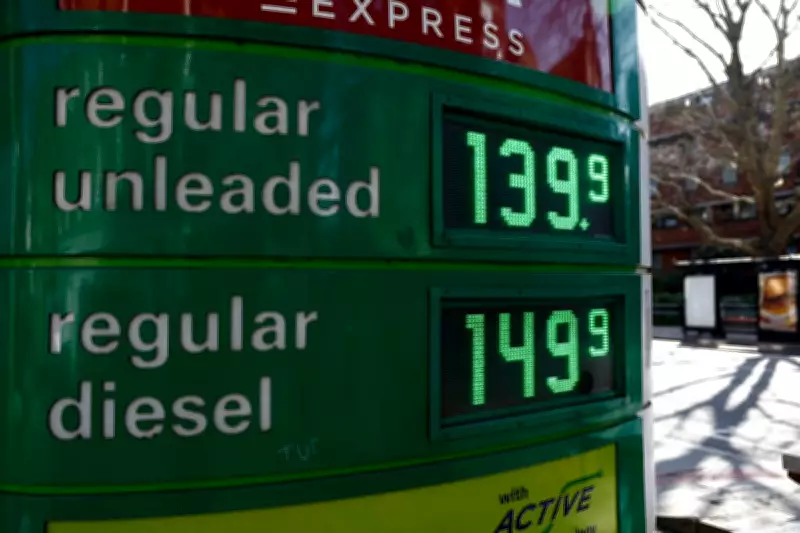
The RAC reported that the average price per litre of petrol at UK forecourts reached 137p on Friday, marking an increase of nearly 4p since the resurgence of Middle Eastern conflict.
Inflationary Pressures and Interest Rate Implications
As Barclays analysts highlighted on Monday, the persistence of high oil prices matters more than the peak price point when assessing economic impact. Official data from the Office for National Statistics naturally operates with a time lag, meaning the full effects of current price movements will only become apparent in subsequent reports. Fundamentally, when energy, raw material, or labor costs increase, consumer prices inevitably follow suit, driving inflation upward.
The crucial question is the magnitude of inflationary impact stemming from the Middle East situation. While UK inflation had been on a downward trajectory over the past year, this development threatens to derail progress toward the Bank of England's 2% target, which some analysts had anticipated would be achieved by early spring. Should prices begin surging again, the Bank of England's primary tool for controlling inflation is raising interest rates.
Higher borrowing costs typically reduce spending and credit demand among businesses and households, thereby cooling economic activity and helping stabilize prices. However, the UK's current economic landscape—characterized by weakness and rising unemployment—complicates this approach, as increased interest rates could exacerbate these existing challenges.

Mortgage and Savings Market Adjustments
Interest rate fluctuations produce two significant consequences for most households: debt servicing costs and savings returns. When rates rise, borrowers with variable-rate agreements face higher payments on outstanding debts, including both short-term loans and long-term mortgages. Mortgage products available on the market do not move in perfect synchronization with the Bank of England base rate; instead, they adjust based on anticipations of future rate movements, influenced by swap rates.
Consequently, mortgage rates that had been trending downward have recently experienced upward pressure due to renewed concerns about potential interest rate hikes. Several major lenders, including NatWest, HSBC, Nationwide, Santander, the Co-operative Bank, and Skipton Building Society, have raised rates on new fixed-term mortgage products over the past week.
Conversely, higher interest rates benefit savers. Numerous banks and building societies have slightly increased interest rates on savings accounts or introduced new competitive products for easy-access accounts, ISAs, and fixed-term bonds during the past week. These developments provide savers with improved opportunities to achieve returns that outpace inflation.
Stock Market Volatility and Pension Considerations
While inflation and interest rates face upward pressure, stock markets typically move in the opposite direction. The FTSE 100 index declined again on Monday morning, having already fallen more than 5% during the previous week amid Middle Eastern turmoil. However, President Trump's recent comments have injected optimism into global markets; Asian stocks rebounded overnight, European markets showed gains, and the FTSE 100 rose 1.7% in early Tuesday trading, with US stocks projected to follow suit.
For individuals monitoring investment ISAs or pension portfolios, financial advisors emphasize the importance of avoiding panic-driven decisions during market downturns. Unless approaching retirement age, investors should recognize that market fluctuations—though sometimes concerning—are a normal aspect of long-term investing. Selling assets during price declines can lock in losses that might otherwise recover over extended periods.