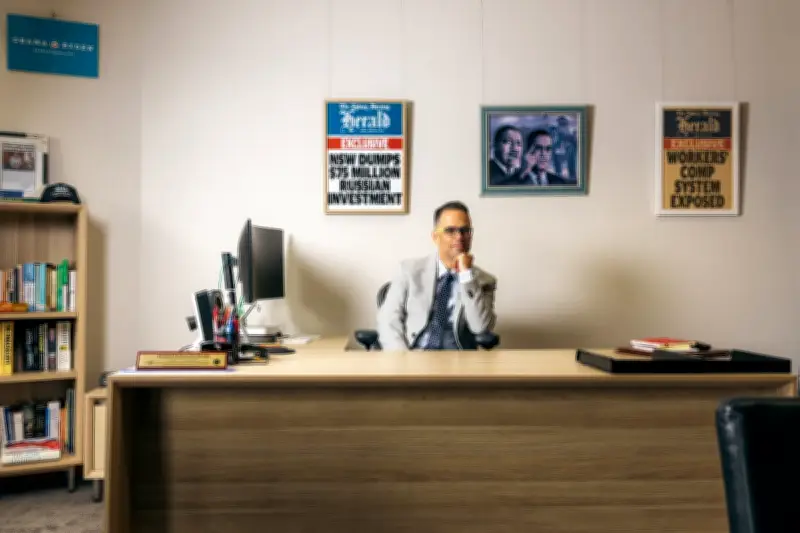
NSW Treasurer Daniel Mookhey will deliver his fourth Labor budget on Tuesday, focusing on cost-of-living relief while maintaining fiscal discipline. The budget will lower daily and weekly caps on public transport fares using Opal or credit cards, reducing the weekly cap from $50 to an undisclosed amount and adjusting daily caps. However, it will not offer free travel like Victoria or 50-cent fares like Queensland.
Balancing Relief and Restraint
The Minns government aims to ease pressure on family budgets amid the fallout from the Israel-US conflict with Iran and rising interest rates. But Tuesday's budget will be an exercise in restraint, with major announcements saved for closer to the March 2027 state election. More road toll relief is expected later this year.
Mookhey emphasized the budget focuses on "relief, reform, and discipline," acknowledging that the economy cannot grow without working people feeling confident. He noted that inflation must fall and wages must rise, addressing fundamental cost pressures like expensive housing and wage suppression.
Key Spending Initiatives
The budget includes additional funding for renewable energy transition and home building. An extra $225 million will go to infrastructure for the south-west renewable energy zone, building on existing interest-free loans for low-income families to install solar panels. Heavy rail maintenance spending will increase by $200 million in 2026-27, totaling $2.1 billion, after recent rail network incidents. New carriages will also be funded as part of a rail upgrade and local industry plan.
The government will announce $130 million for new walking tracks, picnic areas, and visitor centers in national parks, including the Great Koala National Park, to improve safety and accommodate more visitors.
Political Context
Labor's modest budget helps define its election fight against the Liberal-National Coalition and One Nation. Premier Chris Minns wants the government seen as responsible and steady. A May Resolve poll showed Labor's primary vote at 32%, Coalition at 26%, One Nation at 22%, and Greens at 10%. Minns leads Kellie Sloane 38-18 as preferred premier.
Mookhey criticized Coalition promises of new metro lines and infrastructure funded by privatizing state assets, and One Nation's appeal to "battlers." He stated, "We are the only team with a real plan to help working families in NSW," emphasizing stewardship of public money with respect, especially during high inflation.
Economic Outlook
The NSW economy is expected to grow by just 1%, driven by renewable energy investment. Stamp duty revenue is forecast to fall due to a property market slowdown after three interest rate hikes and federal changes to capital gains tax and negative gearing, leading to a $5 billion downgrade over forward estimates. Interest rates on public debt from COVID-19 have risen from about 1% to 5.5%. Gross debt stands at $177.2 billion, $11 billion below the forecast when Labor took office in 2023.
Additional pressure comes from federal NDIS reforms, with states expected to provide services for over 200,000 participants leaving the scheme.