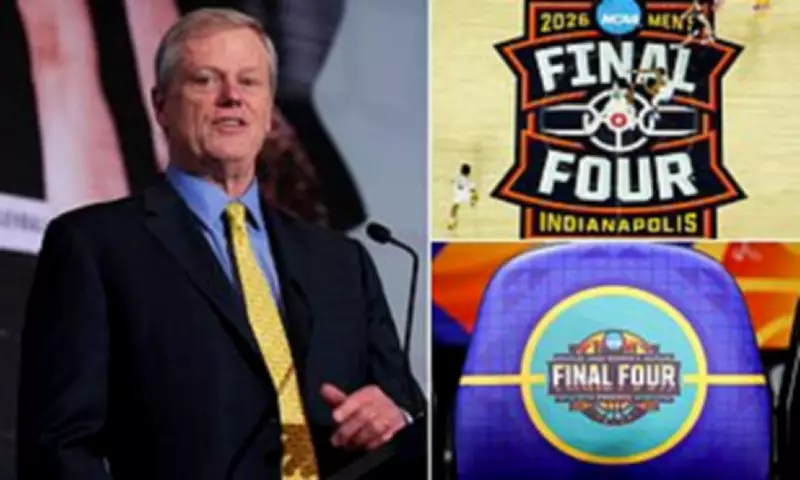
The NCAA is on the verge of expanding its men's and women's basketball tournaments to 76 teams, a move that has been met with widespread criticism from fans and media alike. According to a report by ESPN, the expansion is expected to take effect as early as next year, with multiple NCAA committees poised to approve the change.
Expansion Details and Timeline
The tournament last expanded in 2011 to 68 teams, and prior to that, the last major expansion occurred in 1985 when the field grew from 32 to 64 teams. Under the new format, 24 teams would be required to participate in play-in games, significantly altering the structure of the early rounds. The current 'First Four' concept, which featured matchups between low seeds, will be replaced by an expanded 'opening round' with 12 games played on the Tuesday and Wednesday before the main tournament begins.
Charlie Baker, the former Massachusetts governor and current NCAA president, has been a vocal proponent of expansion. In February, he stated, 'I think there's some very good reasons to expand the tournament, so I would like to see it expand.'

Impact on Teams and Seeding
The expansion would have a profound effect on seeding. Every 16-seed and half of the 15-seeds would be forced to play in the opening round. Additionally, play-in games could involve 11, 12, and even 13-seeds. For context, if the expanded field were in place this year, Auburn would have become the first at-large team with 16 losses to make the tournament, slotting in as an 11-seed alongside San Diego State. Other teams that would have gained entry include Indiana, Oklahoma, Oklahoma State, Virginia Tech, Arizona State, and Cal.
Conversely, lower-seeded teams like Furman and Queens University would have been pushed back to the 16-seed line, while Wright State and Kennesaw State would have dropped from 14 to 15-seeds. This has sparked outrage among fans who argue that the expansion unfairly penalizes smaller conference champions.
Financial Motivations
The NCAA's decision is widely seen as a response to mounting financial pressures. The organization faces numerous lawsuits and settlements related to name, image, and likeness (NIL) rights, eligibility rules, and other issues. With the College Football Playoff operating outside NCAA control, the men's basketball tournament remains its primary revenue generator. At this year's Final Four, the NCAA converted media seats into luxury boxes, selling them for tens of thousands of dollars, further underscoring the push for increased revenue.
Fan and Media Backlash
The expansion has been met with near-universal opposition from fans and commentators. Social media reactions have been scathing, with one user posting, 'Nobody hates college sports more than the people who run college sports.' Another wrote, 'Ruining the one thing that has a 100% approval rating is peak NCAA.' Jeff Lowe of Barstool Sports criticized the plan for harming automatic qualifiers, while college basketball analyst Ryan Hammer called it 'a shame they insist on changing the best postseason tournament in American sports.' Yahoo Sports' Pat Forde described the expansion as 'a lousy development that contributes to the erosion of what makes college sports great.'
Despite the backlash, the NCAA appears determined to proceed. The new format will also require moving some early-round games from Dayton, Ohio, which has hosted all play-in games since 2001. A second site in a Central, Mountain, or Pacific time zone is expected to be chosen, and the television schedule will likely feature tripleheaders on Tuesday and Wednesday.