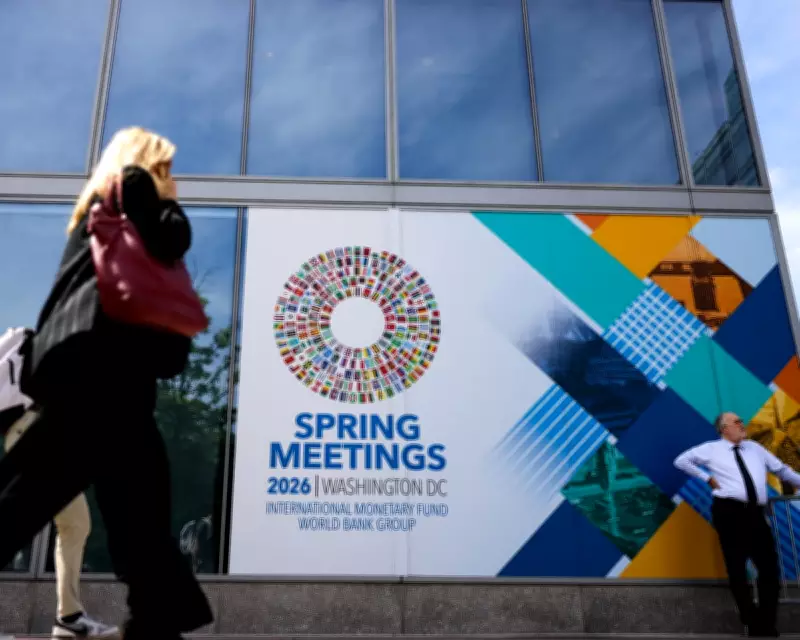
Iran War Casts Deep Shadows Over IMF-World Bank Gathering in Washington
The mood at the International Monetary Fund and World Bank meetings in Washington DC this week has been described as 'sombre' and 'chilling', with the ongoing Iran war casting a long shadow over global economic discussions. Finance ministers and central bank bosses gathered amid a record-breaking April heatwave, but the atmosphere was far from warm, as concerns over the conflict's economic fallout dominated proceedings.
'A Twilight Zone Meeting' Amid Global Economic Concerns
Kristalina Georgieva, the IMF's managing director, addressed the assembly with stark warnings, stating that "some countries are in panic" due to the Iran war. She emphasized that "the sooner it ends, the better for everybody," highlighting how the conflict has disrupted what had been improving global living standards.
Mohamed El-Erian, former IMF deputy managing director and current chief economic adviser at Allianz, described the gathering as "such a twilight-zone meeting," noting three primary shadows hanging over the event: concern about the global economy as a whole, specific countries being particularly hard hit, and the unequal impact where the United States suffers less than other nations despite initiating what many call "a war of choice."

UK Chancellor Rachel Reeves Voices Strong Criticism
British Chancellor Rachel Reeves joined global finance chiefs in highlighting how households and businesses are feeling the pain of higher energy prices triggered by the conflict. In a CNBC conference address just steps from the White House, Reeves criticized the Iran war as a "mistake" and "folly" that has not made the world safer.
Before her meeting with US Treasury Secretary Scott Bessent, Reeves posted an Instagram selfie from an early-morning jog with counterparts from Spain, Australia and New Zealand along the National Mall, captioning it: "Friends that run together – work together." The not-so-subtle dig reflected the transatlantic tensions evident throughout the meetings.
Global Cooperation Complicated by Geopolitical Tensions
The IMF had warned earlier in the week that the Iran war risks triggering a global recession, with Britain potentially becoming the biggest G7 casualty. This warning set the stage for difficult conversations about how to maintain global cooperation without full American participation in international forums.
David Miliband, former UK foreign secretary now running the International Rescue Committee, observed that "everybody is talking about how you hedge against American decisions." He noted that while nations cannot do without the US economy representing 25% of global output, many are seeking ways to structure international cooperation differently, recognizing that "the old west is not coming back."
Irony in Bretton Woods Institutions' Current Predicament
There was particular irony in the meetings taking place in institutions founded under US leadership after World War II to promote global cooperation and prevent the economic conditions that lead to warfare. Yet this year's gathering occurred amid intertwining problems of conflict and economic disruption that echo those the Bretton Woods system was designed to prevent.
As economists discussed policy responses to the shock of conflict, they acknowledged that real power to make a difference lay just two blocks away at the White House, behind security cordons and construction equipment. El-Erian noted pragmatically that "it is not clear they can do anything about it," reflecting the limited influence economic institutions have over geopolitical decisions.
Balancing Admiration for US Innovation with Concern Over Policy
Despite tensions, most countries recognize they cannot afford to completely break ties with the United States, particularly given its booming AI-driven economy. Conversations frequently turned to Anthropic's powerful Mythos model and other technological innovations emerging from American private sector.

El-Erian captured the dilemma facing many nations: "They want to go long the private sector and short the mess. But it's almost impossible to do." This tension between admiration for American innovation and concern over US foreign policy decisions permeated discussions throughout the Washington meetings, creating what one senior figure described as an unusually charged atmosphere for typically diplomatic gatherings.