China Unveils Cautious Economic Blueprint with Historic Low Growth Target
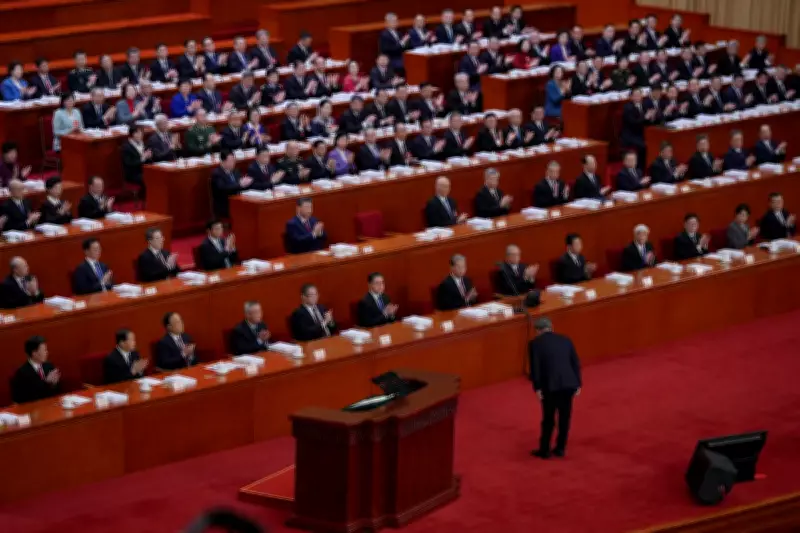
China has formally announced its lowest economic growth target since 1991, setting a cautious tone at the opening of its annual national congress. The target of 4.5% to 5% for 2026 reflects a pragmatic approach as the nation grapples with significant domestic economic headwinds, including a prolonged property sector crisis and weakened consumer confidence.
Key Elements of the New Five-Year Plan to 2030
Alongside the growth forecast, Beijing released the full draft of its five-year economic and political blueprint, which will guide policy through 2030. The document emphasises achieving technological self-reliance amid intensifying rivalry with the United States, with focused investments in artificial intelligence, robotics, semiconductors, and quantum technology.
Economic Realities and Strategic Responses
The downgraded growth target follows years of property market turmoil that has triggered falling home prices, reduced investment, and substantial job losses. In response, officials have pledged to stabilise the housing sector by controlling new supply and reducing existing inventory. Premier Li Qiang reiterated the importance of boosting domestic consumption, although funding for consumer trade-in subsidies has been reduced from 300 billion yuan to 250 billion yuan.

Despite these challenges, China reported meeting its 5% growth target for 2025, largely driven by a record trade surplus of nearly $1.2 trillion. Exports to regions like Europe and Latin America provided crucial support, underscoring the complex global economic landscape.
Technological Ambitions and Military Modernisation
The five-year plan outlines ambitious goals for research and development, projecting an annual average growth of at least 7% in nationwide R&D spending. This push for innovation is central to China's strategy of reducing dependency on foreign technology.
On defence, China has committed to a 7% increase in its military budget for 2026, amounting to approximately 1.9 trillion yuan ($270 billion). This follows a period of military purges and aligns with broader objectives to enhance combat readiness and modernise the armed forces.
Demographic and Environmental Priorities
Addressing a deepening demographic crisis, Chinese officials have vowed to create a "fertility-friendly society" through policies supporting education, employment, childcare, and healthcare. This initiative comes as China's population declined for the fourth consecutive year, dropping by about 3 million in 2025.
On climate action, China, the world's largest polluter, has set a target to reduce carbon emissions per unit of GDP by 17% over the next five years. While this represents a slight decrease from the previous 18% target, it reaffirms the country's commitment to renewable energy and emission reductions.
Geopolitical Stance on Taiwan
Premier Li Qiang adopted a firmer tone on Taiwan, stating that Beijing will "resolutely fight against" separatist forces. This wording marks a shift from last year's "resolutely oppose," highlighting ongoing tensions over the self-ruled island.
The weeklong congress is expected to formally approve the five-year plan in the coming days, setting the stage for China's economic and strategic direction through the end of the decade.