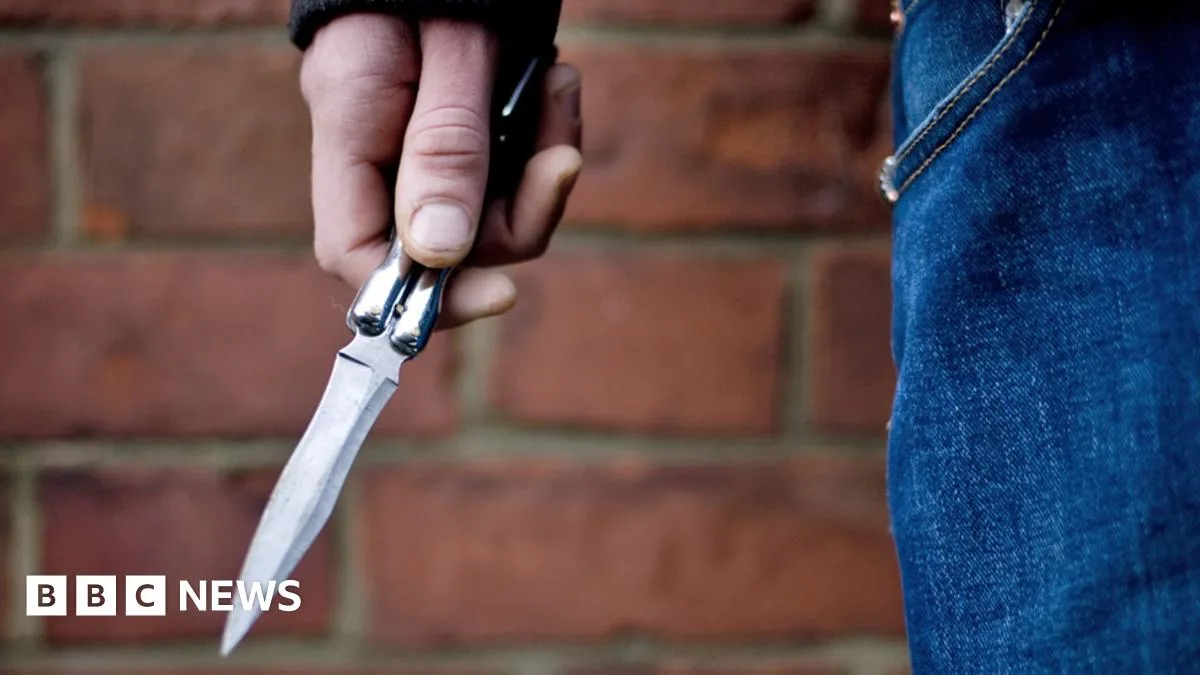
Knife crime rates in some regional towns and cities now exceed those in many London boroughs, according to a BBC analysis of police data. While London remains the most dangerous area overall, places such as Manchester, Slough, Liverpool, and Blackpool have seen sharp increases in serious knife offences.
In Blackpool, the rate of serious knife crime reached 14.3 offences per 10,000 people in 2018, placing it among the top 25 most dangerous locations in England and Wales. The town also features eight of the ten most deprived neighbourhoods in the country, with poverty, unemployment, and drug gangs cited as contributing factors.
Ashley Hackett, chief executive of Blackpool Football Club Community Trust, said: 'There is a significant issue with county lines gangs in Blackpool, and from that we are seeing a lot of young people carrying knives.' He added that many children and teenagers turn to illegal activities to support their households.
In Lancashire as a whole, knife crime has doubled over five years, from 455 offences in 2014 to 981 in 2018. Byron Highton, whose brother Jon-Jo was stabbed to death in Preston in 2014, said: 'We are suffering just as much as anywhere else. The whole country is suffering from knife crime, but small cities in the north like Preston get no mention.'
Young women are increasingly affected, with 15% of knife crime suspects being female in 2018. Dr Mike Rowe of Liverpool University noted that girls are being recruited to carry weapons because they are less likely to be stopped by police. Keeley, a 17-year-old from Blackpool, said she was threatened with a machete while playing football, while her friend Lauren reported being threatened with a stabbing.
The safest areas, with fewer than one knife crime per 10,000 people, include Dorset, the Cotswolds, Monmouthshire, and the Malvern. In Scotland, knife possession has risen to over 2,300 crimes last year, though data collection methods differ.