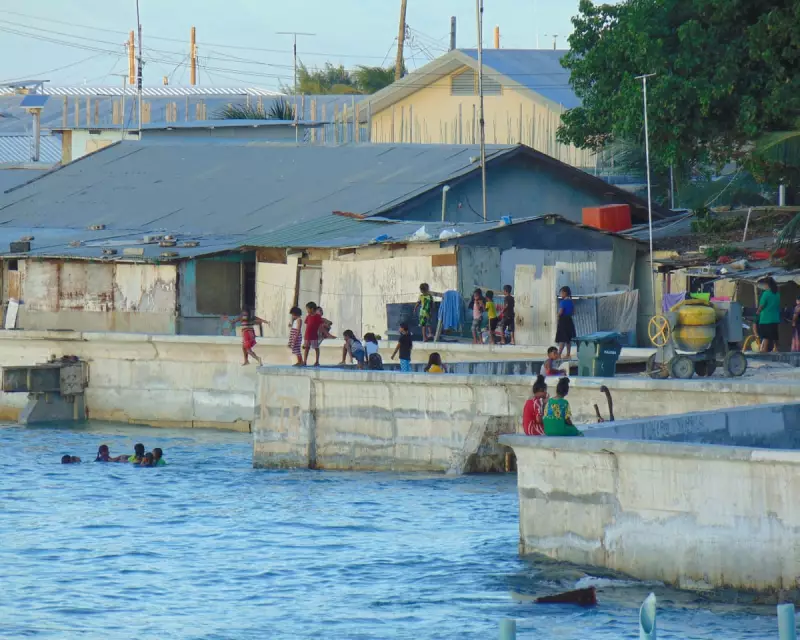
In a global first, the Pacific nation of the Marshall Islands has rolled out a national universal basic income (UBI) programme, uniquely offering residents the choice to receive payments in cryptocurrency. The scheme, designed to alleviate cost of living pressures, provides quarterly disbursements of approximately $200 to every citizen.
A Digital-First Social Safety Net
The inaugural payments were distributed in late November 2023, with recipients able to select their preferred method: direct bank deposit, a paper cheque, or a digital transfer via a government-backed wallet using a US dollar-pegged stablecoin. Finance Minister David Paul stated the government's aim is to ensure "no one is left behind," describing the $800 annual sum as a "morale booster" rather than a replacement for employment.
This innovative approach is partly a response to the logistical challenges of serving a population of around 42,000 people scattered across hundreds of remote islands and atolls. "We saw the opportunity in what the blockchain has to offer," Minister Paul explained, highlighting the technology's potential to streamline transfers to far-flung communities.

Funding and Implementation Challenges
The ambitious programme is financed by a trust fund established under a compact with the United States. This fund, holding over $1.3 billion in assets, is partly intended to compensate the island nation for the legacy of American nuclear testing. The US has committed an additional $500 million through to 2027.
Despite the digital ambition, initial uptake of the cryptocurrency option has been modest. Officials report that only about 12 people have so far signed up for the digital wallet. In the first payment round, roughly 60% of recipients opted for direct bank deposits, with the remainder receiving cheques.
Anelie Sarana, a finance manager involved in the rollout, described teams travelling to outer islands to register citizens. She observed that many used the money immediately for essentials like food, while others spent their $200 on celebrations for the annual Gospel Day holiday.
Expert Analysis and Precedents
Dr Huy Pham, an associate professor and crypto-fintech lead at RMIT University, confirmed the scheme is the world's first nationally implemented UBI programme of its kind. He praised the unique, nationwide use of blockchain but cautioned that digital payments alone don't guarantee financial inclusion. "Improving internet coverage, improving smartphone penetration – all these kinds of things are the minimum for a blockchain-based economy," he noted, pointing to the Marshall Islands' patchy connectivity.
This is not the nation's first foray into digital currency. A previous plan to launch a national cryptocurrency called the Sovereign (SOV) in 2018 stalled after warnings from the International Monetary Fund (IMF). The IMF has again expressed caution, stating the blockchain delivery of UBI carries financial, reputational, and integrity risks if governance is not robust.
Dr Monique Taylor, a lecturer in world politics at the University of Helsinki, said the experiment's success is hard to predict due to a lack of direct precedents. However, she acknowledged potential benefits: "In a geographically dispersed island state where conventional banking infrastructure can be limited, a digital wallet may lower frictions and make transfers more accessible, particularly in outer atolls."