
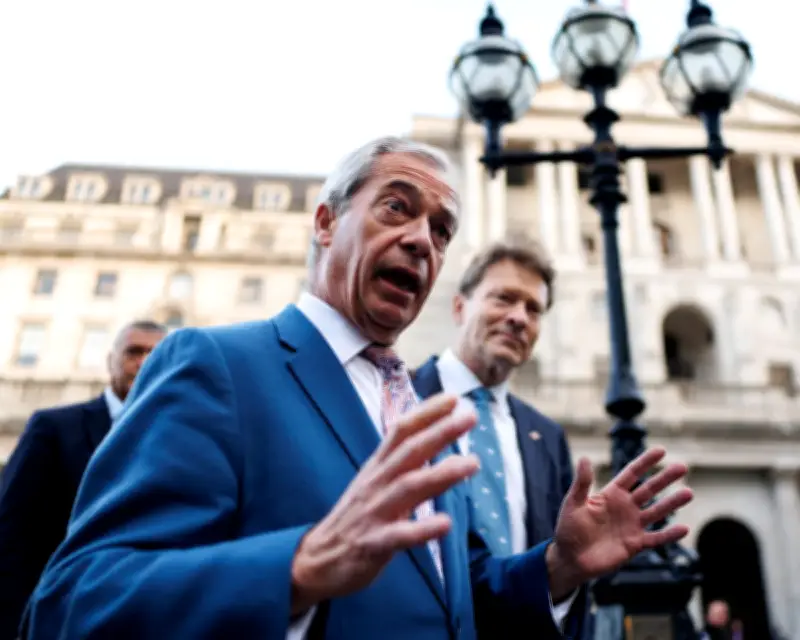
Reform UK leader Nigel Farage has been actively opposing the Bank of England's plans for a state-run digital currency, known as 'Britcoin', which could have significant financial implications for his party's billionaire donor, Christopher Harborne. Harborne, a minority owner of Tether, the company behind the world's most traded stablecoin, has donated approximately £25 million to Reform UK, accounting for about two-thirds of its funding.
Private Meeting at Bank of England
In a private meeting last September with Bank of England Governor Andrew Bailey, Farage urged the governor to abandon the Britcoin proposal. After the meeting, Farage told an audience of crypto enthusiasts at the Zebu Live event in London that he was 'prepared to go to prison' to stop the digital pound, expressing his 'total and utter horror' at the plans.
Potential Impact on Tether
The Digital Currencies Governance Group (DCGG), an industry body representing Tether and other stakeholders, submitted a response to the Bank and Treasury in 2021 warning that Britcoin could 'stifle growth and innovation' by causing users to switch from private stablecoins like Tether's to the state-run currency. Tether's profits, which have surpassed those of Netflix and Coca-Cola, could be threatened if demand for stablecoins declines.
Harborne's 12% stake in Tether reportedly yields him about £1 billion annually. His lawyers have stressed he is a minority shareholder, not an executive, and denied any coordination with Farage, calling the allegations 'fantasy'.
Political and Regulatory Scrutiny
Anna Turley, chair of the Labour Party, has announced plans to write to the financial regulator to investigate Farage's actions. The Bank of England has refused a freedom of information request for details of the meeting, citing the need for 'free and frank' advice. A Bank spokesperson acknowledged Farage's 'differing view' but noted that cryptocurrency policy is being developed with input from industry, academia, and the public.
Farage frames his opposition as a fight for freedom from state overreach, claiming Britcoin would require a digital ID system—a claim the Bank has not confirmed. He has also pushed Bailey to abandon a proposed cap on individual stablecoin holdings.
Reform UK dismissed the allegations as 'utter rubbish', stating Farage's focus is solely on 'saving the country'. However, critics like Tim Picton of Spotlight on Corruption call for transparency, urging the Bank to disclose meeting minutes to reveal vested interests shaping crypto policy.




