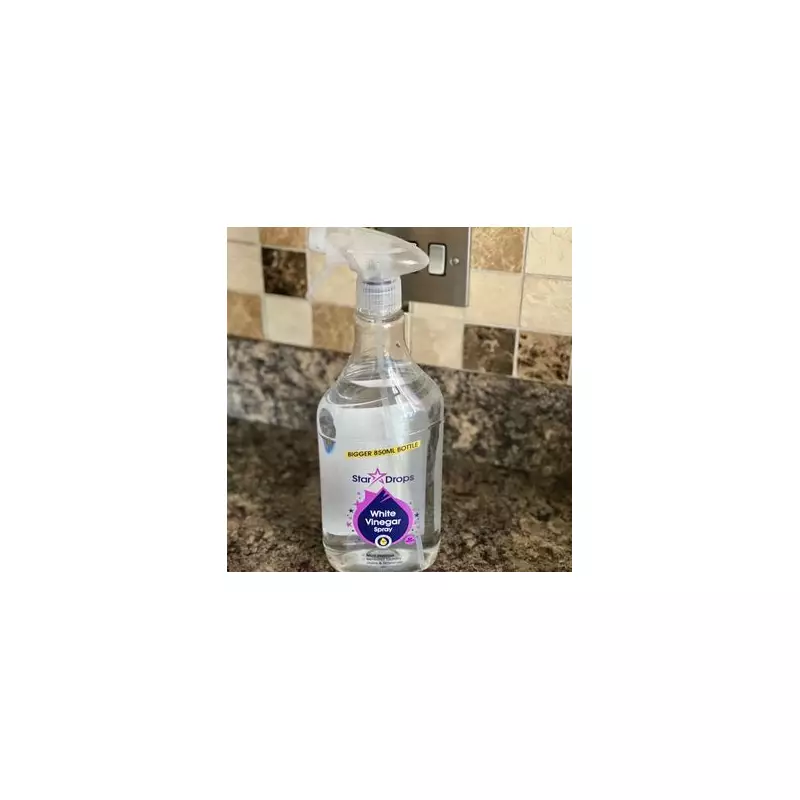
While white vinegar has long been celebrated as a versatile, eco-friendly cleaning staple in British households, recent discoveries reveal it's not always the optimal choice. Many homeowners are now realising that for three specific household items, superior natural alternatives exist that deliver better results without potential damage.
The Vinegar Cleaning Conundrum
For years, white vinegar has been the go-to natural cleaning solution for countless UK households, offering an effective alternative to harsh chemical cleaners. Its acetic acid content makes it particularly useful for tackling limescale, removing soap scum, and disinfecting surfaces without leaving toxic residues.
However, growing evidence suggests that vinegar isn't universally effective, and in some applications, it can actually cause gradual damage to household items. The realisation has prompted many cleaning enthusiasts to reconsider their vinegar dependency and explore more targeted natural alternatives.

Three Household Items Where Vinegar Falls Short
1. Kettle Descaling Dilemma
For British tea and coffee lovers, the kettle stands as one of the kitchen's most essential appliances, particularly during chilly winter months when hot beverages become daily necessities. Regular descaling is crucial for maintaining efficiency and preventing limescale buildup that affects both taste and performance.
While white vinegar can remove limescale through its acetic acid content, it often requires multiple boiling cycles to achieve complete results, especially when dealing with neglected buildup. More significantly, vinegar leaves behind a persistent odour that can transfer to subsequent hot drinks.
Superior Alternative: Citric acid powder, available from most supermarkets and hardware stores, provides a more effective solution. This natural alternative eliminates limescale immediately with a single treatment and leaves absolutely no residual odour, ensuring your morning cuppa tastes exactly as it should.
2. Towel Refreshment Revolution
After multiple washes, many Britons find their towels becoming increasingly scratchy and stiff rather than maintaining the soft, fluffy texture they initially enjoyed. This common problem occurs when detergent and fabric softener residues accumulate within the fibres, creating a barrier that prevents proper cleaning and absorption.
While vinegar has traditionally been recommended for stripping towels of these residues, it often proves insufficient for complete restoration. The acetic acid helps break down some buildup but doesn't always achieve the deep cleaning required for truly refreshed linens.
Superior Alternative: Washing soda crystals or citric acid provide more effective solutions for towel restoration. Both substances work more powerfully to dissolve accumulated residues, resulting in noticeably softer, more absorbent towels that feel genuinely refreshed rather than merely cleaned.
3. Tile Grout Preservation
Grout performs the essential function of securing tiles together while preventing moisture penetration in bathrooms and kitchens. Many homeowners have turned to vinegar as a natural grout cleaner, only to discover unexpected consequences after regular use.
Within just a few months of vinegar application, grout can begin to crumble and break away as the acetic acid gradually deteriorates its structural integrity. While sealed grout offers some protection, unsealed grout proves particularly vulnerable to this acid-induced degradation, potentially leading to costly repairs.
Superior Alternative: Baking soda provides a gentle yet effective alternative for grout cleaning without causing damage. Simply mix baking soda with water to create a thick paste, apply it to the grout lines, allow it to sit for 10-15 minutes, then gently scrub with an old toothbrush before rinsing thoroughly.
Embracing Smarter Natural Cleaning
The shift away from vinegar for these specific applications doesn't represent an abandonment of natural cleaning principles but rather an evolution toward more targeted solutions. By understanding each cleaning challenge's unique requirements, British households can achieve better results while preserving their belongings.

This approach aligns with growing consumer interest in sustainable living practices that balance environmental consciousness with practical effectiveness. As cleaning knowledge expands, homeowners are discovering that sometimes the most popular natural solution isn't necessarily the best one for every situation.
The key lies in matching the cleaning agent to the specific task at hand, whether that involves descaling appliances, refreshing textiles, or maintaining structural elements like tile grout. With these superior alternatives now widely available, UK households can maintain their homes effectively while avoiding the potential pitfalls of inappropriate vinegar use.