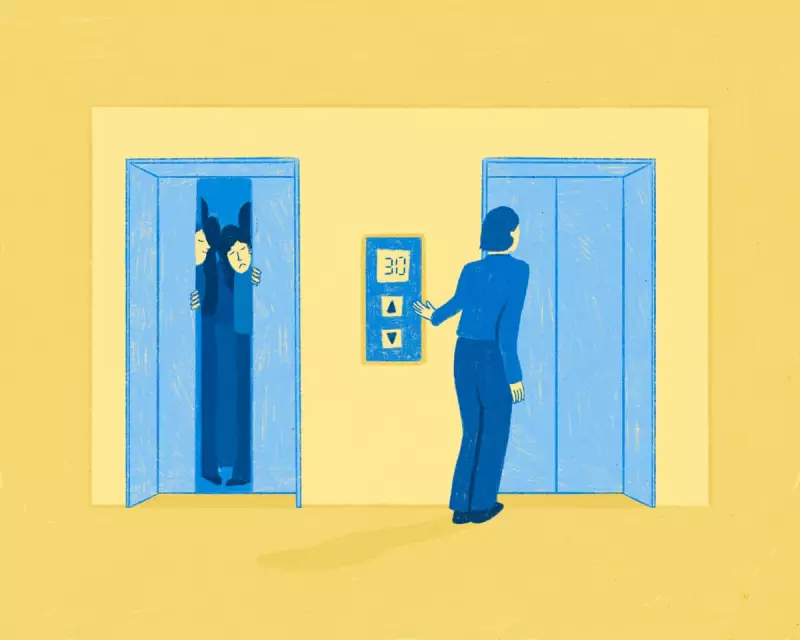
Navigating the shared, confined space of an elevator presents a unique social challenge that many find deeply uncomfortable. As Naomi Mourra articulates in her observations, there exists a complex set of unspoken rules governing this vertical journey, with silence reigning as a paramount principle.
The Sanctity of Silence in Confined Spaces
Most individuals do not relish being locked in close proximity to strangers while travelling at speed through a building's shaft. Yet, as Mourra notes, many fail to elevate the experience for their fellow passengers. The fundamental rule is clear: when you enter an elevator with a stranger, all conversation must cease immediately.
This applies whether you're mid-discussion with a work colleague who has gossip to share or engaged in a phone call. The appropriate action is to pause your dialogue until you exit the metal chamber. The temptation to strike up a conversation with an unfamiliar passenger should be firmly resisted.

Spatial Awareness and Entry Etiquette
Particular frustration arises from those who demonstrate excessive enthusiasm at elevator doors. These individuals position themselves directly at the threshold, waiting with Black Friday sales intensity for the doors to part. Upon opening, they often recoil in surprise when encountering existing passengers.
Should you need to exit as these eager entrants are boarding, they frequently appear annoyed rather than accommodating. Instead of stepping aside, they typically remain rooted, turning sideways to create only a sliver of space through which others must squeeze. The minor satisfaction comes when they realise no one is disembarking and they must wait for the next carriage.
The Awkward Interval and Button Futility
This brief victory quickly transforms into discomfort during the three-to-eight second interval when doors remain open. Passengers are left to blink silently through this awkward pause. A related truth: repeatedly jabbing the close button has absolutely no impact on the doors' operation.
Positioning Protocols and Human Tetris
What truly aggravates seasoned elevator users is improper positioning. Those who stand at the front, obstructing others, violate basic protocol. The correct approach involves standing against the wall, beginning at the rear and facing the doors until all wall space is occupied.
Latecomers face the punishment of entering the nucleus, where they experience non-sexual contact from strangers on all sides. After an initial glance of acknowledgment, courtesy demands avoiding further eye contact. Passengers should either look downward or watch the floor numbers slowly progress.
Capacity Considerations and Strategic Luggage
During high-demand periods with queues forming, passengers should lift their game by creating space for others. This involves putting phones away and removing backpacks—unless strategically positioned over a small child's head during a game of human Tetris.
The Cardinal Sin of Cramped Commentary
Above all, when doors close on a packed elevator, resist the urge to comment on its supposed capacity. Remarks like "apparently this space is meant to hold 25 people" will only elicit polite smiles and laughter from your captive audience. Such commentary will not secure you a Netflix standup special.
These unspoken conventions, while never formally documented, represent a social contract that makes shared vertical transportation tolerable. By observing these guidelines, we can all contribute to making elevator journeys slightly more civilised experiences.