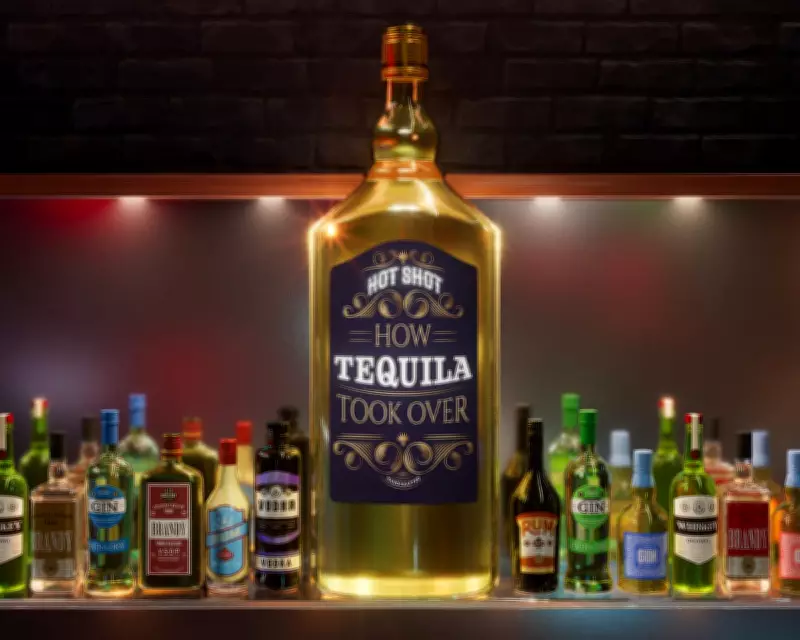
Once synonymous with rowdy student nights and sombrero-clad stereotypes, tequila has dramatically shed its youthful, hedonistic image to emerge as the fastest-growing spirit globally. This agave-derived Mexican beverage is now celebrated for its sophistication and complexity, captivating consumers who seek refined drinking experiences.
The Accidental Discovery That Sparked a Revolution
For Tom Bishop, a casual evening in south-east London in 2017 proved transformative. Running out of beer, he unearthed a bottle of premium Añejo tequila, a gift from his brother after a business trip to Mexico. Expecting the throat-burning assault of his youth, Bishop was astounded by the spirit's quality and flavour. "It completely blew me away," he recalls. "I just hadn't associated tequila with that level of craftsmanship."
This serendipitous encounter led Bishop and his friend Jack Vereker to launch El Rayo, a premium tequila brand now stocked across the UK. Their journey mirrors tequila's broader evolution from a party staple to a connoisseur's choice.

Statistical Surge and Market Dynamics
According to the global alcohol analyst ISWR, UK tequila sales have grown by approximately 14% annually between 2019 and 2024. While growth has moderated recently, the United States has witnessed a similar explosion, with tequila now ranking as the country's second-largest spirit after vodka.
Nick Ward, co-founder of Ark Drinks, a specialist marketing agency in London, observes, "What we're seeing in the UK isn't just a tequila boom, it's a complete reframing of the spirit." This resurgence is fueled by at-home drinking trends, premium brands, and aged varieties, indicating consumers are prioritising quality over quantity.
Drivers Behind the Boom
Several factors converge to explain tequila's ascent. The pandemic-era rise in cocktail culture, a societal shift towards "drinking less but better," and fatigue with gin have all played roles. Increased tourism to Mexico and growing global appreciation for its cuisine and culture have further bolstered tequila's appeal. Ward summarises, "Tequila was the right spirit, in the right place, at the right time."
El Rayo capitalised on this momentum, becoming the first premium tequila brand priced over £30 to be stocked by Sainsbury's in 2023. The retailer has since expanded its offerings to include other premium labels like Patrón and Casamigos, co-founded by George Clooney.
Overcoming Stereotypes and Embracing Authenticity
A decade ago, UK consumers scarcely viewed tequila as a viable alternative to vodka or gin, especially in sober contexts. Bishop notes, "I don't think people really understood how to drink it, particularly at home. It wasn't part of that moment when you shut your laptop at the end of the day, put on some music and reach for a drink."
Historically, tequila marketing in the UK leaned on lazy stereotypes, targeting hard-drinking male demographics with imagery of moustachioed hombres and plastic sombreros. Sierra Tequila, for instance, features a guitar-toting figure on its label, capped with a sombrero that doubles as a measure and lime-squeezer. Such branding evoked Mexican theme nights and student excess, rather than the spirit's true heritage.
The Premiumisation Wave
Tequila blanco, or silver tequila, remains the most popular type in the UK, accounting for roughly two-thirds of the market by volume in 2024. This pure form, bottled within 60 days of distillation, often carries notes of agave, citrus, and pepper against a grassy backdrop.
However, the recent "premiumisation" trend has sparked interest in aged varieties like reposado and añejo. Aged in wooden barrels for months to years, these tequilas develop golden to amber hues with flavours of oak, vanilla, caramel, and spices. Their richness and complexity align more closely with whisky than the harsh, clear spirits of tequila's past.
Mezcal, made from roasted agave hearts for a smoky profile, further diversifies the category, offering consumers a broad spectrum of flavours and expressions.

Versatility and Mixology Appeal
From a bartender's perspective, few spirits match tequila's versatility. Lucia Montanelli, manager of the Vesper Bar at London's Dorchester Hotel, explains, "Tequila pairs well with a range of flavours – fruity, herby, umami, earthy, smoky, sweet – while holding its own against them. Rather than disappearing in the mix, it elevates it."
This distinct identity, characterful yet not overpowering, makes tequila an increasingly preferred base over gin or vodka. Montanelli adds, "Vodka is often selected for its neutrality, while gin is driven by botanicals that can sometimes dominate a drink – tequila sits comfortably in between."
Pritesh Mody, a cocktail consultant and creative director of Think Drinks, attributes tequila's reputation shift partly to celebrity endorsements in the 2010s. The 2017 sale of Casamigos to Diageo for $700 million signalled the spirit's commercial potential, prompting a wave of celebrity-backed brands from figures like Dwayne Johnson, Matthew McConaughey, and Rita Ora.
Challenges and Controversies
Not all celebrity ventures have enhanced tequila's standing. Kendall Jenner's 818 Tequila, launched in 2020, grew rapidly through social media partnerships but faced accusations of cultural appropriation for promotions depicting her in agave fields with braided hair. A class action lawsuit alleged false marketing of its products as "100% agave"; the brand denies the claim and sought dismissal in January.
Mody recalls trying 818 Tequila: "It's almost like a cocktail in a bottle," he says, shuddering at its "sweet, orangey" taste. Such instances highlight the challenge of preserving tequila's integrity amid a global gold rush.
Regulatory Rigour and Heritage Protection
As a legally protected spirit in Mexico, tequila faces stricter regulations than Scotch whisky or French cognac. To be sold as tequila, a beverage must contain 35-55% alcohol, be made from blue weber agave, and produced in the Tequila region under standards set by Mexico's Tequila Regulatory Council. Mezcal, with a more permissive definition, has also seen rising sales.
Bishop emphasises, "It's not like someone can just go down to their garden shed and make some tequila if they feel like it. It can be a bit onerous at times, but it does a great job for quality control."
This heritage has become a key selling point in the UK, with premium brands like El Rayo highlighting provenance and production methods. Mody notes, "You can tell a real story with tequila: it's been aged in a barrel, it was grown with this type of agave, it's been hand-cut."
Innovation and Future Risks
Premium premixed cocktail brands such as Moth and Whitebox have bridged the gap between familiar orders like margaritas and their base spirit, popularising options like the paloma. Beverage giants like Schweppes have followed suit, offering tequila-based ready-to-drink products.
However, the craze for tequila risks diluting its craft heritage. Some producers use artificial sweeteners and additives, potentially compromising flavour and authenticity. Even bottles labelled "100% agave" may contain up to 1% additives under current rules, prompting brands like El Rayo to market themselves as "additive-free."
Bishop cautions, "The big thing to watch out for is that it doesn't innovate too fast. There will come a time for flavours." For now, the focus remains on educating consumers about tequila's transformation. "We're trying to turn tequila into the first drink of the night, not the last," he concludes.